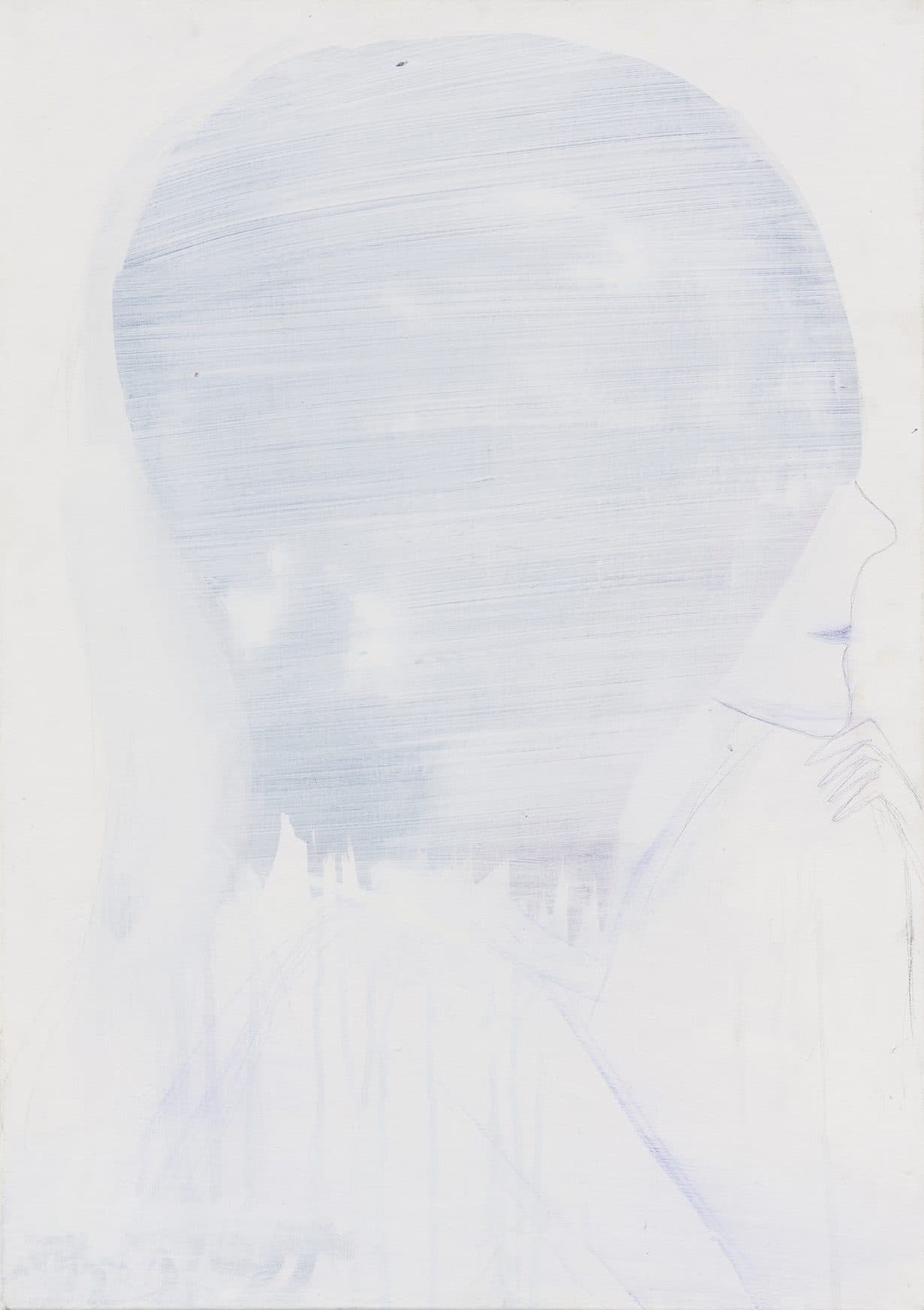
The artist seems to be batting at floating signifiers of luxury and taste with a blindfold on
This past summer, content creators began describing their every movement as ‘kinda chic’. It was kinda chic to read a book, kinda chic to birth a child, kinda chic to order coffee without milk. These posts so diluted the meaning of chicness that the word became impossible to define and only possible to desire. With his solo exhibition of readymades, paintings and mixed-media works at Ulrik gallery, Tam Ochiai seems to be batting at floating signifiers of luxury and taste with a blindfold on, working out his feelings towards the fetishisation of consumer goods.
The Yokohama-born, New York-based artist’s 1994 painting Evin is the most direct satirisation of a chic figure. A whimsical feline loiters at a bistro table underneath pointillist Swiss Alps, aka the blue and white peaks and flat red sky of an Evian water bottle (the letters ‘e v i n’ hang in the middle ground – a chic androgynous name, in fact). To her left, cheerful text announcing three films every cinephile needs to know (Last Year at Marienbad, Jules and Jim and Shoot the Piano Player), and hovering around her lithe frame, in faint pencil, are diagrammatic lines and annotations. She’s reading? Cahiers du Cinéma. She’s wearing? Yohji Yamamoto. She smells like? ESCAPE by Calvin Klein.
For decades, the artist has been making distinctively wispy paintings like Simone: can you cat my hair?: blue cafe (2000) and Vibrissae (2006), both included here, all sharp, pointed chins and overlarge kawaii eyes, prioritising ornament and affect-laden detail over a rendering of specifics: we’re not sure where the girls are going, only that they’re looking good. The works in this show, most of which were made during the mid-1990s and early 2000s, have started to age, their whites now closer to beige. But unlike what gets labelled ‘vintage’ online, this patina is not merely an aesthetic or pose. In the gallery, Ochiai has also arranged a delightfully high-low collection of ashtrays on slabs of painted wood, readymades meant to taunt the nicotine-addicted. From antique bronze to plastic New York State Lottery merch, the ashtrays bear the smudgy remnants of their actual use.
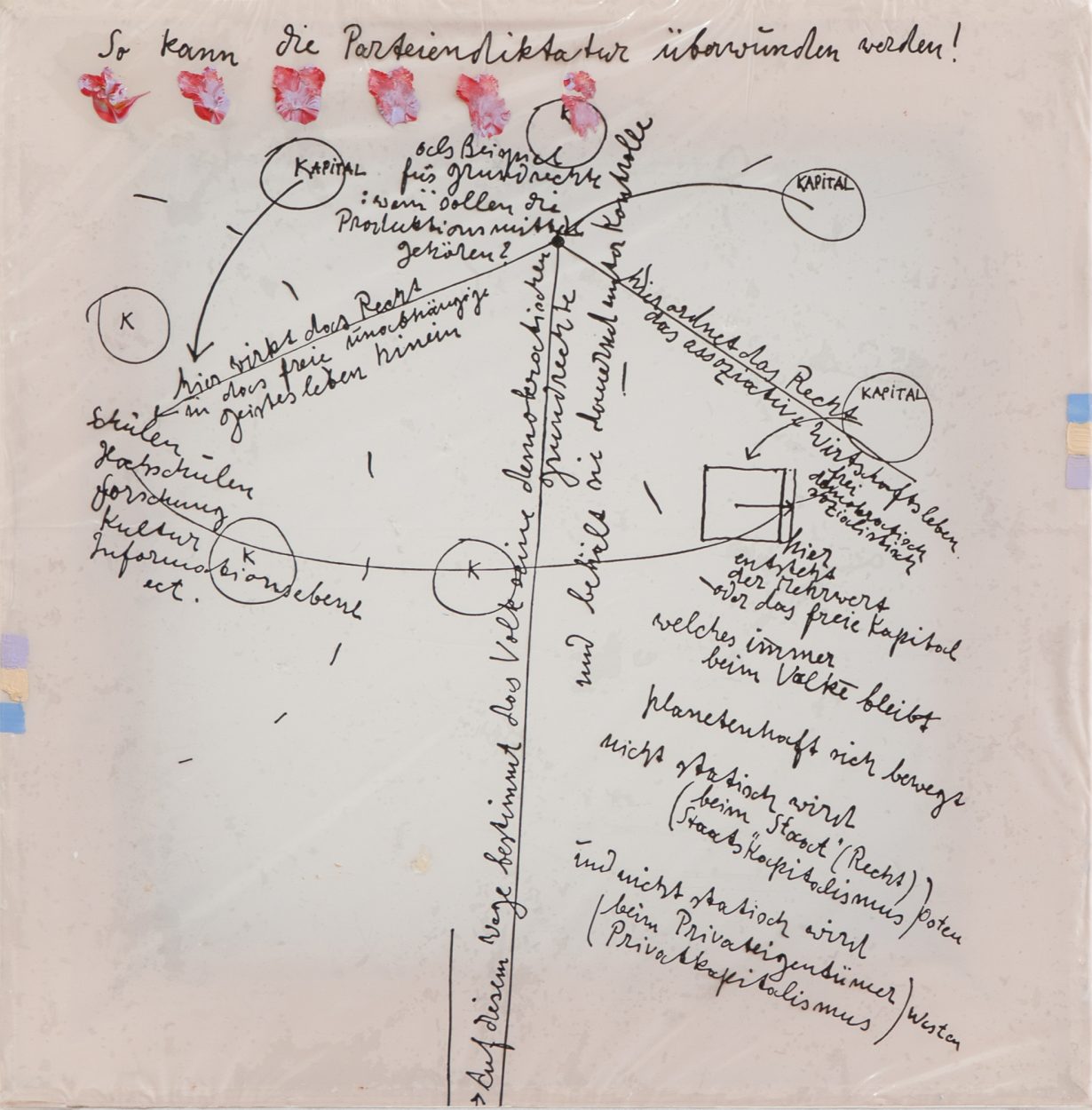
The show’s title refers to the reflective layer of tissue behind the retinas of some animals, including cats, that enhances their vision in the dark. Another way of seeing, inspired by a new context (the nighttime), using the lightbouncing mechanics of a mirror. The original contexts for Ochiai’s preoccupations – the film festival and the afters; the luxury department store where one might purchase an outfit to wear to such events – tend to be more flatteringly low-lit than the white cube. His series of brand-name shopping bags made rectangular and coated in plastic, sometimes decorated with thumbprints of complementary dabs of paint, offers another opportunity to consider the arbitrary nature of the iconography we have deemed valuable in the free market. Their existence is inescapable, and Ochiai’s intervention mostly serves to remind us of that fact. Though, amid the logos for brands like Gap and United Colors of Benetton, Ochiai has slipped a few curveballs. Greenberg (1992) is not an appropriated bag but a sparse and restrained textual acrylic painting winking at the critics. MoMA (1994)’s frenetic diagram of kapital and other German words in loopy cursive won’t tell us if it’s a reference to Marx or an ad for Kapital, the Japanese denim brand (it is actually from Joseph Beuys’s 1971 pamphlet ‘How the Dictatorship of the Parties Can Be Overcome’, which the Museum of Modern Art once printed on plastic bags and sold as multiples). The chicest of postures requires the scaffolding of intellect, a sense of awareness behind the je ne sais quoi. Ochiai is true to this, not new to this. Influencers beware.
Tam Ochiai: Tapetum Lucidum at Ulrik, New York, 12 September – 24 October
From the October 2026 issue of ArtReview – get your copy.