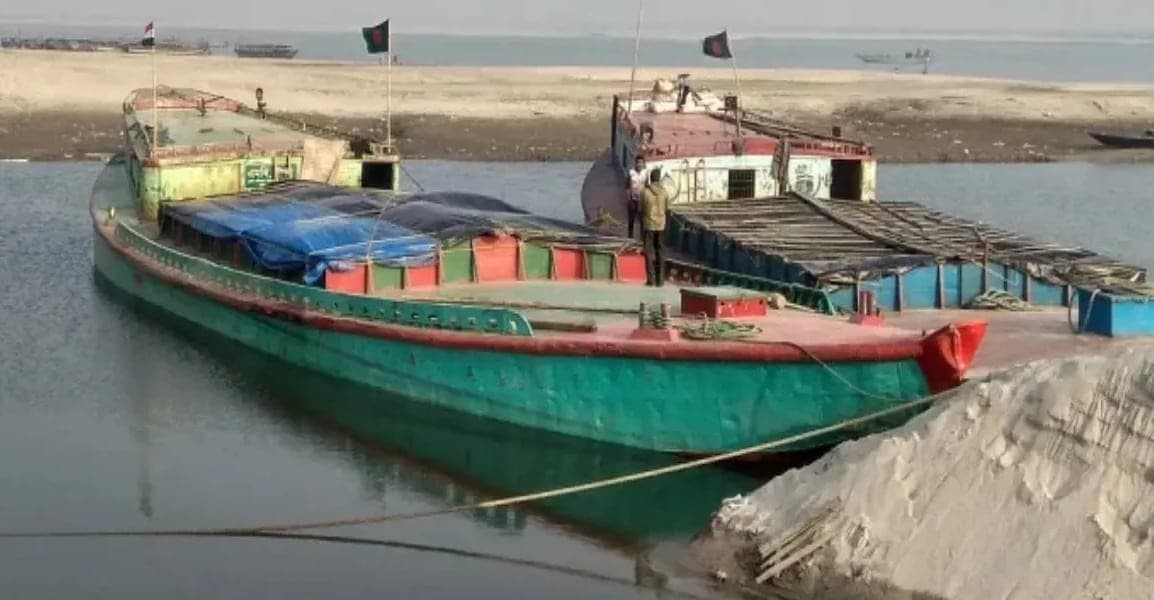
Integration of the Manas and Sankosh rivers into the wider network could create additional possibilities
Bhutan and India are exploring the potential of inland waterways to strengthen bilateral trade and provide additional routes to regional and international markets, with the Brahmaputra River and the Jogighopa terminal in Assam emerging as key components of the proposed connectivity.
The issue was discussed during a bilateral meeting between the Minister for Infrastructure and Transport, Lyonpo Chandra Bahadur Gurung, and India’s Union Minister for Ports, Shipping and Waterways, Sarbananda Sonowal on the sidelines of Sagarmanthan 2026 in New Delhi.
India’s National Waterway-2 (NW-2), which runs along the Brahmaputra, and the Jogighopa Inland Waterways Transport Terminal as potential gateways for Bhutanese cargo to global markets. The two ministers also discussed the possible use of the Manas and Sankosh rivers and their connectivity with India’s national waterways to improve cargo movement.
However, the proposals remain at the exploratory stage, and their commercial viability will depend on technical assessments, navigation conditions, transport arrangements and coordination between the two countries.
For Bhutan, which relies heavily on cross-border road transport for the movement of imports and exports, a more integrated inland waterway network could offer an alternative for selected commodities, particularly bulk goods and agricultural and industrial products.
Located in Assam, Jogighopa has been developed as a multimodal logistics hub intended to strengthen cargo movement across India’s Northeast and facilitate regional trade with Bhutan and Bangladesh.
The terminal was inaugurated by Sonowal on February 18, 2025, with Bhutan’s Minister for Industry, Commerce and Employment, Lyonpo Namgyal Dorji, attending the ceremony. Built at a cost of more than INR 82 crore, the facility includes a reinforced cement concrete jetty and an electric level-luffing crane for cargo handling. It is also linked to a planned multimodal logistics park intended to integrate water, road and rail transport.
The terminal is strategically located about 91 kilometres from Gelephu, making it particularly relevant with the development of the Gelephu Mindfulness City and considers new opportunities for investment, production and trade.
Bhutanese officials and private-sector representatives have also visited the facility to understand its infrastructure, operating procedures, customs requirements and cargo-handling arrangements. A delegation led by the Ministry of Industry, Commerce and Employment visited Jogighopa in March 2025, with participants from Gelephu, Samdrup Jongkhar and Phuentsholing examining its relevance to Bhutanese exporters.
The terminal’s potential value lies not only in its proximity to southern Bhutan but also in its connection to a wider river transport network. If logistics arrangements become commercially attractive, Bhutanese businesses could explore moving suitable goods by road to Jogighopa and onward by water, reducing dependence on longer road journeys for certain destinations.
The river has long served as an important transport corridor in Assam, supporting the movement of people and goods and linking settlements across the region. Its connection with Bangladesh also provides a route through which inland cargo can reach wider regional transport networks.
The Brahmaputra is already used for cargo transportation, passenger services, tourism and the movement of oversized consignments. Its potential for Bhutan, however, will depend on how efficiently cargo can be transported from Bhutanese production centres to the river terminals and transferred between road, water and other transport modes.
The proposed integration of the Manas and Sankosh rivers into the wider network could create additional possibilities. According to authorities, a functioning multimodal corridor could help Bhutan diversify its export routes, strengthen links with Assam and Bangladesh, and improve the movement of commodities such as agricultural produce, construction materials and manufactured goods.
The corridor could also support wider economic cooperation between Bhutan and India’s northeastern states, particularly as Gelephu develops as a potential centre for investment and economic activity. The discussions also covered training opportunities for Bhutanese youth in maritime and inland water transport at the Centre of Excellence in Dibrugarh, which is being developed to build specialised skills.
The proposed cooperation would extend beyond physical infrastructure to human-resource development, potentially creating opportunities for Bhutanese youth in logistics, cargo handling, vessel operations and related transport services. For Bhutan, the Brahmaputra and Jogighopa offer a possible additional route to markets beyond its immediate neighbourhood.
Tashi Namgyal, Thimphu
Post Views: 7