
President Nikos Christodoulides on Monday stressed that the proposal he had made to Turkish Cypriot leader Tufan Erhurman to open and repopulate the fenced-off area of Varosha under the United Nations’ administration and open the port of Famagusta under the European Union’s control was not the same as a proposal to the same end which was made over 20 years ago.
“The proposal we submitted regarding the fenced-off area is not an old proposal, but rather, it builds upon previous discussions which have taken place. While it is natural for it to contain elements present in earlier proposals, it is not identical to the 2005 proposal,” he told Famagusta’s Greek Cypriot town council-in-exile.
He added that the proposal he had submitted to Erhurman “builds upon that other initiative, which, I should recall, had reached an advanced stage, bringing us closer to a potential outcome”.
“Although the initial response, following our last meeting, was a rejection, the proposal remains on the table,” he said.
As such, he said he wished to discuss with the town council-in-exile “how we may enrich, refine, and modify it … so as to achieve a positive result”.
“I believe this could be the very element we are currently seeking, should we wish to demonstrate, through concrete action, our genuine commitment to working toward a resolution to the Cyprus problem,” he said.
He also made reference to the issue of crossing points, saying that he has “submitted a proposal” to this end.
“I hope for a positive outcome. Perhaps I will hear good news tomorrow,” he said.
Christodoulides, Erhurman set to meet on Tuesday
However, he said, “we will all be tested by our willingness to pursue bold confidence-building measures which could pave the way towards a solution to the Cyprus problem and demonstrate that we are truly committed to achieving such a solution”.
Looking ahead to his planned meeting with Erhurman on Tuesday and the forthcoming arrival of UN envoy Maria Angela Holguin, he said that “we shall see how things unfold”, with a trilateral meeting involving Christodoulides, Erhurman, and Holguin set to take place during Holguin’s stay on the island.
Erhurman had said last week that he had rejected the proposal, lamenting that it fell short of an entry into force of the European Union’s direct trade regulation.
“Is this the entry into force of the direct trade regulation? No, it is not the entry into force of the regulation, but since [the port] would be under EU control, direct trade would begin,” he said.
As such, he said, the proposal was unbalanced.
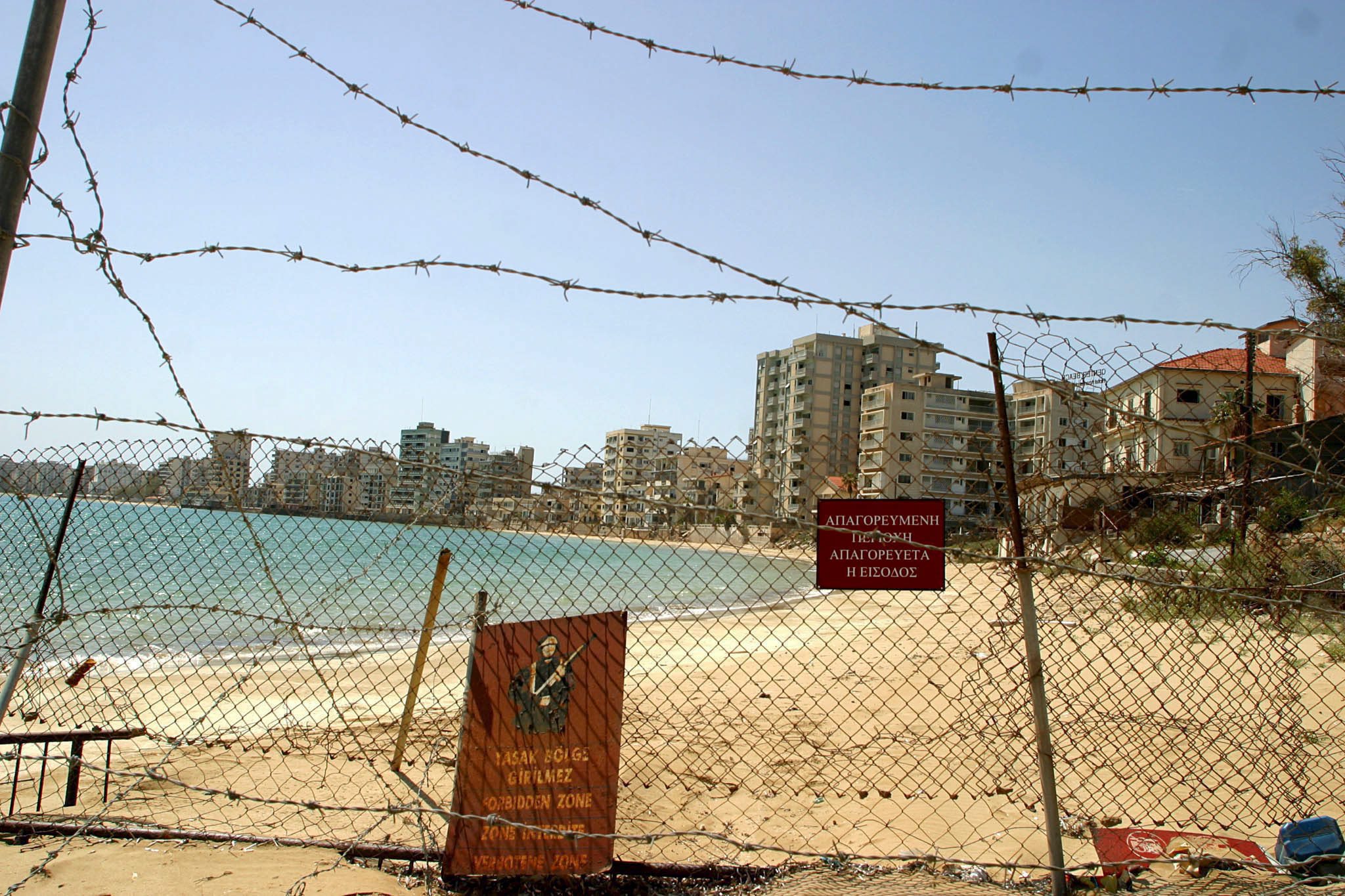
“Why is this the price for handing over Varosha to the UN’s administration? Are these balanced things?” he asked, before pointing out that the same proposal had been put forward in 2006, when Mehmet Ali Talat was Turkish Cypriot leader.
“This formula was presented in 2006 during Talat’s presidency, so 20 years have passed since then, and it has been brought up as if it were a new formula after 20 years. This is something I cannot accept.”
The direct trade regulation is a pending EU regulation which would allow Turkish Cypriot goods, as certified by the Turkish Cypriot chamber of commerce, to be exported directly into Europe via the Green Line, and given preferential treatment inside the European single market as European goods.
It was proposed in July 2004, three months after the rejection of the Annan plan by the Greek Cypriot side in a referendum, shortly after the Republic of Cyprus’ accession to the EU.
Menelaou cites progress of talks on crossing points
On the matter of crossing points, Greek Cypriot chief negotiator Menelaos Menelaou had last week said that a dispute over the routing of the planned transit road between Athienou and the Nicosia suburb of Aglandjia “has been overcome”.
He said that the outstanding dispute now remains over the question of whether a planned crossing point to connect Louroujina, the southernmost Turkish Cypriot village, with nearby Lymbia, will open at the same time.
The Turkish Cypriot side’s position is that the road between Athienou and Aglandjia constitutes two crossing points, one in Athienou and one in Aglandjia, and that they are part of a package of four alongside plans for a crossing point in the eastern Nicosia suburb of Mia Milia, and one in Louroujina.
However, the Greek Cypriot side treats the road between Athienou and Aglandjia as one crossing point, counterweighted by the Mia Milia crossing point, and is therefore of the view that the Louroujina crossing point should only be opened if a second transit road, through the Turkish Cypriot Kokkina exclave in the Tillyria region, also be opened.