
A senior EU official has called for concrete action "in the coming days" to halt renewed fighting in Yemen and salvage the possibility of a political solution.
In an interview with The National, the EU ambassador to Yemen, Patrick Simonnet, warned the recent escalation threatens not only civilian lives but also years of diplomatic progress aimed at ending the conflict.
"Concrete steps are needed in the coming days, rather than weeks, to halt the escalation, protect civilians and ease their suffering," he said.
As Yemen faces renewed hostilities and mounting uncertainty over its political future, Mr Simonnet stressed that military action alone cannot end the country's protracted conflict.
“The path to a political settlement has unfortunately become more difficult, but it remains essential," he told The National. "The challenges have grown, but so has the urgency of finding a political solution that delivers lasting peace for Yemen and security for its neighbours."
"Military developments may change the situation on the ground, but they cannot, on their own, resolve the underlying political differences or deliver lasting stability," he added.
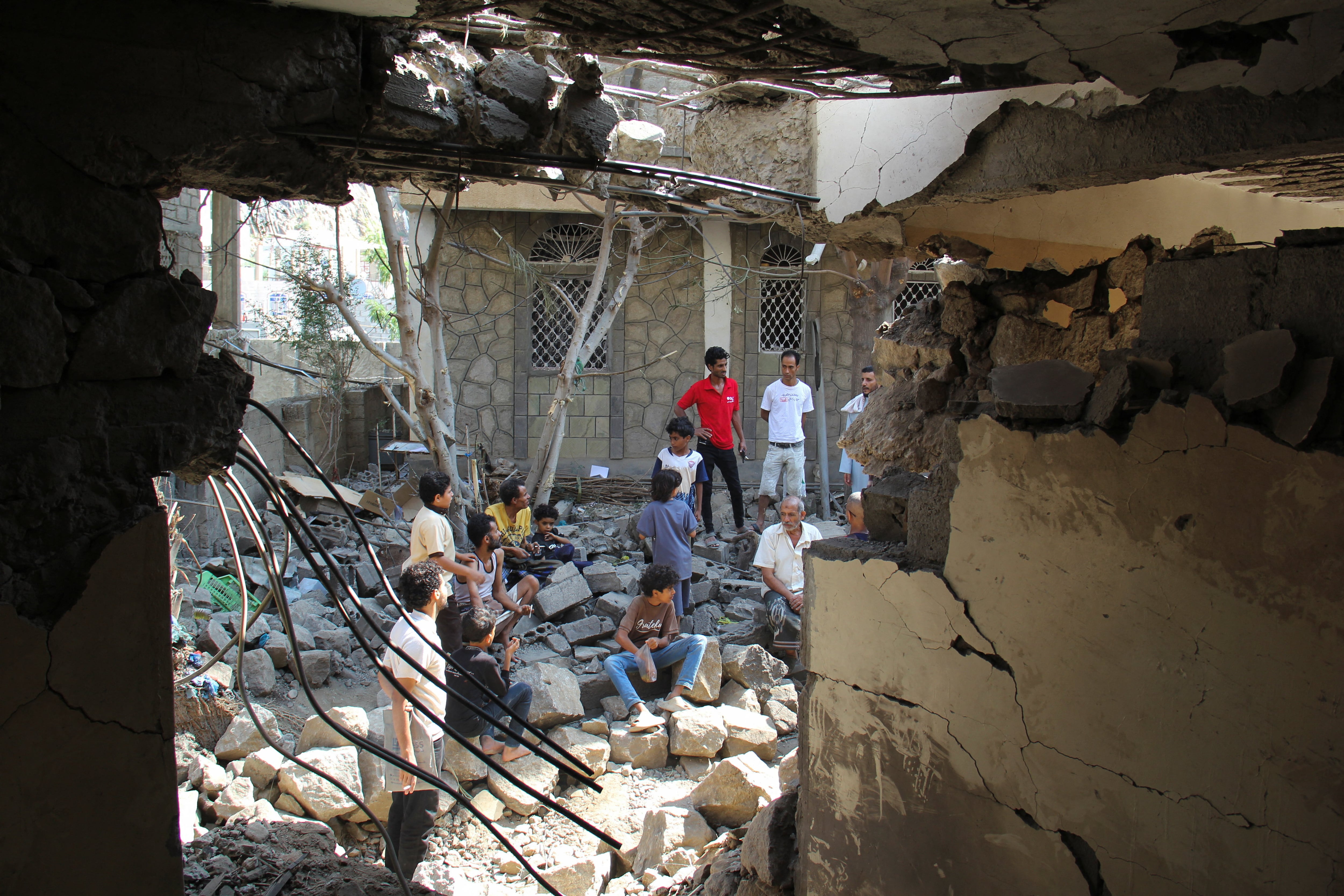
The ambassador's warning comes amid a sharp escalation in fighting in Yemen that has threatened to unravel years of relative calm following a UN-brokered truce in 2022. On October 9, UN special envoy Hans Grundberg warned that Yemen had "slid back into full-scale war", with hostilities spreading across multiple front lines.
Yemen's already fragile peace process was tested in February when it became entangled in the wider regional conflict involving the US, Iran and Israel.
The latest Houthi escalation began in July when the rebels launched a campaign and seized Yemen’s western coast. The Yemeni government and the Saudi-led coalition responded with air strikes and a counter-attack, while the Iran-backed Houthis intensified strikes on Saudi cities at an unprecedented pace.
They have since launched deadly attacks on Saudi civilian airports, oil installations and military sites, turning the kingdom into a pressure point in the wider regional war.
The Houthis have been fighting the Yemeni government since seizing Sanaa in 2014. Saudi Arabia intervened in 2015 at the head of a coalition of regional allies to support the government against the rebels.
But de-escalation beyond the country's borders would not, on its own, resolve its internal divisions, Mr Simonnet said.
"Yemen’s conflict has its own roots, but it has become increasingly intertwined with regional tensions. Both dimensions must be addressed," he told The National. "Regional de-escalation would help, but Yemen still needs an inclusive political settlement that addresses Yemenis’ own concerns and aspirations. We must therefore keep Yemen’s political process alive."
Humanitarian fall-out
Beyond the need for a political settlement, Mr Simonnet stressed that Yemen's humanitarian crisis and the needs of its people must not be overlooked amid growing international concern over regional security.
"Yemen has returned to international attention, but sadly because of renewed escalation and its implications for regional security. The concern is that this attention focuses primarily on missiles and shipping routes, while Yemenis’ political aspirations and daily needs receive less consideration," he told The National.
"Families need food, clean water, health care, education and a reliable income. They also need a credible prospect of peace. Keeping those priorities at the centre of our engagement is essential," he added.
The ambassador emphasised the need to "translate renewed international attention into sustained engagement with Yemen’s people, its economy and its institutions".
"Humanitarian assistance must reach those who need it, and Yemenis must have a meaningful voice in shaping their country’s future," he said.
The latest escalation has compounded Yemen's humanitarian crisis, displacing more than 250,000 people since June 2026, according to UN figures. Mr Simonnet expressed deep concern over Houthi attacks in Aden and the prolonged siege of Taiz, which has further restricted access to scarce essential supplies.
"We have strongly condemned the attacks on the Maashiq presidential compound and Aden airport, and called on the Houthis to immediately lift their siege of Taiz and allow food, water, medicines and fuel into the city. These attacks must stop, and civilians and civilian infrastructure must be protected," he told The National.
Mr Simonnet said the bloc remains committed to supporting Yemen's government and people, with an immediate focus on efforts to end the escalation, protect civilians and address growing humanitarian needs.
On Sunday, the EU announced the allocation of €22.5 million in humanitarian aid to Yemen, in addition to the €87.5 million previously allocated for 2026, to "address the consequences of the renewed conflict escalation and the critical needs of millions of people".