By Muhammet Kemaloglu | AzerNEWS
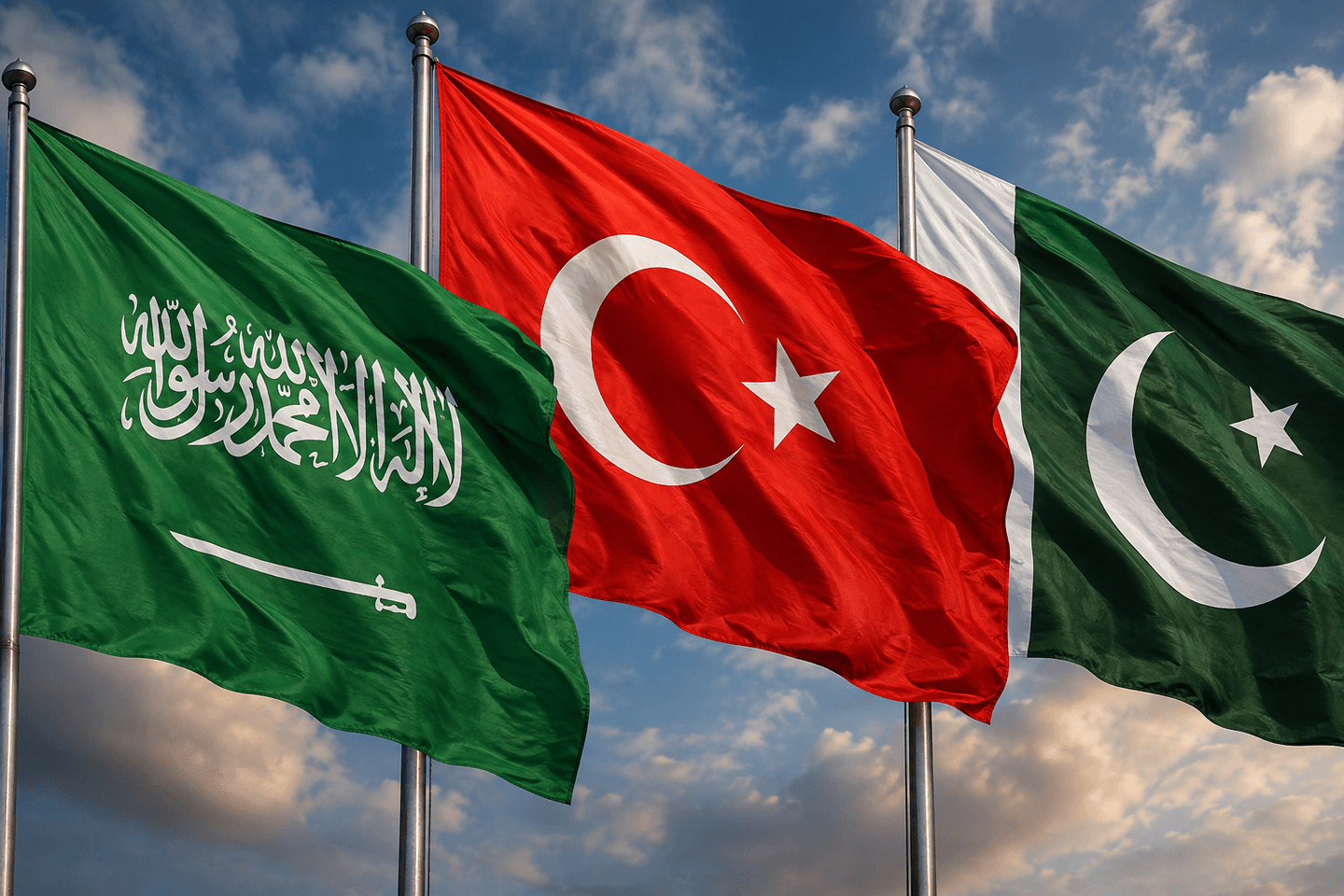
The signing of the Mecca Joint Defence Agreement by Türkiye, Saudi Arabia and Pakistan on 7 August 2026 looks like a more promising and significant development in regional security. Presented as a means of strengthening collective deterrence, the pact could deepen military cooperation, expand defence industry partnerships and give the three countries greater strategic weight. But it also raises a question that will become more important with time: how can Türkiye strengthen its security without compromising its freedom to make independent decisions when a crisis erupts?
The agreement, whose text contains 16 articles, has now been submitted to the Turkish parliament for ratification. Its provisions deserve scrutiny because the consequences of security commitments often become apparent only when governments face difficult choices. [The pact and its ratification process have been reported by Reuters and Al Jazeera.]
Thus, the most consequential provision is Article 2, which states that an armed attack originating outside the territory of one party shall be considered an attack against all. The parties are expected to assist the country under attack, making use of the means available to them.
The principle is familiar from collective defence arrangements such as NATO. Its purpose is to discourage aggression by making an adversary consider the possibility of confronting several countries rather than one.
For Türkiye, this could offer meaningful advantages. Saudi Arabia brings substantial financial resources and regional influence, Pakistan contributes extensive military experience, and Türkiye possesses a sizeable armed force and an increasingly sophisticated defence industry. Together, the three countries could expand intelligence sharing, improve military coordination and develop technologies that would be expensive or difficult to produce independently.
However, collective security is only as straightforward as the decisions required to implement it.
The agreement does not explicitly require Türkiye to declare war automatically or send troops into every conflict involving another member. The nature of assistance, however, could become a source of disagreement. What happens if Riyadh considers an incident an existential threat while Ankara believes that military escalation would make the situation worse? What if Pakistan seeks assistance during a confrontation with India, a country with which Türkiye must also consider its wider diplomatic and economic interests?
These are not predictions that such crises will occur. They are questions that any serious defence arrangement should answer before a crisis begins.
In addition, Article 1 requires cooperation to safeguard the parties’ independence, sovereignty and territorial integrity, including the use of necessary means when these are threatened. Other provisions cover counterterrorism, joint military exercises, troop deployments, intelligence sharing and logistical assistance during peace, war and extraordinary circumstances.
Each form of cooperation can serve a legitimate security purpose. Intelligence sharing may help prevent attacks; joint exercises can improve preparedness; and logistical cooperation can strengthen military resilience. But the practical boundaries matter.
The term ‘objective assessment’ in the agreement’s mutual assistance framework raises questions about how threats will be evaluated and how disagreements will be resolved. Article 14 provides for disputes to be settled through consultations and negotiations, rather than setting out a clearly defined independent arbitration mechanism.
That leaves room for diplomacy, but it also makes political judgement crucial. In a rapidly escalating confrontation, a government may face pressure from its partners to demonstrate solidarity even when its own assessment of the situation differs.
Türkiye’s challenge will be to ensure that consultation does not become an expectation of automatic compliance. A defence partnership should strengthen a country’s ability to protect itself, not make it harder to distinguish its own security needs from those of its allies.
Weapons, investment and the cost of commitment
The economic dimension may prove as important as the military one. Article 7 encourages defence industry cooperation, joint production, research and development, innovation and technology sharing. For Türkiye, this offers opportunities to expand exports, attract investment and develop domestic capabilities.
Saudi financing and Pakistan’s military experience could complement Turkish manufacturing and engineering expertise. If structured effectively, joint projects could generate jobs, support research and reduce production costs.
But the value of a partnership cannot be measured by investment announcements alone. The critical questions concern who owns the technology, where production takes place, how intellectual property is protected and whether Turkish companies gain durable capabilities rather than simply fulfilling external procurement requirements.
There is also a legal distinction between the defence agreement and the commercial contracts signed under it. Withdrawal from the pact would not automatically cancel every project, nor would a change of government necessarily invalidate existing contractual obligations. Compensation, termination rights, delivery commitments and dispute settlement would depend on the terms of individual agreements and the applicable law.
For a country seeking greater strategic autonomy, these details matter as economic interdependence can strengthen an alliance, but poorly structured commitments can also make political choices more expensive.
So, Article 16 provides that the agreement will remain in force indefinitely once it enters into force following ratification by all parties. A party may withdraw only after ten years from that date, giving the others at least three months’ written notice through diplomatic channels.
The distinction between signing and entry into force is essential. The ten-year period does not necessarily begin on 7 August 2026; it begins when the agreement enters into force under its ratification provisions.
Nor does the clause mean that a future Turkish government would be unable to change its wider foreign policy for a decade. Withdrawal from the agreement is different from deciding how to respond to an individual request for assistance while it remains in force.
Nevertheless, the arrangement creates a long-term strategic commitment. Article 16 also states that withdrawal or termination will not affect previously agreed ongoing activities or projects, while confidentiality obligations continue after withdrawal.
A future government could therefore inherit commercial commitments, military cooperation arrangements and sensitive information-sharing obligations apart from a defence framework. And the precise consequences would depend on the agreement’s implementation and the terms of the relevant contracts.
The real test will come during a crisis
Consider a confrontation between Saudi Arabia and Iran, or a major escalation between Pakistan and India. Türkiye could face competing demands: support an ally, prevent a wider war, preserve economic relations and avoid becoming directly involved in a conflict that threatens its own security.
The choices would not necessarily be limited to fighting or refusing assistance. Intelligence, equipment, air defence, logistics, diplomatic mediation and direct military participation are different forms of support, each carrying its own risks. The agreement’s practical arrangements and Türkiye’s domestic legal requirements would be central to determining what could be provided.
The same principle applies to a conflict involving non-state armed groups or a cyberattack against critical infrastructure. Governments will need clear rules for deciding when an incident triggers collective obligations and what response is proportionate.
The agreement’s provision preserving existing international obligations also matters for Türkiye’s NATO membership and its other partnerships. Ankara will need to manage the relationship between its new commitments and its established security responsibilities without assuming that the interests of all its partners will always coincide.
Moreover, the Mecca pact could become a useful instrument of deterrence, technological development and regional diplomacy. Its success should not be judged solely by the strength of the language used at its signing or the scale of the investments announced afterwards.
The more important test is whether it makes Türkiye safer while preserving its capacity to act according to its own national interests.
That requires transparent parliamentary scrutiny, clear rules governing military assistance, effective oversight of intelligence sharing and careful assessment of the financial risks attached to joint projects. It also requires an honest public debate about the difference between defending an ally and assuming responsibility for a conflict.
Ultimately, a defence agreement is not simply a document exchanged between governments. Its consequences can extend to soldiers deployed abroad, families waiting for their return, businesses exposed to regional instability and future governments obliged to manage decisions made by their predecessors.
Türkiye is right to seek partners and strengthen its defences. But the value of an alliance lies not in the number of obligations it creates, but in whether those obligations protect the country without needlessly narrowing its choices.
The central question is therefore not whether Türkiye should cooperate with Saudi Arabia and Pakistan. It is whether the partnership can deliver greater security without leaving Ankara facing a future in which the costs of saying no become almost as consequential as the costs of saying yes.
------
The views and opinions expressed by guest columnists in their articles may differ from those of the editorial board and do not necessarily reflect its views.