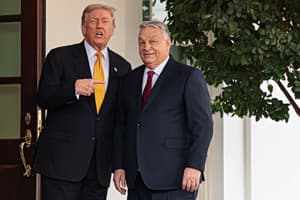

Officials in the Trump administration are advocating former Hungarian Prime Minister Viktor Orbán for the post of UN secretary-general, according to the Wall Street Journal. In an editorial published Sunday, the newspaper’s editorial board wrote that sources from three countries confirmed the administration’s backing. According to the WSJ, the US encouraged Orbán to enter the race and even brought him the idea in the first place. The plan still awaits a final decision, and Euronews notes that the White House, Moscow and Beijing have not confirmed the information.
A State Department official admitted to the WSJ that the idea sounds crazy at first. However, Russia and China are believed to support it, based on previous talks with Washington, and the plan is for Orbán to be the joint candidate of the three countries. As officials from the US and a second country told the newspaper, when the United States, Russia and China all want the same thing at the UN Security Council, they usually get it.
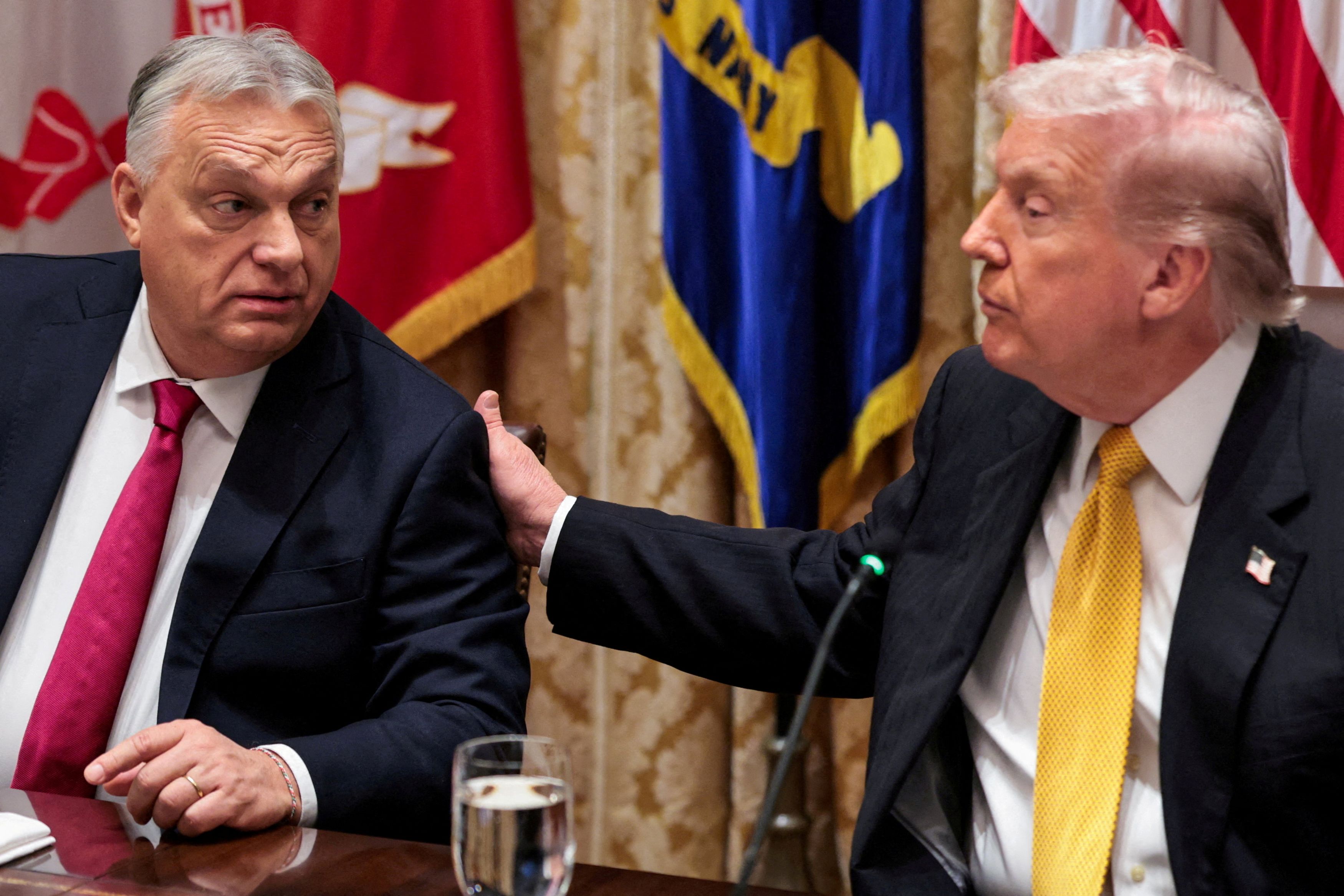
U.S. President Donald Trump hosts a bilateral lunch with Hungary’s Prime Minister Viktor Orban at the White House in Washington, D.C., U.S., November 7, 2025. REUTERS/Jonathan Ernst/File Photo
Tusk: “Just As Funny”
Polish Prime Minister Donald Tusk dismissed the report on Monday. According to Politico, Tusk smiled when asked about it and said he had not heard about it. “Just a moment ago, he was a candidate for president of the European Commission. This seems to me just as funny as that first rumor,” Tusk said, referring to an earlier false claim that Orbán would become Commission president.
NEWSLETTER TABLE TALK
Never miss a story.
Subscribe now.
The most important news & topics every week in your inbox.
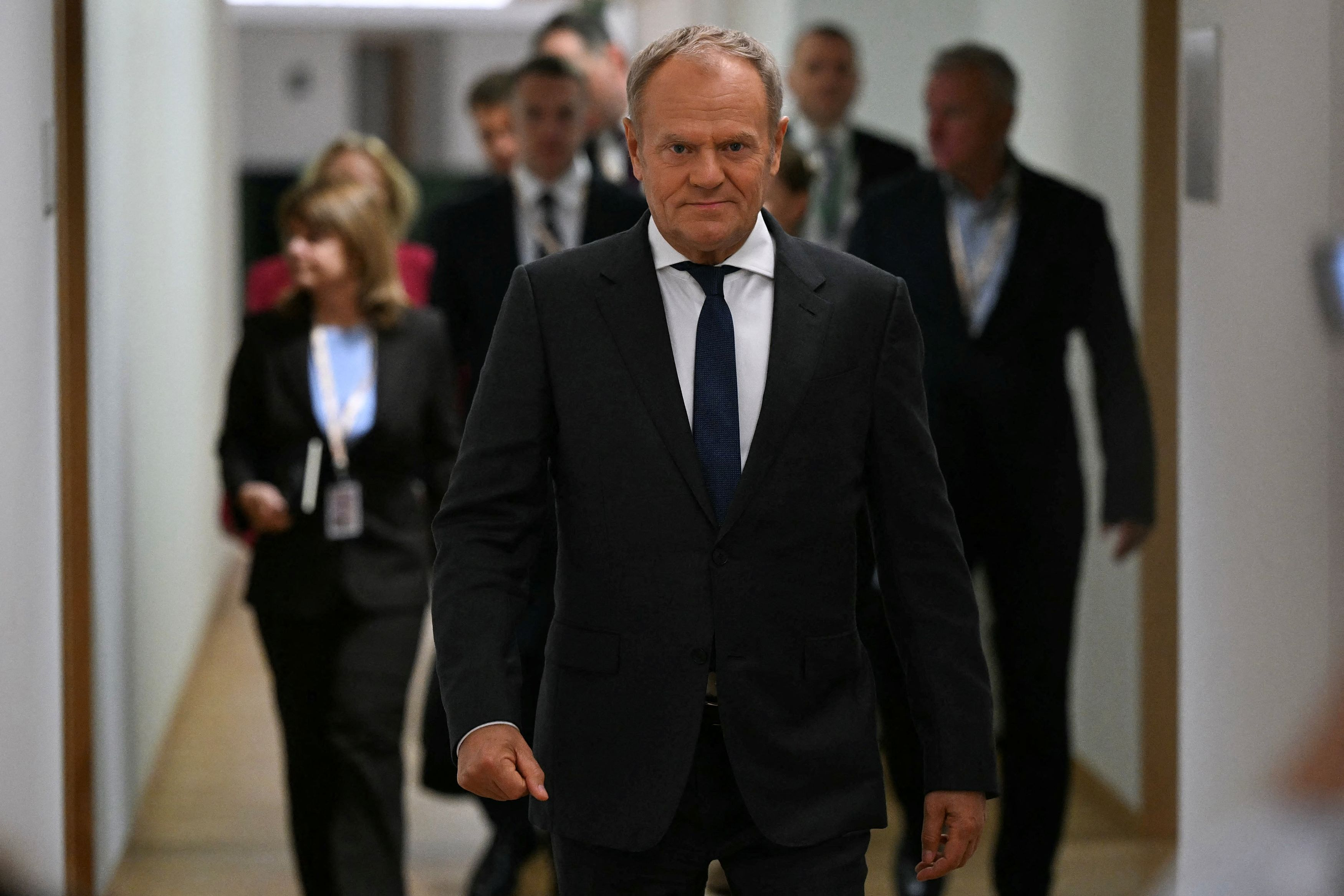
Poland’s Prime Minister Donald Tusk arrives to meet Ukraine’s President Volodymyr Zelensky (unseen) on the day of a bilateral meeting on the sidelines of an EU summit in Brussels on October 15, 2026. NICOLAS TUCAT/Pool via REUTERS
Why Washington Wants Orbán
According to the WSJ, Orbán’s name kept coming up as US officials discussed who they would like to see lead the UN, and Chinese and Russian counterparts agreed. Eventually, US officials asked themselves why not Orbán himself.
The State Department official called Orbán “the dream MAGA-conservative candidate.” This is largely due to his moves against mass migration, liberal NGOs and Hungary’s left-leaning courts and press. The official added that Orbán has the right ideology, knows how to exercise power in the face of hostility and would not be intimidated by the UN establishment. An official from a second country told the newspaper that the rest of the field is heavy on “secretary,” meaning candidates with international bureaucratic or behind-the-scenes diplomatic experience, while Orbán would be a “general.”
iefimerida notes that Trump has publicly called himself a “big fan” of Orbán, and that members of his administration, such as Vice President JD Vance, have repeatedly praised his anti-immigration and anti-“woke” political model. Accordingly, Orbán serves as a “bridge” for the Trump administration to Moscow and Beijing, as well as a lever of pressure within the EU.
Trump had endorsed Orbán in Hungary’s April election and Vance campaigned for him. Both are expected to back him again if he enters the UN race, although, according to a third source familiar with the process, an announcement has been held back until after the US midterm elections.
The WSJ editorial board itself was critical of the idea, arguing that Orbán would act as an apologist for Vladimir Putin and other dictators, and that his pro-China stance never damaged his image as a defender of Western civilization.
Orbán’s Position
According to the WSJ, US officials contacted Orbán to gauge his interest and found him receptive, though with reservations as a nationalist politician. He does not want to run unless he is confident he can win, a scenario that Euronews describes as currently unlikely. Orbán declined to comment to the WSJ.
Euronews said it contacted Orbán’s spokesperson but had not received a response. The spokesperson had previously dismissed press reports about Orbán running for the post of deputy secretary-general as “fake news.”
From Defeat In Hungary To A UN Bid
Orbán lost power in Hungary’s parliamentary election on April 12, 2026, when Péter Magyar’s Tisza party defeated him after 16 years of government with an absolute majority, as Euronews notes.
According to Euronews, his hard-right, strongly anti-migration and eurosceptic policies, together with the decline of the rule of law in Hungary, strained relations with Western allies, including the EU and NATO. Nevertheless, he maintained close ties with Trump, Putin and Chinese President Xi Jinping.
Euronews also reports that, since the election, Hungarian authorities have launched fraud and corruption investigations into several members of Orbán’s former government. Two former ministers and the former governor of Hungary’s National Bank are under arrest, and authorities could also examine Orbán’s possible involvement in those cases. In May, the investigative newsletter VSquare reported that a UN position could be important for the former prime minister because of the diplomatic immunity that comes with the role.
How The Selection Works
The second five-year term of the current secretary-general, António Guterres, ends on December 31. By then, the 15 members of the Security Council must agree on a candidate who secures at least nine votes in favor and no veto from any of the five permanent members: China, France, Russia, the United Kingdom and the United States.
The State Department official told the WSJ that Orbán could count on eight Security Council votes “comfortably,” with 10 within reach. iefimerida reports that France and the United Kingdom could veto his candidacy, while the WSJ notes that the two countries are usually cautious in using their veto power.
The Rest Of The Field
According to iefimerida, in the latest indicative vote on Friday, none of the seven candidates managed to avoid a negative vote from at least one of the five permanent members. Following a geographic tradition that is not always respected, Latin America is claiming the post this time, and many countries are pushing for a woman to lead the UN for the first time.
Rebeca Grynspan of Costa Rica, 70, head of UN Trade and Development (UNCTAD), came first in that vote. She was followed by Carolyn Rodrigues-Birkett, 53, former foreign minister of Guyana, and Argentina’s Rafael Grossi, 65, head of the International Atomic Energy Agency (IAEA).
The WSJ reports that Lana Nusseibeh, a diplomat from the United Arab Emirates, entered the race last week. She will answer questions on Tuesday, and a new Security Council straw poll will be held on Wednesday. New candidates, such as Orbán, can still enter the race at any point.