Uganda to unveil sobering Food Security Report with focus on Karamoja
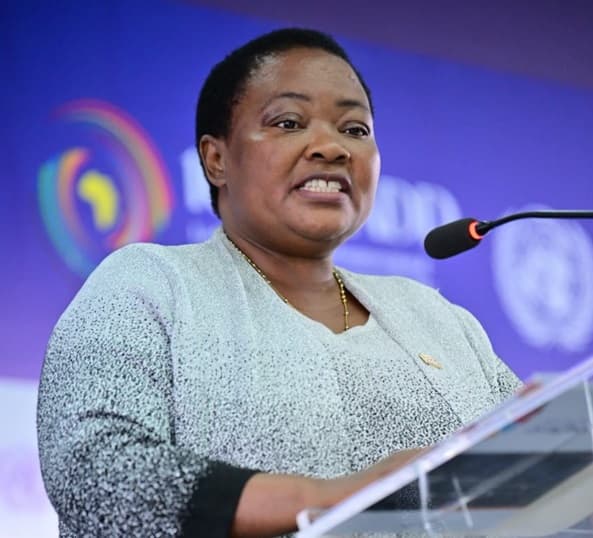
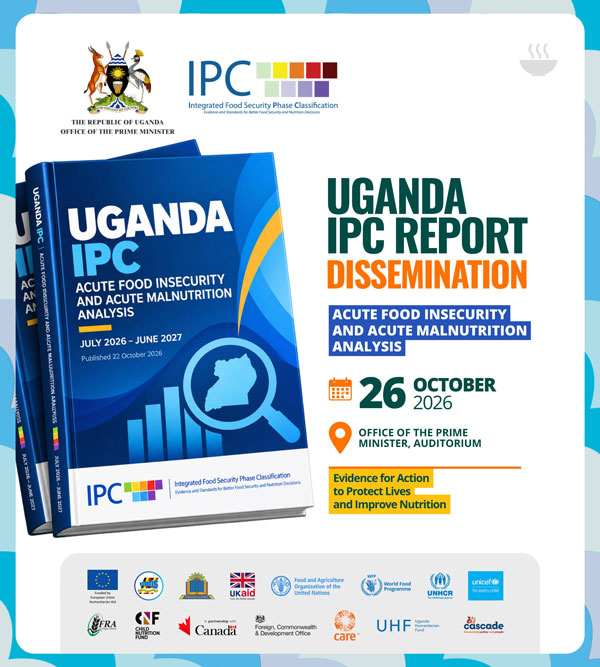
Kampala, Uganda | THE INDEPENDENT | Prime Minister Robinah Nabbanja will this morning release the latest Integrated Food Security Phase Classification (IPC) analysis at the Office of the Prime Minister, alongside the Ministers of Agriculture, Health, and Disaster Preparedness. The report paints a picture of a nation grappling with climate shocks, economic pressure, and shrinking humanitarian lifelines.
The report is expected to outline that approximately 3.6 million people, or 17 percent of the analysed population, are currently in Crisis or worse (IPC Phase 3+) between July 2026 and January 2027. This figure is projected to surge to 4.4 million, or 21 percent, during the lean season from February to June 2027.
The nutrition picture is equally alarming: 529,000 children aged 6 to 59 months are acutely malnourished and need treatment, including 103,800 severe cases. An additional 327,700 pregnant and breastfeeding women are acutely malnourished.
The Karamoja sub-region remains the epicentre of concern. El Niño-induced dry spells have wiped out crops and pasture, leaving 673,000 people, or 42 percent of the region, in Crisis or worse. This is the highest level recorded since 2018 and represents an increase of 200,000 people since March 2026.
At the heart of today’s event will be a call to action. The Prime Minister is expected to urge scaled-up food, cash, and nutrition assistance, prioritising Karamoja, refugees, children under five, and pregnant and breastfeeding women. The report also calls for expanded screening and treatment of acute malnutrition and the prepositioning of supplies such as ready-to-use therapeutic food before the rains cut access. Beyond immediate relief, it stresses the need for strengthened health services, immunisation, and disease surveillance, particularly for malaria, diarrhoea, measles, and cholera, alongside improved water, sanitation, and hygiene.
Crucially, the report warns that sustained donor funding and stronger coordination across government and partners are essential. Without it, conditions will worsen significantly in the February to June 2027 lean season, and children and mothers will pay the highest price.
Refugees and Host Communities Under Strain
The report will indicate that Uganda’s generous refugee policy is buckling under financial strain. While refugee settlements host 642,000 people in Crisis, the population in emergency has risen sharply from 16,000 to 62,000. The overall decline masks a troubling shift: those in Emergency (Phase 4) nearly quadrupled, suggesting that while some refugees have recovered, the most vulnerable are sinking deeper. The report notes that about 63 percent of refugees receive no food or cash assistance, and funding is only secured until December 2026. Meanwhile, refugee-hosting districts have seen the number of people in Crisis more than double to 756,000 as hosting pressure grows.
The report cites a familiar but devastating cocktail: El Niño dry spells, crop pests, livestock disease, and high food and fuel prices. In Karamoja, household food stocks were expected to last only about seven days. Food assistance in Karamoja reached 1.1 million people in August 2026. From October through February, it will cover roughly 74,000 people a month, about 10 percent of those in urgent need.
The analysis was conducted by the Uganda IPC Technical Working Group, bringing together the Office of the Prime Minister, the Ministry of Agriculture, Animal Industry and Fisheries, the Ministry of Health, the Uganda Bureau of Statistics, and the Ministry of Water and Environment, alongside UN agencies including FAO, WFP, UNICEF, and UNHCR. Technical and NGO partners include FEWS NET, World Vision International, OXFAM GB, Action Against Hunger, and Makerere University’s Institute of Statistics and Applied Economics. The European Union and WFP Uganda provided financial and technical support.
The post PM Nabbanja to outline plans to improve food security and end malnutrition appeared first on The Independent Uganda:.