•Tinubu seeks to cut energy costs, boost manufacturing through Gas Master Plan
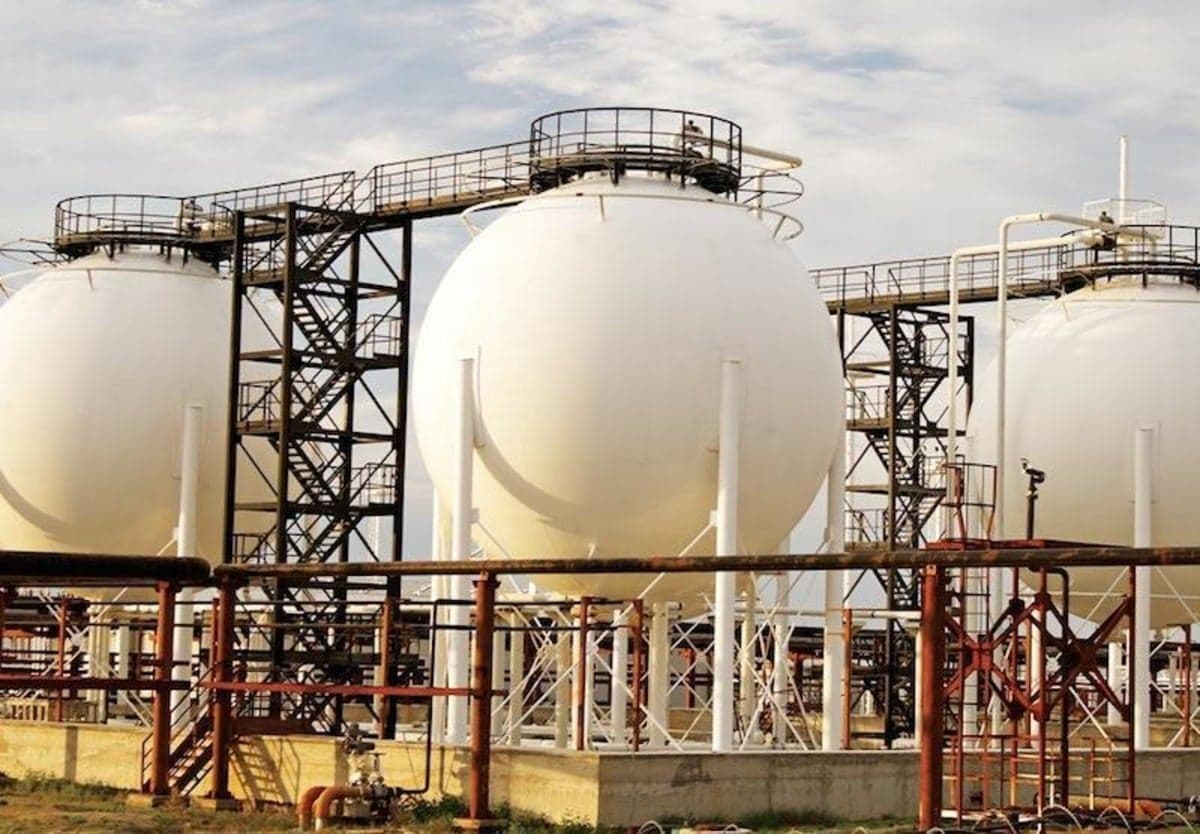
The Federal Government says it is targeting 12 billion standard cubic feet of natural gas production daily, by 2030, as the part of efforts to address Nigeria’s energy supply challenges, strengthen manufacturing and accelerate industrialisation.
Under the Gas Master Plan 2026, President Bola Tinubu, said his administration planned to raise output to 10 billion standard cubic feet per day by 2027 before reaching 12 billion standard cubic feet by 2030, placing increased emphasis on domestic gas utilisation, electricity generation and industrial development.
The president unveiled the plan, on Monday at the 20th anniversary of OTL Africa Downstream Energy Week, held in Lagos.
Represented by the Permanent Secretary, Ministry of Petroleum Resources, Mrs Patience Ojekunle, the president said Nigeria’s proven gas reserves of more than 250 trillion cubic feet offered significant opportunities to transform the economy, provided the country could attract investment in production, processing, transportation and distribution infrastructure.
Tinubu said the government’s ambition is to move beyond exporting raw energy resources to building a domestic industrial economy that uses natural gas to power factories, generate electricity, produce petrochemicals and support transportation.
“Gas will power industries, support electricity generation, expand CNG and LPG utilisation, strengthen LNG exports, and provide feedstock for petrochemicals and other gas-based industries,” she said.
The president described natural gas as both an engine of industrialisation and a bridge towards a cleaner, more secure energy future, adding that reforms under the Petroleum Industry Act were designed to improve transparency, commercial viability and investor confidence.
However, hestressed that meeting the production targets would require more than increased output, as inadequate infrastructure, financing requirements and the need to connect gas resources with consumers remain critical considerations.
Chief Executive, Nigerian Upstream Petroleum Regulatory Commission (NUPRC), Mrs Oritsemeyiwa Eyesan, similarly emphasised the importance of strengthening domestic hydrocarbon supply to support refining, gas utilisation and industrial growth.
She said Nigeria recorded average production of 1.717 million barrels of crude oil and condensate per day in September 2026, a 2.34 per cent increase over August.
“Crude oil production alone averaged 1.53 million barrels per day, marking the fifth consecutive month Nigeria met or exceeded its OPEC production quota,” Eyesan who was represented at the forum said.
She attributed the improvement to better asset integrity, enhanced security of evacuation infrastructure, closer collaboration with operators and efforts to restore production from shut-in assets.
She also disclosed that more than 127 million barrels of crude oil and condensate were delivered to Nigerian refineries between the first and third quarters of 2026.
However, she said that the commercial disagreements under the willing-buyer, willing-seller arrangement had initially affected deliveries to local refiners.
To address the challenges, she said the commission was engaging producers and refiners over pricing benchmarks, transportation costs and payment terms, while consultations continued on a proposed domestic crude swap framework.
The arrangement, she said could allow refiners to obtain crude from the nearest suitable production or export point, potentially reducing transportation costs by $3 to $4 per barrel.
The commission’s chief said it was also working with the Nigerian Midstream and Downstream Petroleum Regulatory Authority to align crude supply planning with refining demand.
Meanwhile, Chairman of the OTL Advisory Board, Otunba Adetunji Oyebanji, said Africa’s downstream petroleum industry had undergone significant transformation over the past two decades, shifting gradually from import dependence and managed pricing towards local refining and regional trade.
He cited the development of large-scale private refining capacity in Nigeria, alongside infrastructure expansion in other African countries, as evidence of the sector’s changing structure.
Oyebanji, however, warned that uneven infrastructure, foreign exchange constraints and continued import dependence in some markets remained obstacles to a more resilient regional energy system.
He also said geopolitical tensions, shipping risks and global supply chain disruptions had increased freight rates and cargo costs, complicating the operations of downstream businesses.
He urged industry stakeholders to develop practical solutions that balance environmental objectives with Africa’s industrial requirements and consumers’ purchasing power.
Speaking, Special Adviser to the President on Energy, Olu A. Verhijen,
said reforms had begun reshaping the downstream market by encouraging domestic refining, private investment and competition.
She disclosed that government efforts had helped mobilise more than $2 billion in private investment in downstream gas over the past three years.
She, however, identified affordable gas, regulatory certainty and regional integration as priorities for the next phase of the reforms.
According to her, expanding access to gas would require completing infrastructure that connects production centres with power plants, industries, households and transport operators.
She added that predictable regulations and consistent enforcement were necessary to attract long-term investment, while regional integration could enable Nigerian refined products, gas and technical expertise to reach wider African markets.
The presidential representative said the African Continental Free Trade Area offered opportunities to strengthen Nigeria’s position in regional energy trade.
She stressed that the success of the reforms should be measured by their impact on employment, skills development, household welfare and business productivity.
“A secure energy system that leaves citizens behind is neither stable nor sustainable,” she said, calling for targeted interventions to protect vulnerable households and support small businesses.
WATCH TOP VIDEOS FROM NIGERIAN TRIBUNE TV
- Relationship Hangout: Public vs Private Proposals – Which Truly Wins in Love?
- “No” Is a Complete Sentence: Why You Should Stop Feeling Guilty
- Relationship Hangout: Friendship Talk 2025 – How to Be a Good Friend & Big Questions on Friendship
- Police Overpower Armed Robbers in Ibadan After Fierce Struggle