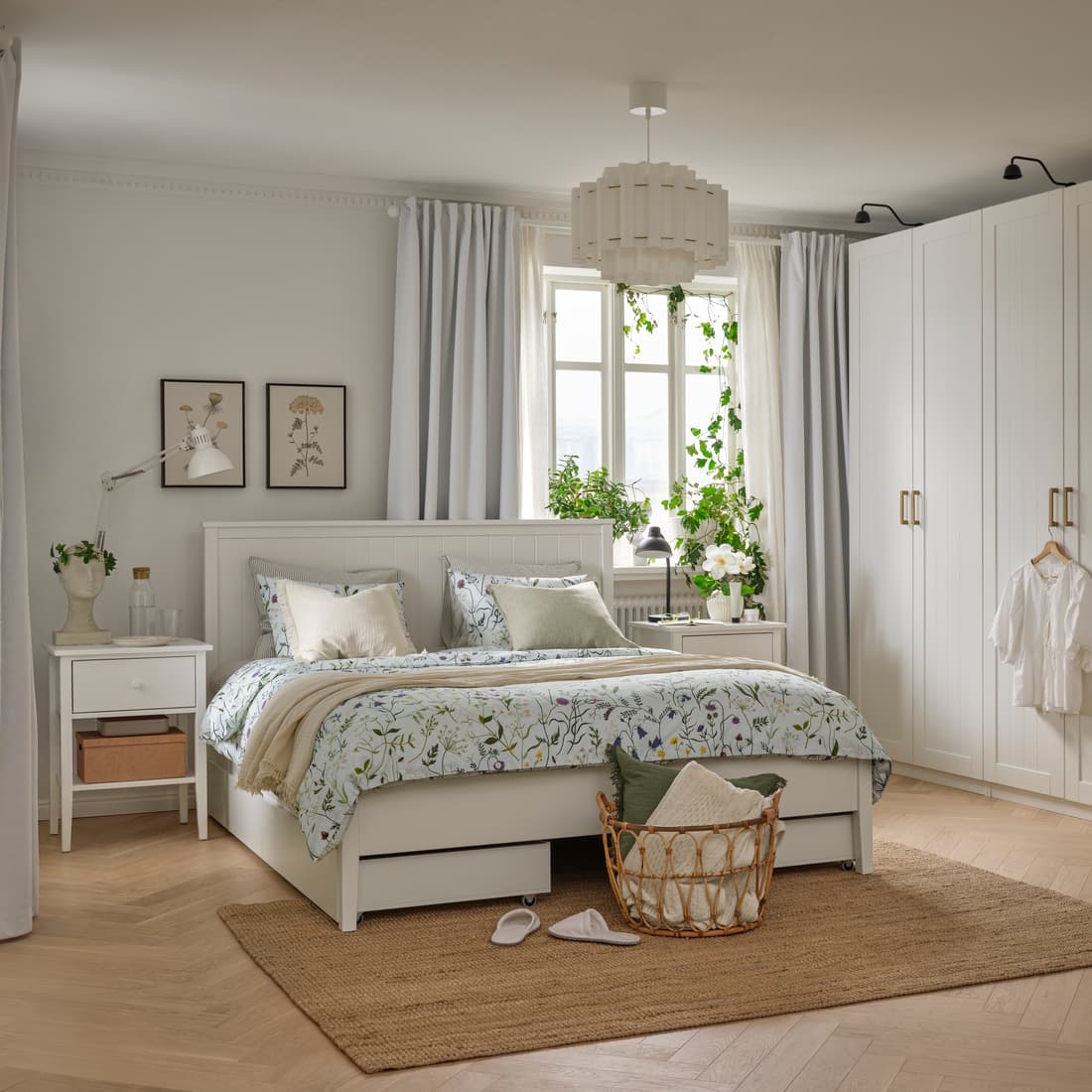
I’ve often wondered how much of my life I’ve spent in repose. Not merely resting, but genuinely asleep—face down, starfished, curled around a pillow… The estimate is startling: over a typical lifetime, we spend roughly 25 to 30 years asleep. That’s a third of a life spent in bed, which perhaps makes the bedroom less of a physical space and more of a long-term relationship.
And like any good relationship, it should make you feel supported.
A great bedroom is not only about beautiful linen, a soothing colour palette and soft lighting. It’s more about the moment your head meets the pillow and your body poses one simple question: am I comfortable here? And there’s an art to answering that question.
IKEA suggests six factors shape the quality of your slumbers—and, by extension, your energy, health and mood the next day. Comfort comes first, and it’s also the most personal ingredient, for there’s no universal ‘best’ mattress, there’s only the one that understands your individual way of entering dreamland. Your sleeping position matters. Your body shape counts. Whether you share the bed with a partner, a pet or a small child—all of it’s significant.
Yet the goal is simple: your spine should stay naturally aligned, while the heavier parts of your body, such as your shoulders and hips, should sink just enough to relax. Done right, falling asleep should feel effortless. Done badly… perhaps we shouldn’t even go there. Side sleepers, for example, usually do better on a medium-firm mattress with softer zones that allow shoulders and hips to sink while the spine stays level. Stomach sleepers need something firmer to keep the spine’s natural curve intact and spare the neck and lower back from overnight protest.

And then there’s the question of body weight. Lighter sleepers often find softer mattresses more comfortable, while mid-to-heavier sleepers generally need firmer support. If you’ve ever spent a night in a foreign bed and woken with stiff shoulders, aching hips and a lower back filing a formal complaint, you can already relate to the importance of your choices.
Meanwhile, the material of your mattress turns the search into something even more personal. Latex, IKEA notes, offers pressure relief with a resilient, breathable feel. Pocket springs respond to movement and allow air to circulate. Memory foam wraps around the body and absorbs the motions you create when you roll over at 2 am. Personally, a foam mattress is what allows me to dream. I like the body-contouring comfort and its ability to absorb my movements as I shift during the night. I’ve never slept on a hybrid mattress—memory foam combined with high-resilience foam, pocket springs and comfort zones for even weight distribution—but I confess, I’m curious.

Next to consider, there’s the mattress-pad: the bed’s quiet over-achiever. I’ve never owned one myself, but I’m told it can make a bed feel softer, fresher and altogether more inviting. It also protects the mattress beneath it and can be removed easily for airing and cleaning. Is there anything more satisfying than climbing into a freshly-made bed at the end of a long day?
After which, you have the sleeping pillow—deceptively small, secretly powerful. I’m definitely a hug-your-pillow sleeper. One pillow for the head, one for the arms. For the head, I would choose an ergonomic pillow any day; just because I toss and turn enough and they come in a shape that keeps me comfortable, whichever direction I end up facing. For this purpose, I always choose a classic cotton, down-and-feather pillow: soft, breathable and faintly nostalgic. Feathers remind me of my childhood—and of beds that seemed impossibly high and wonderfully inviting. Nowadays, though, there’s a pillow for everyone’s needs: soft or firm, thick or thin, contoured, cooling, ergonomic or gloriously oversized. The right one keeps your neck aligned with your spine which, as medical science reminds us, we can’t be too careful to protect.
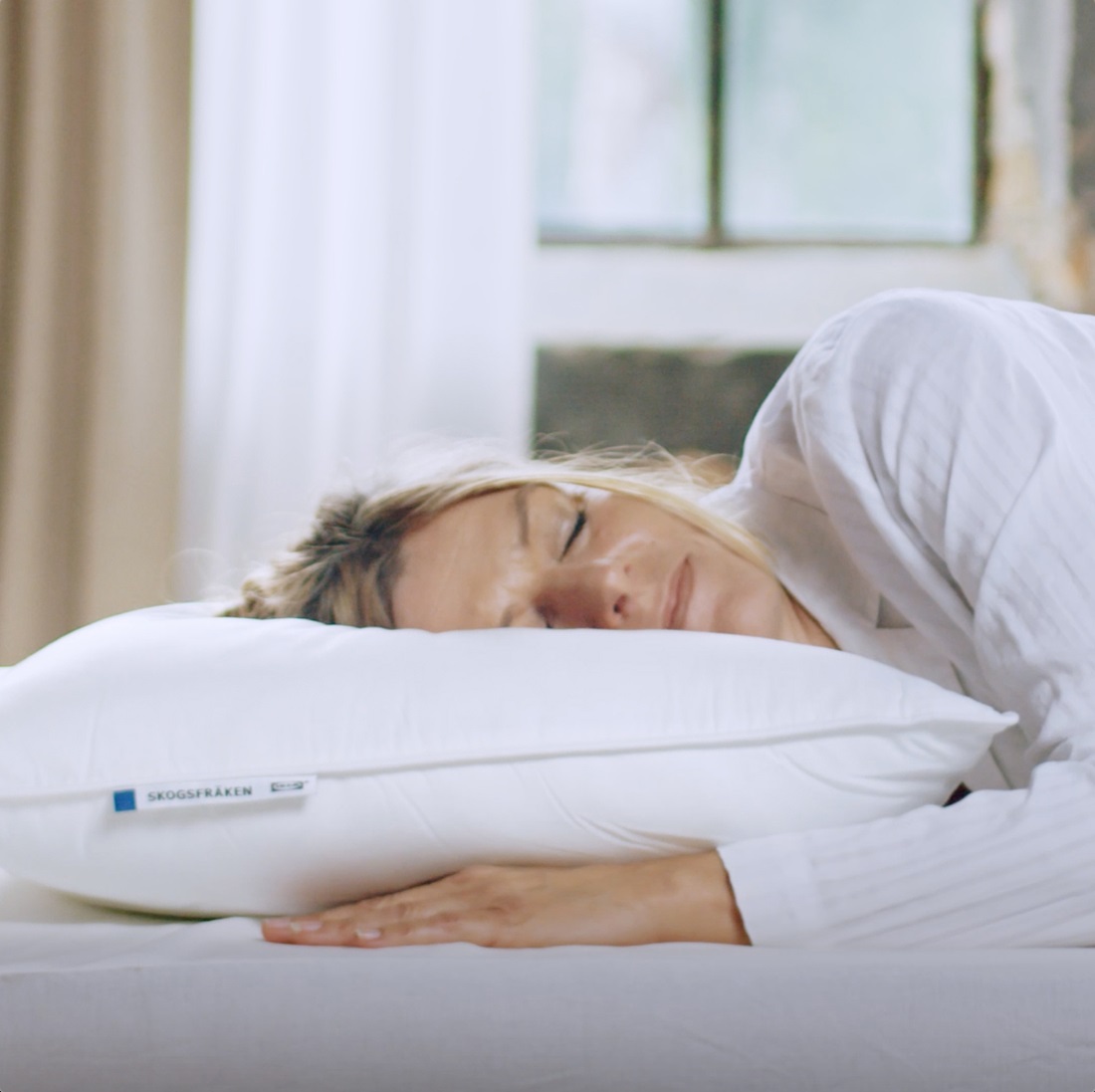
Mind you, whether or not your mattress rests on a panel bed, divan, platform bed or even a bunk bed—irrespective of it being single, double, queen- or king-sized—the bed itself is only part of the story. To turn a bedroom into a sanctuary for sleep, IKEA highlights five more elements: organisation, lighting, temperature, sound and air quality. Most of us already sense this intuitively. The bedroom is where the day quietly ends. Dim, warm lighting helps. Breathable bedding assists. A tidy surface inspires. But, beneath the sheets, the real foundation remains the same: a mattress and pillow working together to support your natural posture. Because if we’re going to spend decades in repose, we may as well do it properly—with all the senses comfortably supported — and a pillow worth hugging.
