
This past July, Pro Patria became the first Italian club Estrella Football Group acquired: Football Italia sits down with Estrella’s co-founder and President, David Dwinger, to learn more about the group’s plans for the club and how the project reflects its wider vision for football.
Success in football can take many forms. It can mean lifting trophies on the pitch, building a sustainable club, or developing a thriving youth academy that nurtures the next generation of talent.
Coming from a family of Dutch champions and Olympians, David Dwinger understands the dedication and sacrifice required to compete at the highest level. Through Estrella Football Group, his goal is to create the environment and foundations that allow that potential to flourish.
In July, Estrella Football Group acquired Pro Patria, its third club after Portugal-based Cascais SAD and Carvoeiro United.
“We started off buying Cascais because it was just a childhood dream to have a football club,” Dwinger says in an exclusive interview with Football Italia.
Estrella Football Group is a European football investment company developing a horizontal multi-club ownership model.
Rather than imposing a rigid hierarchy, the model lets clubs remain independent while benefiting from shared knowledge, operational resources, and long-term planning. The ultimate mission is to create an environment where their clubs can compete at a higher level while strengthening their foundations for long-term growth.
With a strong background in sport tech companies, David and Estrella Group have been looking for the next standard, the next club, since they bought Cascais in 2024.
“In digital worlds everything is scalable. You just add more servers, and you can scale to the next 100,000 customers. In football, that’s different,” he says.
When the company announced it was looking to buy another club after Cascais, about 100 signed up, so Estrella started to set its own criteria: “We started looking at the country, the city, the catchment area and of course, the finance, a big part of it,” David says.
“Then the people who work there and the history. We effectively started building our first set of criteria, which I think now contains 45 criteria, and we built a tool.
“That’s how we started gathering information,” he continues.
“Currently, I think we have over 3,000 clubs in our tool. Predominantly from Europe. Predominantly from football countries. But Italy is a bigger football country than others, of course.”
The process starts long before formal negotiations. When a club makes contact, Estrella Football Group analyses a wide range of available data using its proprietary platform. A strong overall assessment opens the door to more detailed discussions about a possible investment.
So, what stood out about Pro Patria, an Italian Serie D club based in Busto Arsizio, in the region of Lombardy?
“I really liked the history as well as the close proximity to Milan. There’s, of course, a lot of football going on there,” David says.
“I liked the context, which is very difficult as a criterion. But it’s very important to us. So, the context, in this case, specifically of Luca Bassi, who is very important for us as a partner, because he’s effectively our equal partner.
“He is from the city. He’s very much emotionally attached to the club, and that brings a lot of value to us. We also see the potential there, and the infrastructure is quite good. The stadium may be a bit old, but there’s room to grow.
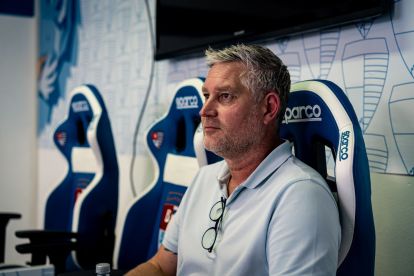
“It should be a Serie C club, of course. And we see the potential to bring it at least to Serie B. Probably not in the next two years. But it has that potential.”
The Estrella Football Group has four macro-areas that describe the types of clubs they could acquire.
There are ‘Brand clubs’, where the location makes the difference: “Beautiful places, like where I am today,” David says from his office in Cascais.
“Technically, this club can’t get beyond the fourth division in the current location. So, that’s a big issue. The reality is that I can’t go beyond a certain level, but it will never lose the location or the name.
“Then we look at academy clubs, which are very strong for their youth departments,” David continues.
“Then we look at performance clubs, which for us are the clubs which could have the potential to already be on a pro level, like Serie A, or Serie B.
“And then we look at fallen angels. They’re closely related to performance clubs, used to be big clubs, and have been struggling over the last few years.
“Pro Patria, for me, sits between a performance club and an academy club.”
And the academy focus should not be overlooked; quite the opposite. A key feature of Estrella Football Group, in fact, is the balance between collective support and local autonomy. On the one hand, clubs within the group share resources and best practices, but, locally, they continue to develop their own sporting project, keeping a strong connection with supporters and local communities.
“I feel that the academy is the base of a club. So, I think we need to have a strong academy with the potential to make these guys really become pro players,” David says.
“In the end, that’s what you dream of when you’re a little boy, right? You like to play football. You like to play with your mates, train, have fun, and enjoy it.
“My son used to play at the Ajax academy and for me, that’s the starting point. A club needs a strong academy to grow. Not every player will make it to the first team, but my ambition, and Estrella Football Club’s, should be to achieve the highest growth from the academy to the first team.
“I think our clubs should be known for giving out youth contracts,” he continues.
“I’d like to have it broader because I believe once we do that, it adds something to your club, to the infrastructure and, very importantly, to the scouting model. If you are known for that, then the scouting becomes inbound. So, we need to change that youth model, that academy model.”
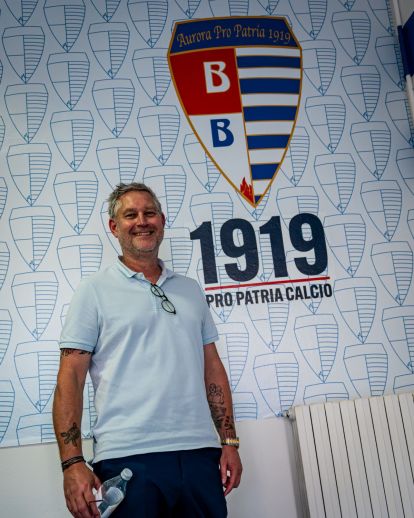
Every city, every region, every country has its own story, but what challenges and opportunities does investing in Italian football present?
“Exceptions, of course, are everywhere, but I see a lot of Fallen Angels. It feels like a high percentage of clubs in Italy are Fallen Angels, maybe more than in the Netherlands or Spain. It feels like it, maybe because we look at Italy a lot.
“What I would really like to ensure is that clubs like Pro Patria, especially now that we’re involved, become really stable and not opportunistic.
“There’s a lot of culture, a lot of emotion. So we should build it up even more, right? Imagine showing movies on the pitch, like an open-air cinema, and that movie night also gives you a free ticket to the next match. Or organising gala dinners at the stadium.
“And we can build content around that, and that content allows us to attract more eyeballs and get people to buy shirts in countries which are maybe even close to Italy. It’s exactly what’s happening all year in Portugal. I truly feel we can do that because Pro Patria isn’t coming from nothing, right?
“We need to win everything, sure. But then there’s also realism and building a system that is sustainable, as self-sustainable as possible.”
The project is about building a solid network and sharing expertise and opportunities, which will lead to success on the field. It’s not about millions of euros in new signings.
“I don’t believe in it,” David says.
“I want to build a system and a foundation which works to ensure that the club will be here for 100 more years. When we focus on the business side, it positively affects what’s happening on the field.
“I want to be promoted, but not just for the sake of promotion. I want promotion because we’ve done everything well. And that should result in promotion.
“And that the business side and business intelligence and structures and frameworks all complement the drive to win. And actually, we’ve seen that work a couple of times now.
“I want to win. We’re all entrepreneurs as well, so I’m always surrounded by people who want to win, but we want to work directly with the club’s local teams, because that’s where the local knowledge sits, the cultural understanding.
“Working with [Pro Patria President] Rosanna [Zema] and [Sporting director] Giovanni [Giovanditti], and then the new head of youth, Augusto [Splendore], and Luca [Bassi], who’s based in London.
“We want to work with the local teams. We do that for all the clubs. And then we implement our tooling.”
Each club works locally, but how do they share information and knowledge and, ultimately, help each other grow?
“We’ve built an application called ClubOS. It’s an operating system for a football club,” David says.
“It sits in every department, which we implement at all our clubs. External clients also use it. We’ve got a couple of pro clubs in the Netherlands using that tool, and we’re now rolling it out for Europe.
“We’ve got a lot of ideas,” David continues.
“We can do Estrella tournaments. The logical part is player training, player pathways, youth. But also from the staff perspective.
“For example, two years ago, the staff of Cascais went to Atletico Madrid for two days to work with their technical staff. And of course, Atletico is not an Estrella club, but it is a client of one of our applications. So that ecosystem, that network, is what we’re always trying to optimise and implement.
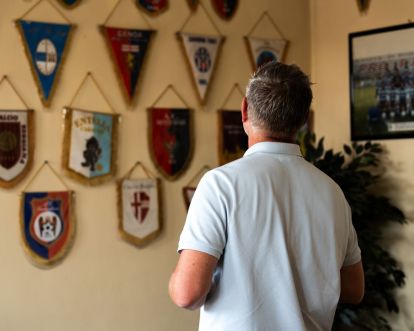
“There’s a lot of knowledge per football club, which is within the walls of a football club and doesn’t really get out. We want to optimise that knowledge within our clubs, not just dictate from our side.
“We have strong opinions on how to run a football club, but we miss the local details. So this is how we work together.
“I think it will be great to start setting up Estrella events where all the staff come together. One year we go to Pro Patria, the next year we go to a club in Portugal, and now we’re working on a club in Austria and the UK. So that’s all very specific knowledge with a lot of people with a lot of experience.”
There are already projects taking shape, involving Pro Patria as well.
“These are very early conversations. But we are looking at the pitch at Pro Patria, which could use improvement. We are fairly closely connected to a very large Dutch company, TenCate, which creates pitches.
“They actually have a plant and a factory in Italy, so we’re now in conversations with them on maybe starting a partnership with Estrella, so that all the Estrella clubs can get a great pitch from them.
“It’s the same we’ve done with the ticketing system, or x the GPS system. These are all partners for Estrella.”
A fairly small team runs all of Estrella’s management. The daily work involves David’s two ventures, founding partner Alessandro Nuccetelli, Estrella co-founder and CEO Xander Czaikowski, former CEO of PEC Zwolle in the Netherlands, and Global Sports Director Cristiano Piccini, a former Italy international and Valencia defender.
“We deliberately want to keep Estrella core team as small as possible. Because every euro I spend on a new guy is not going towards buying a football club,” David concludes.
“Estrella’s goal is to buy five clubs per year. We believe that with our horizontal MCO, we’re the world’s first horizontal MCO, and that if we put the clubs next to each other, rather than stacking them on top of each other, this one becomes less important than the top one. We want to do it like this. That means that with every club we add, we add something else to the flywheel.”