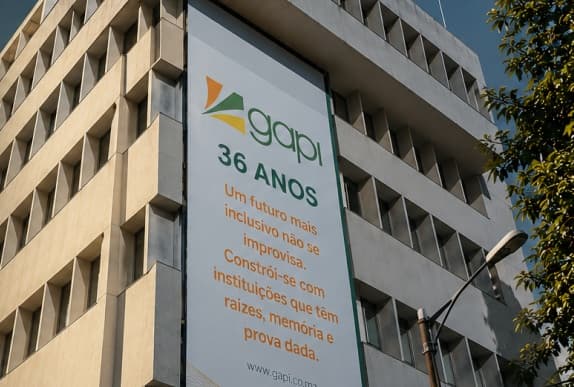
- The new Strategic Plan foresees mobilizing $80 million and supporting approximately 9,700 companies by 2030. The government entrusted the institution with managing a $17 million credit line for post-flood recovery.
Gapi – Sociedade de Investimentos is strengthening its financing for micro, small and medium-sized enterprises (MSMEs), expanding its presence in the national territory and mobilizing new public, private and international resources, within the scope of the Strategic Plan 2026–2030 (Gapi2030), approved by shareholders at an Extraordinary General Meeting held last September.
The decision to update the institution’s strategy, incorporating a new vision focused on the economy and impact investing, gained new momentum during the celebrations of its 35th anniversary in March 2025. On that occasion, the President of the Republic, Daniel Chapo, praised the role played by Gapi in the economic and social development of Mozambique, highlighting its contribution to financial inclusion, entrepreneurship and job creation.
During the same ceremony, the Chairman of the Board of Directors, Rafael Uaiene, highlighted the need to prepare Gapi for a new stage of development, through the elaboration of a Strategic Plan capable of responding to the economic and social challenges of the country.
This process included holding a strategic seminar in May 2026, with the participation of shareholders, managers, and national and international experts in development finance and impact investing.
The new strategy aims to mobilize the equivalent of $80 million in blended financing, support approximately 9,700 MSMEs , and contribute to the creation of more than 57,000 direct jobs and approximately 199,000 indirect jobs by 2030.
The Plan also establishes the expansion of the business financing and training network from 37 to 50 units and the strengthening of the institution’s own funds to approximately 1.6 billion meticais.
The government entrusts Gapi with managing $17 million for post-flood recovery
One of Gapi’s most recent interventions is the management of a credit line of approximately 17 million dollars, contracted by the Government to support the recovery of agricultural and livestock activities affected by the 2026 floods.
The financing line, which began operating at the end of August, is the result of a partnership with the National Fund for Sustainable Development (FNDS) and is intended for producers and companies linked to agro-industrial chains in the provinces of Cabo Delgado, Niassa, Nampula, Zambézia, Tete, Manica, Sofala, Inhambane, Gaza and Maputo.
Under the terms of the contract, Gapi is responsible for ensuring the fiduciary, operational, and financial management of the resources, intended for the recovery of productive activities and the restoration of the economic capacity of the beneficiaries affected by the floods.
This intervention exemplifies Gapi’s participation in the implementation of development financing programs promoted by the Government, in coordination with national and international partners.
The national network granted 380 million meticais in credit in 2025
With 36 years of activity, Gapi has a network that, by the end of 2025, comprised 15 branches, 10 agencies and 12 business incubators, ensuring service coverage in 110 districts of the country.
During that fiscal year, the institution granted 1,123 new loans, totaling approximately 380 million meticais. The Northern region accounted for 47% of the value of the loans granted, with a particular focus on activities related to agribusiness.
In addition to its lending activities, Gapi implemented 20 business capacity development programs in 2025, in collaboration with public entities and national and international partners.
Within the scope of Gapi2030, the institution intends to expand its network to 50 units and provide services digitally in 130 districts, strengthening access to financing, training, and business support.
INCUBOX and AgroVida support young and small producers
Among the programs being implemented, INCUBOX II – From Idea to Business stands out. Funded by the European Union and implemented in collaboration with the Aga Khan Foundation, it promotes youth entrepreneurship in the provinces of Niassa, Cabo Delgado, and Nampula.
The program was officially launched by the President of the Republic during the celebrations of Gapi’s 35th anniversary, with one of its goals being to contribute to the creation of more than three thousand jobs in the Northern region.
By the end of 2025, the initiative would have established and equipped 12 incubators, supporting the creation of 221 companies. The intervention includes entrepreneurship training, technical assistance, business plan development, and support for professional integration.
Another program is AgroVida, developed in partnership with the Aga Khan Foundation and funded by Dutch cooperation, which covers eight districts of Cabo Delgado.
With activities planned until 2029, AgroVida aims to improve the food and nutritional security of 24,500 small producers. By the end of 2025, 1,844 beneficiaries had been assisted and 64 savings and loan groups had been created or supported.
These programs are part of a portfolio of interventions that combines financing, technical assistance, business training, and support for market access.
The state increases its stake and the CTA appoints a new administrator
The approval of Gapi2030 occurs during a phase of strengthening the capital structure and renewing the representation of shareholders in the institution’s governing bodies.
The Mozambican state has made an additional investment of 36 million meticais, increasing its stake in Gapi’s share capital from 8.9% to approximately 18.7%. The capitalization process foresees that this stake could reach 30%, while preserving the presence of private investors and civil society organizations.
In turn, the Confederation of Economic Associations of Mozambique (CTA), a shareholder with the right to representation on the Board of Directors, nominated businessman Aly Lalgy to fill that organization’s seat. The appointment was announced by Gapi on September 9, 2026.
Linked to the transport sector, Aly Lalgy succeeds Jeremias Sitoe, who represented the CTA for the last four years
Gapi’s shareholder structure includes, in addition to the State and the CTA, private investors organized in GapiGest, civil society organizations, namely the Foundation for Community Development (FDC) and the Mozambique Red Cross, as well as managers and technicians represented by Amutzi.
Gapi2030 focuses on new financing instruments and impact investment
The implementation of the Strategic Plan focuses on combining and strengthening the institution’s capital with the mobilization of funding from national and international partners, the development of new financial instruments, and the technological modernization of services.
One of the main guidelines of Gapi2030 is the strengthening of an integrated model that links productive financing to the development of business capabilities. This approach seeks to support companies not only in accessing financial resources, but also in improving their management, productivity, and economic sustainability.
The strategy also aims to strengthen the measurement of the economic and social results of investments made, seeking to link the resources mobilized to the creation of businesses, jobs, income, and development opportunities in communities.
With Gapi2030, shareholders aim to consolidate Gapi as a national impact financing and investment platform, capable of linking public, private, and international resources to the development of productive sectors and economic and financial inclusion in Mozambique.
Source: Gapi