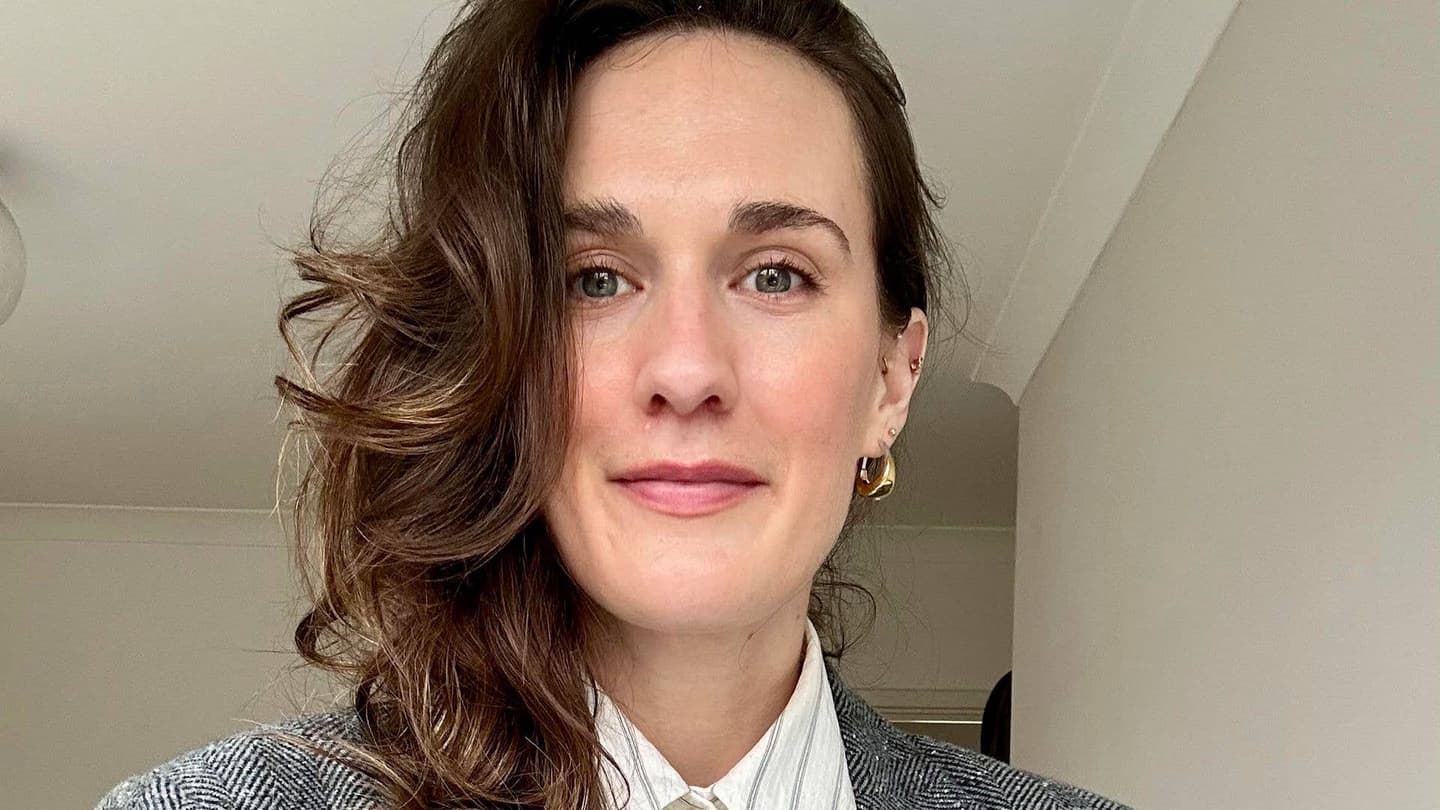
As I’ve gotten older, I’m not as adventurous with colour, print or textures as I used to be. Quite frankly, I feel uninspired every time I open my monochrome capsule wardrobe.
As women age, our bodies change, hormones fluctuate, and we can feel a little uncomfortable in our skin. In some cases, the clothes we once relied on to feel fabulous, don’t have the same effect; certain silhouettes may not feel as flattering as they once did, fabrics feel suffocating, or cause us to overheat, and our confidence slowly dwindles, so we slip into shapeless comfies, and lose ourselves.
For years, we have been told a haircut is the quickest way to reinvent yourself, while motivational speakers encourage us to “dress for the job you want, not the job you have.”
But, what if reclaiming our identity and personality through fashion goes beyond surface-level aesthetics? Enter: enclothed cognition.
 © Maisie Bovingdon
What is Enclothed Cognition?
While donning a power suit, wearing a confidence-boosting colour, or applying a sweep of red lipstick, can make you look confident, it is merely a façade, and doesn’t necessarily reflect how you truly feel. Enclothed cognition takes an inside-out approach to dressing, and encourages people to consider how clothes make them feel, regardless of who’s looking.
Explaining this theory, which has dominated my Instagram FYP for months, Monica Thompson, founder of Style Synergy Studio, explains: “Enclothed cognition is the idea that what we wear can influence how we think, feel and behave. The real benefit is that getting dressed becomes more intentional. Instead of standing in front of a full wardrobe thinking, ‘I’ve got nothing to wear’, ask yourself, ‘How do I want to feel today, and what helps me get there?’”
Interestingly, this theory feels like a simpler method women in their 40s, 50s and beyond can adopt. When we are navigating changes to our body pre, during or post-menopause, among other changes life may throw at us, trying to squeeze into the clothes our younger selves once slipped into easily adds another layer of self-loathing. So, checking in with ourselves, and how we want to feel, encourages us to be kinder to ourselves, especially during later life stages when our self-esteem ebbs away.
Recognise your style has changed
If you have fallen out of love with your wardrobe, it doesn’t mean your fashion sense is dated, and you need to buy lots of new things. When you acknowledge that your wardrobe no longer serves you, instead of longing for your 20-year-old body and wardrobe, recognise that your style has evolved with you, which is something to embrace with excitement. Think of it as an opportunity to study you, rediscover what makes you feel confident, comfortable, stylish, and authentically you.
 © Maisie Bovingdon
The certified Image Consultant reassures us that this disconnect between our age, identity and how we dress happens because “your life has changed, but your wardrobe hasn’t quite caught up.” She adds: “Your body, career or tastes may be different, and the things you used to love simply don’t feel like you anymore.”
This resonates with me. In my teens and 20s, I felt invincible in a mini skirt, colour blocking, geometric prints, luminous bras (God forbid!), and sky-high stilettos. In my thirties, I gravitated towards tailored pieces, structured silhouettes, and muted colour palettes that were versatile, practical and timeless. But, my wardrobe felt like it was lacking. So, I need to strike a happy medium to channel elements of my playful wardrobe, with mature silhouettes, as I embrace my next decade.
How to implement the Enclothed Cognition theory
Analyse your existing wardrobe
Start by going through your wardrobe with a fine tooth comb and cull the items that don’t make you feel good. In doing so, consider why you reach for specific garments when you want to feel your best.
The style guru suggests asking yourself, “what these items have in common: the colour, the fit, the shape, or even the memory attached to them.”
From here you can make more intentional style choices, guide future purchases, and even rediscover pieces you neglected.
Reframe your thinking
Enclothed cognition encourages you to tap into your emotions and consider what you want to feel, before deciding what to wear.
Monica suggests asking yourself three questions:
- How do you want to feel?
- How do you want to come across?
- What would make you excited to get dressed again?
Perhaps a certain colour lifts your mood, a sculpted silhouette makes you feel confident, or a plush knitted jumper handmade by your mum makes you feel safe when you’re anxious.
When women go through “the change”, we can feel an overwhelming sense of self-loathing; we long for our younger bodies that don’t bloat, feel puffy, or overheat at the thought of synthetic fabrics, and our former confidence to brave shorter hemlines. Instead, we need to make a conscious effort to shift our mindset, and consider our midlife wardrobe as an exciting experiment, and part of our evolution.
 © Maisie Bovindon
Feel good
There is nothing worse than wearing an irritating fabric, when we’re already feeling hot and flustered. Hence why it’s important to prioritise fabrics that feel comfortable on the body, so we can feel confident in ourselves too.
Personally, I need soft yet breathable materials that feel gentle against my skin to avoid overheating and getting a rash, which can make me self-conscious, especially during a presentation.
I typically favour a cotton white shirt, or lightweight turtleneck to conceal my blood pressure visibly rising, as well as any sweat patches. This uniform makes me feel polished, supported, covered, and comfortable. It also helps me stay present, concentrate on the task, rather than being distracted by my clothes or my body, and feel confident in my skin.
Colour theory
Colour psychology in clothing associates certain colours with character traits: red is associated with power or passion, and yellow is energy. However, enclothed cognition focuses less on what a colour should represent, rather how a colour makes them feel.
The professional explains: “Putting on something brighter, bolder or a little outside our usual can instantly make us feel more energised and expressive. You often see this on holiday, people naturally reach for more colour, prints and playful pieces because they feel more relaxed and open to trying something different.”
For those who want to “get out of their colour comfort zone” and “dial up the rainbow energy”, Monica recommends having your colours analysed. This can help identify the best hues to suit your complexion, and even encourage you to experiment with colour. While your colour palette doesn’t change as you age, it can “evolve.” She adds: “Hair may become lighter or greyer, skin can change, and your natural contrast may soften, so you might find yourself preferring slightly different depths or combinations than you did years ago.”
Your workout gear can also be a great introduction to experimenting with bold colours and patterns. The style guru weighs in: “Workout clothes can be a cue it’s time to move, yet colour can help shift your mood and make the whole outfit feel more energising.”
In a bid to reintroduce colour into my monochrome wardrobe, I paid attention to the colours that compliment my hair and eye colour, as well as the colour palettes I naturally gravitate towards (outside of black, grey and white). For formal occasions, I tend to favour cool pinks or sky-blue colours, which suit my complexion, and bring out the blue in my eyes, rather than all-black dresses that require a generous dusting of blusher to prevent me looking washed out.
 © Maisie Bovingdon
I have also received a lot of compliments when I’ve worn vibrant red, whether it’s a red blazer, a red funnel jacket, or a rouge lipstick. In true enclothed cognition fashion, these colours make me feel brighter when I step into a room, my posture improves, and I ask more direct questions, rather than shrinking in a corner scoffing canapés. As I get older, I may still wear these colours, pepper them into outfits, or opt for different tones within these palettes, like Monica suggested.
 © Maisie Bovingdon
Subtle changes
For the faint-hearted who fear adding colour into an outfit may draw attention to areas of the body we feel more conscious of as we age, Monica recommends changing “one thing” about your go-to ensemble, rather than investing in a whole new wardrobe.
She suggests: “Swap your usual neutral top for colour, add a bolder accessory, or wear the piece you normally think is a little too much. Sometimes one unexpected choice is enough to make what you already own feel completely different.”
For years, I swore by a pair of black high heeled boots to complete almost any outfit. Recently, I have traded the tired footwear staple for a colourful pair of trainers, or a vibrant smaller block heel. Although it’s a small change, the pop of colour makes a huge difference to a simple outfit, and boosts my confidence, without the expense of investing in a new wardrobe.
Personal anchors
Enclothed cognition also encompasses garments that carry sentimental value or hold memory cues, which can lift your mood and influence how you present yourself.
This notion strikes a chord with me. I wear my mum’s jewellery, and a chain of my dad’s, almost all the time, particularly on difficult days. When I feel anxious and want to feel safe in unsettling environments, such as panel talks or job interviews, wearing their jewellery makes me feel like they’re by my side, facing that challenge with me. I notice my nerves ease, and I’m filled with a sense of comfort, and renewed confidence that I can do anything.
 © Maisie Bovingdon
For others, a specific outfit (or a pair of lucky knickers) may be intrinsically linked to a previous success. So, when you wear that item again, you carry some of that optimism and positivity with you.
Structurally sound
While some settings call for comfort and warrant relaxed silhouettes, other occasions may need you to hold yourself better, which is when I lean into structural outfits.
For me, stiff fabrics, sculpted detailing, shoulder pads, sharp tailoring and structured silhouettes, function as physical cues that force me to improve my posture and carry myself with greater confidence (physically and professionally). Inevitably, when I feel more poised in an outfit, I stand taller, and I feel a wave of confidence take over, which is particularly useful when I want to be taken seriously at work.
With that in mind, my go-to outfits include my beloved H&M three-piece pinstripe “power suit” in the summer, and my Anine Bing Houndstooth blazer in the winter. The latter is made from a rigid fabric, and features exaggerated shoulders, which force me to sit upright.
 © Maisie Bovingdon
I typically pair the blazer with wide leg black trousers, preferably without a pocket, so I’m not inclined to hide my hands, slouch or shrink away.
I’ve relied on this outfit formula on several occasions because it encourages me to channel the confident, organised, and polished professional, instead of the shy journalist crippled with imposter syndrome.
Can you overdo enclothed cognition?
The secret is to relax into this theory, rather than be ruled by it.
Monica warns: “You can overdo it, especially if you start treating colour theory like a strict rulebook. The aim is to understand what works for you, then use that knowledge in a way that still feels personal and instinctive.”
My style reset
After speaking with the Image Consultant, I am making it my mission to carve out five minutes every morning to choose a word (or two) I want to embody when I get dressed.
For an upcoming panel, I want to feel confident, knowledgeable, and professional. So, I’m already considering the garments that ignite those feelings within me, and make me feel empowered. From the fit, colour, texture, and silhouette, to the memories attached, I am carefully evaluating every item against those buzzwords to help me harness those qualities on the big day.
By practicing this enclothed cognition theory over the next few weeks, I’m hoping I will fall back in love with fashion, feel brave enough to express myself by making bold fashion choices, and reconnect with my sparkly younger self, who I’ve diluted over the years, but in a refined way I can maintain as I age.