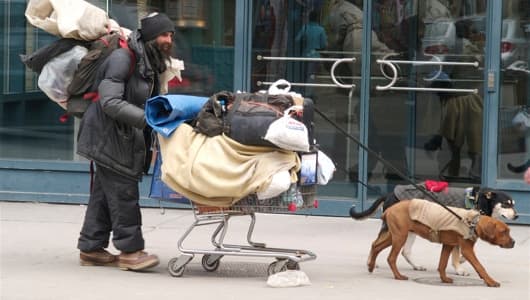
In certain areas of Panama City, one cannot ignore the fact that more people are living on the streets. In the capital alone, the estimate is over 1000 people in this situation. The homeless population in Panama City faces significant challenges related to extreme poverty, lack of affordable housing, and substance abuse. During one year dating from 2023 to 2024, the number of homeless people had more than doubled. Of this number, men were in the larger percentage and the majority of the homeless population suffered from substance abuse disorders. The areas of Panama City that have the highest concentration of unsheltered and displaced people is Curundú, Calidonia, Santa Ana, 24 de Diciembre and Tocumen.
In response, the local government and humanitarian groups have established a network of care, recently marked by a historic milestone in social infrastructure. The Municipality of Panama City opened the “Comprehensive Care Center for the Homeless” (CAIPHAC) located in Las Garzas. The shelter has a capacity for 150 men and 100 women. This is Panama’s first comprehensive care center which offers a safe place to stay, alongside with medical care, psychological evaluations and substance abuse rehabilitation. The center operates through a partnership with the Mayor’s office, the Catholic Archdiocese, The Ministry of Health and The Ministry of Social Development. In Panama, local laws protect individual liberty therefor entry into treatment centers or shelters is voluntary. Those who enter must agree to a detoxification process of about three months as part of the treatment plan. Social workers use digital facial recognition tablets to create electronic medical and social files on-site, offering primary hygiene, food, and options for voluntary shelter.

On the national level, the Exectutive Decree 11 of July 23 (2026) created the Inter-institutional Commission for the Guarantee of Rights and Comprehensive Care of People Experiencing Homelessness in Panama. This decree was published in the Official Gazette. The commission centralizes state action to move away from isolated municipal responses and toward a cohesive national strategy rooted in human rights and social inclusion, coordinating temporary accommodation programs, promoting physical and mental health services, promoting rehabilitation processes, and strengthening opportunities for training, education, and job placement. The decree also recognizes the participation of civil society organizations, foundations, churches, and community groups, with the purpose of joining efforts to serve this vulnerable population.
The post The Reality of Homelessness in Panama. appeared first on Newsroom Panama.