
Spread the word
His death did not come as a surprise to those close to him as he made efforts to secure a worthy representation for him in Afenifere. Blueprint.ng correspondent reflects on his life up to the passage.
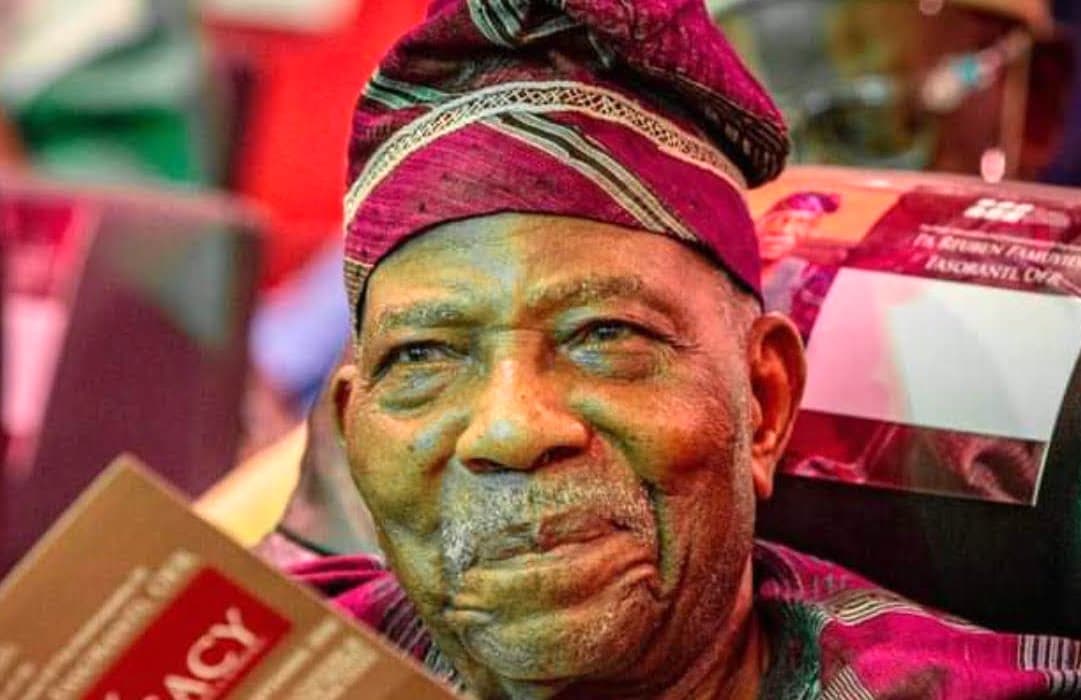
The family of the late pan-Yoruba socio-political leader and elder statesman, Pa Reuben Famuyide Fasoranti, has announced Thursday, December 17, 2026 as the date for his funeral service and interment in Akure.
Fasoranti, who died at the age of 100, was a prominent figure in the Yoruba political establishment, a committed educationist, a pro-democracy advocate and leading voice in Afenifere, the pan-Yoruba socio-political organisation associated with the progressive political tradition of the late Chief Obafemi Awolowo.
His death, announced on Tuesday, October 20, 2026 by Ondo state governor, Lucky Orimisan Aiyedatiwa has triggered an outpouring of tributes from political leaders, traditional rulers, public office holders and other Nigerians who acknowledged his contributions to education, democratic governance and the development of Yoruba land.
The announcement of his burial arrangements comes as attention shifts to the future of Afenifere and the process of consolidating its leadership following the departure of one of its most prominent figures.
Family announces burial programmes
According to the burial announcement issued by the family through Dr Taiwo Fasoranti, the Christian wake-keeping service for the deceased would take place on December 16, 2026 at his residence within the Omolere Nursery and Primary School Compound, Akure.
The funeral service and interment have been scheduled for Thursday, December 17 at St David’s Cathedral, Ijomu in Akure, thereafter interment would follow immediately after the funeral service at the church cemetery, while a reception for guests would take place at the deceased’s residence.
The family has also scheduled an outing and thanksgiving service for Sunday, December 20, 2026, at St David’s Cathedral, Ijomu, Akure.
In the announcement, the family described the deceased as its beloved patriarch, an Afenifere leader and foremost nationalist whose life spanned a century of remarkable developments in Nigeria’s political and social history.
The family also appealed for prayers as it prepares to honour the memory of the departed statesman.
The burial programme is expected to provide an opportunity for family members, political associates, traditional institutions, members of Afenifere and other Nigerians to celebrate a life devoted to public service and the advancement of society.
Aiyedatiwa, other leaders mourn
Governor Aiyedatiwa, who announced Fasoranti’s death, described the late elder statesman as a patriarch whose life was characterised by wisdom, integrity and selfless service.
The governor said the centenarian’s contributions to Ondo, Yoruba land and Nigeria had left an enduring legacy that would be remembered by generations.
He also commiserated with the Fasoranti family, the people of Akure and Ondo state generally over the loss.
Tributes have also come from prominent political figures, including President Bola Tinubu and serving and former governors, who have acknowledged Fasoranti’s place in Nigeria’s democratic evolution.
The head of the Awolowo family, Dr Olatokunbo Awolowo-Dosumu, described his passage as the end of a remarkable era in Yoruba political history, highlighting his longstanding association with the political philosophy of Chief Obafemi Awolowo.
The reactions reflect the extent to which Fasoranti’s influence extended beyond the boundaries of Ondo into national conversations on democracy, governance, regional development and the political future of Nigeria.
From education to politics
Born on May 11, 1926 in Uso, present-day Ondo state, Fasoranti lived through Nigeria’s colonial period, independence, the civil war, successive military administrations and the country’s return to democratic rule.
He trained as an educationist and devoted a considerable part of his life to teaching and the development of educational institutions.
He taught at Ondo Boys’ High School and other institutions before establishing schools, including Omolere Nursery and Primary School and Akure High School.
His commitment to education was reflected in his willingness to support pupils from disadvantaged backgrounds, giving some the opportunity to complete their studies despite financial difficulties.
His educational work became one of the defining aspects of his public life, reinforcing his association with the progressive philosophy that placed education and social welfare at the centre of public development.
Fasoranti later became involved in politics through the Action Group, the political party associated with Awolowo and subsequently remained connected to the Unity Party of Nigeria (UPN) during the Second Republic.
Between 1979 and 1983, he served as commissioner for finance in Ondo under the administration of the late Governor Michael Adekunle Ajasin.
His public service placed him among the political figures associated with the implementation of progressive policies in the old Western Region and its successor states.
Beyond partisan politics, he became known for his involvement in Afenifere and his participation in efforts to defend democratic governance during periods of military rule.
His political journey, which spanned several generations, positioned him as a link between the early progressive movement and contemporary Yoruba political advocacy.
Fasoranti and Afenifere tradition
Afenifere occupies an important place in the political and socio-cultural history of Yoruba people.
Its ideological roots are closely associated with Awolowo’s political philosophy, particularly the principles of social justice, educational advancement, accountable government, federalism and the welfare of ordinary citizens.
Over the decades, the organisation served as a platform for discussing Yoruba interests, Nigeria’s constitutional structure, regional development and the protection of democratic institutions.
Fasoranti’s emergence as its leader placed him within a succession of influential figures who helped to sustain that political tradition.
His leadership, however, also coincided with disagreements within the organisation over political alignments, leadership authority and the direction of its engagement with national politics.
Those disagreements became particularly visible during the 2023 presidential election period, when different tendencies within Afenifere expressed divergent positions on presidential candidates.
The differences illustrated the challenges facing an organisation whose influence rests partly on its ability to reconcile competing views while maintaining a common ideological identity.
Nevertheless, Fasoranti remained a significant figure in Yoruba political discussions until his death.
His passing has therefore reopened questions about institutional continuity, reconciliation among different tendencies and the future direction of the organisation.
Who succeeds Fasoranti?
One of the major questions following Fasoranti’s death is about who would succeed him as Afenifere leader.
Recent developments have placed Kabiyesi Olaitan Oladipupo at the centre of efforts to consolidate the organisation’s leadership.
An online report monitored on October 24, 2026, stated that Afenifere had announced the consolidation of its collective leadership under Oladipupo, presenting the development as an effort to strengthen unity and preserve the organisation’s political and socio-cultural heritage.
Oladipupo is not a newcomer to Afenifere as he has previously served in leadership positions within the organisation and has also been associated with its longstanding advocacies for restructuring and true federalism.
His emergence comes against the background of previous disagreements and competing leadership claims within the organisation.
In February 2025, a faction associated with the late Pa Ayo Adebanjo announced Oladipupo as its leader following Adebanjo’s death. The appointment was initially described as acting, with the intention that he would become substantive leader after Adebanjo’s burial.
The latest reported consolidation under Oladipupo therefore represents a significant development in Afenifere’s continuing search for leadership stability.
However, the distinction between leading Afenifere and being the universally recognised leader of the entire Yoruba nation must be maintained.
Yoruba land comprises numerous traditional institutions, socio-cultural organisations, political groups and community associations, each with its own structures and constituencies. No single individual is universally acknowledged as the sole leader of all Yoruba people.
Consequently, Oladipupo’s emergence should be understood within the context of Afenifere’s leadership arrangements rather than as an uncontested succession to an all-encompassing Yoruba leadership position.
The extent to which the latest arrangement would bring lasting reconciliation among different tendencies within the organisation remains an important question for its members and observers.
Challenge of unity/reconciliation
The transition following Fasoranti’s death presents Afenifere with both an institutional challenge and an opportunity.
For an organisation with a long history of political advocacy, the preservation of its relevance will depend on its ability to maintain internal cohesion, articulate clear positions on national issues and engage constructively with changing political realities.
One immediate challenge is the management of disagreements without allowing them to undermine the organisation’s collective identity.
Another is the need to maintain the confidence of younger generations while preserving the historical ideals associated with the progressive movement.
The organisation must also continue to clarify its positions on constitutional restructuring, federalism, security, education, economic development and the protection of democratic institutions.
These issues have remained central to debates about the future of Nigeria and the role of regional and socio-cultural organisations in shaping national policy.
Fasoranti’s departure provides opportunity for Afenifere to reflect on its historical responsibilities and determine how best to sustain its influence in a changing political environment.
Whether the leadership consolidation under Oladipupo would produce lasting unity will depend on the extent of consultation, institutional discipline and reconciliation among the organisation’s different tendencies.
A legacy that extends beyond politics
Fasoranti’s legacy is not limited to his political activities or his position within Afenifere.
His work in education, his involvement in public administration and his association with Nigeria’s pro-democracy movement formed important parts of his contribution to society.
His century-long life also provided a personal link to several defining periods in Nigeria’s history.
For the people of Ondo state, particularly in Akure and the surrounding communities, his passing represents the loss of an elder whose influence extended into education, public affairs and community life.
For Afenifere, it marks the departure of a leader whose name became closely associated with the organisation’s modern history and for the wider Yoruba community, it renews discussions about the preservation of political traditions, the responsibilities of elder statesmen and the need for effective institutions capable of sustaining collective aspirations beyond the lifetime of individual leaders.
As preparations continue for the December funeral, the attention of the country would be on Akure, where family members, political leaders, traditional rulers and other well-wishers are expected to gather to honour the late centenarian.
His burial will provide an opportunity not only to celebrate his life but also to reflect on the enduring questions of leadership, unity, democratic governance and the future of the Yoruba political tradition.
Ultimately, the most meaningful tribute to Fasoranti would be the extent to which the ideals he represented—education, public service, democratic accountability and the advancement of society continue to influence those who follow him.
Spread the word