China's beauty brands are stepping out into the global market, armed with intricately carved lipsticks, freeze-dried face masks activated with purified water, as well as creams infused with ingredients from traditional Chinese medicine.
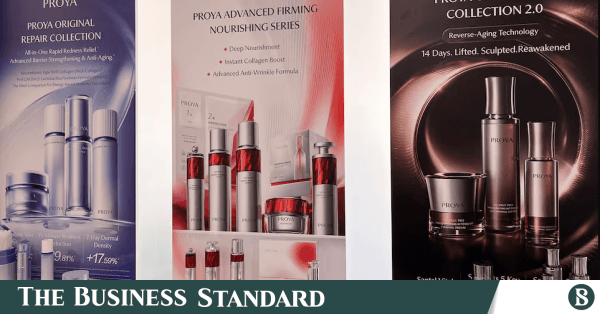
Proya Cosmetics, the largest C-beauty brand by revenue, is among the most aggressive. Its Advanced Firming and Original Repair skincare lines will be sold in 400 Ulta stores as well as on Ulta.com across the US from November, and it opened a Paris research and development centre this month.
Other brands had their start in online sales and are now expanding to physical stores abroad. They include Florasis, whose lipsticks and other ornate cosmetics draw on traditional Chinese aesthetics. It opened its first overseas flagship shop in Tokyo's posh Ginza district last year.
Joocyee, which produces skincare-infused make-up, and Judydoll, known for inventive products such as its metal-wand mascara, opened shops in Singapore last year. Both brands, owned by China's Joy Group, are also now stocked at Skin Cupid, a British retailer specialising in Asian beauty products.
C-beauty brands have grown rapidly within China over the past decade, and industry executives today speak of growing confidence that Chinese products will find favour with consumers worldwide. Gone are the days when China was associated with cheap and low-quality goods, as Chinese innovations — across many industries, but particularly in electric vehicles — have produced a halo effect, they say.
"The shift can be seen in everything from cars and smartphones to AI models," said David Huang, CEO of New York-listed Yatsen Group, which owns the Perfect Diary make-up brand.
The efforts by C-beauty firms are part of a broader push abroad by Chinese brands — from fashion and electronics to bubble tea — keen to seek new revenue amid a years-long slump in domestic consumer spending.
Brand awareness challenges ahead
Some Chinese brands are very ambitious. Proya, for example, wants to become a top 10 brand globally and is among C-beauty companies exploring acquisitions of smaller foreign brands to expand their portfolios.
Its 51%-owned colour cosmetics brand Flower Knows, known for fairytale-inspired packaging, also launched with British pharmacy and beauty retailer Boots in March and began a limited run in Ulta stores in September.
While awareness of Chinese beauty brands is growing in many international markets, Proya says it has a long way to go.
"I would say that Proya's brand awareness in both Europe and the US is currently zero," founder and CEO Hou Juncheng said at the opening of the company's research and development centre in Paris.
"We hope that through collaboration with our partners, we can earn consumer trust and encourage them to purchase our products."
Rivals believe Proya, founded only 20 years ago, has a bright future, with Marc-Antoine Jamet, president of French industry association Cosmetic Valley, describing Hou as an "incredible competitor".
"He moved from the mass market to the mid-market, and then from the mid-market to the premium segment. You can be sure he'll move into the luxury sector — whether in six weeks, six months, or six years. That's a near certainty," said Jamet.