
A narrow, brick-paved road leads from the local highway into the village. A three-minute walk along it brings us to Robin Rangsa’s small shop, where he sells tea, biscuits and basic groceries.
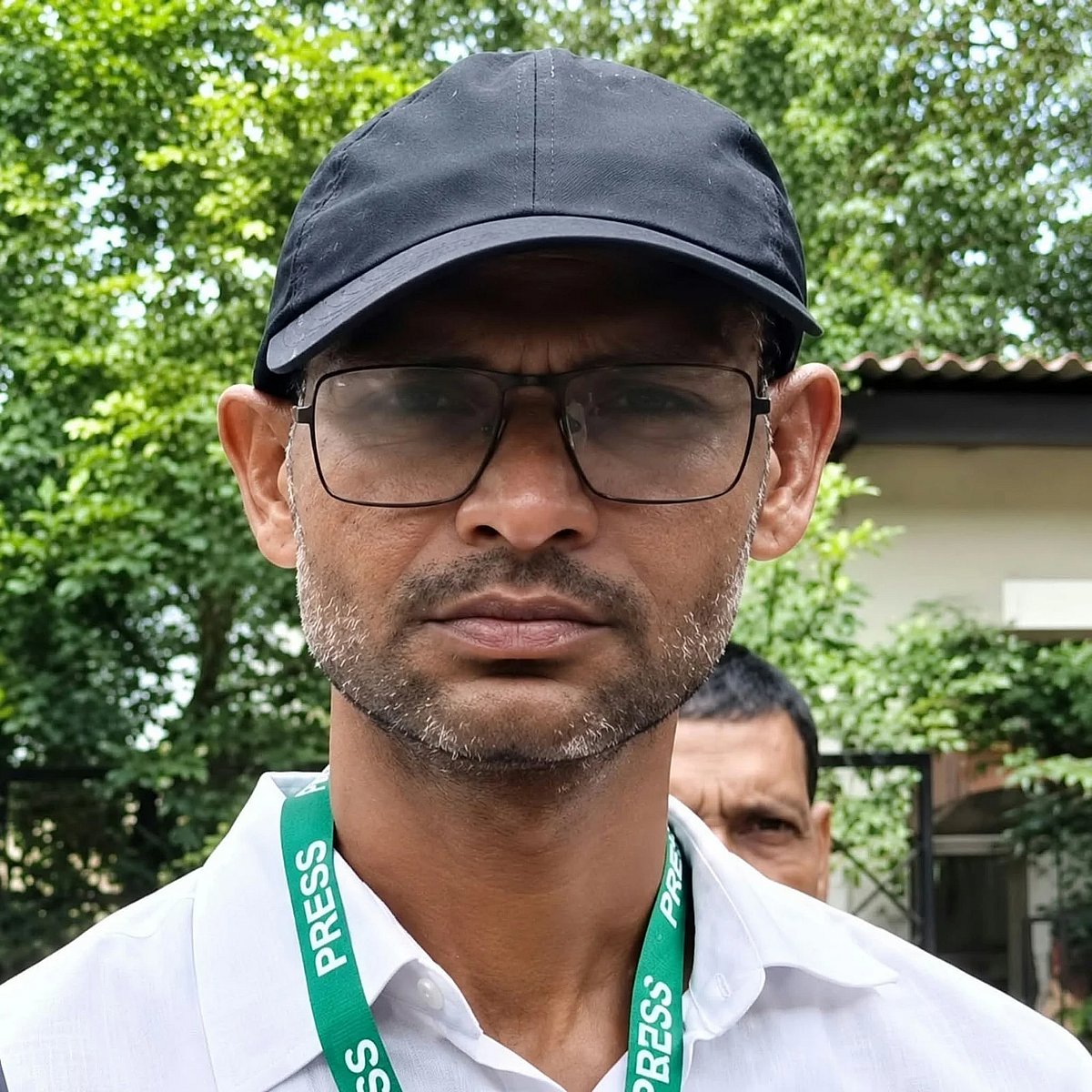
Just a short distance from the shop, journalist Lutfozzaman Alif Fakir, 44, was shot dead at around 8:30 pm on 15 October. Robin was at the shop when the shooting took place. Last Friday, he recounted the incident to us.
Robin said Alif had stopped by at around 8:00 pm that night and bought six cigarettes. He sat at a table in the shop and smoked one before heading to his in-laws’ house nearby. Alif had been living there for about two years. In his haste to leave, he accidentally left his mobile phone on the table.
According to Robin, two other customers arrived and bought cigarettes while Alif was away. One was wearing a lungi, the other three-quarter-length trousers. A short while later, Alif returned to collect his phone and set off for his in-laws’ house again. Almost immediately after he left the shop, Robin heard gunshots.
Robin was washing tea cups when he heard the gunshots. He looked up and saw Alif lying on the ground, with the two men still at the scene. Terrified, Robin retreated into his home behind the shop.
Asked whether he recognised the two men, Robin said he did not. He had never seen them before.
Alif was from Sunai village in Pogla Union, Kalmakanda Upazila, Netrokona. His in-laws lived in Telunjia village in Birishiri Union, Durgapur Upazila. A retired member of the armed forces, Alif worked as the Netrokona correspondent for the IP television channel Ruposhi Bangla. He also ran a Facebook page called Detective Article.
Through his reporting, Alif exposed smuggling, drug trafficking, arms-related activities and other wrongdoing along the border. He regularly published photographs and videos.
According to the police and his family, there had already been two attempts on his life. Fearing for his safety, he had moved to his in-laws’ house. It was there that gunmen eventually killed him. He sustained six bullet wounds to the head, neck and chest.
The day after the murder, his wife, Khadija, filed a case against seven to eight unidentified people. Police say Tajul Islam, 48, and Shamim Ahmed, 32, also known as “Shooter Shamim”, are among the leading suspects. The two men maintain separate networks of associates involved in illegal border trade, though they sometimes work together. Investigators are examining whether they helped plan or finance Alif’s murder and whether they had links to the attackers.
Alif’s in-laws’ house stands about 300 yards from Robin’s shop. After speaking with Robin, we headed there. Alif had lived in a small hut with tin-sheet walls. Among the old furniture and household belongings, a pair of blue trainers stood out. They had faded with years of use. His shirt, denim trousers and blazer had also lost much of their original colour.
Alif’s wife, Khadija Akter, belongs to the Garo community. The two had been in a romantic relationship before their marriage. She converted to Islam when they married; her parents had named her Anondita Sangma.
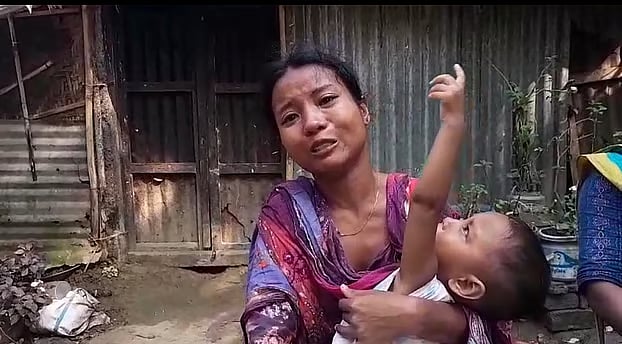
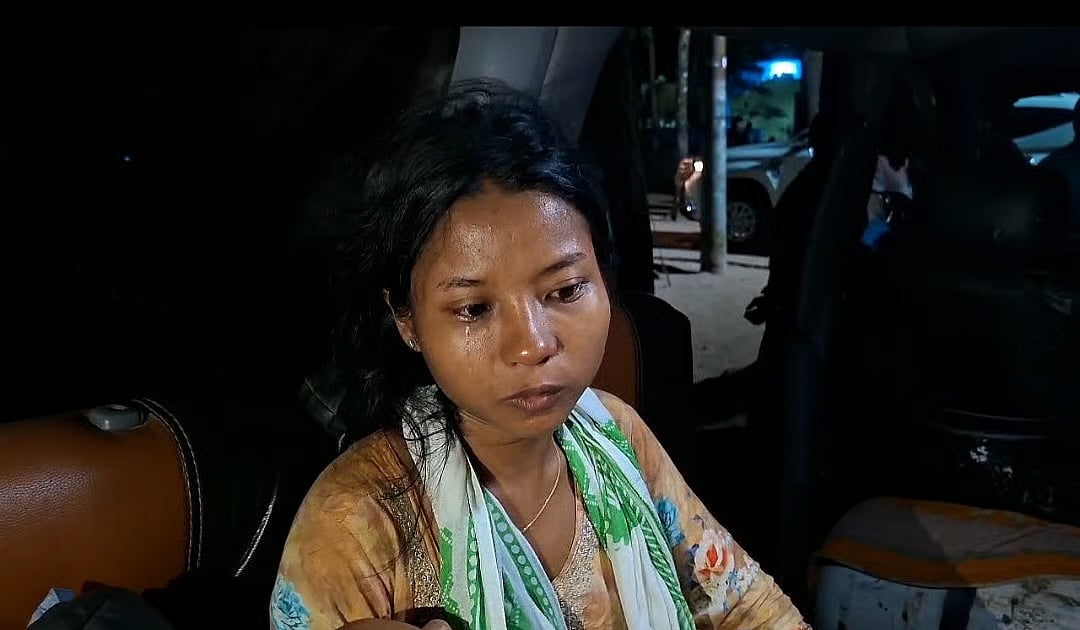
We found Khadija in the room where she had lived with Alif and their two young children. She told Prothom Alo that she initially did not realise the sound she heard was gunfire. She thought someone had set off firecrackers. Then a neighbour told her that Alif had been shot, and she rushed to the scene.
Khadija said she lifted Alif’s head onto her lap and checked for a heartbeat. Having studied nursing, she understood that her husband was dead. She remained there, sitting beside him, until the police arrived some time later.
As she spoke, Khadija wept. She said the family had planned to move to Dhaka the following month, November. Her mother had even taken out a loan of Tk 40,000 to help them make the move. But Alif died before they could carry out their plans.
Crime Along the Border
Kalmakanda and Durgapur are neighbouring upazilas in Netrokona, both bordering India’s Meghalaya state. Smuggling across the border involves a wide range of goods, including drugs, sugar, cosmetics, blankets, cattle, machinery parts and firearms.
According to police and local sources, Shamim Ahmed controls part of the smuggling trade along the Durgapur border. Tajul, meanwhile, leads a criminal gang accused of extortion, smuggling and other offences.
Both men have been accused of involvement in a range of crimes, including murder, attempted murder, arms offences, drug trafficking, explosives-related offences, kidnapping, extortion, robbery and theft.
At least 25 cases have been identified against Shamim, filed at Durgapur Police Station between 2014 and 2026. Eleven involve charges of attempted murder, and 19 cases remain pending.
Shamim has also been accused in two murder cases. On 8 October, 2022, Subrata Sangma, a former chairman of Kullagora Union Parishad in Durgapur, was killed. His sister filed a case naming Shamim as the main accused. On 4 February, 2024, Shamim was again named as the main accused in the murder of Mojibur Rahman, known as “Dao Mojibur”, from Naljora village in Birishiri Union. The case was filed by Mojibur’s son.
At least 13 cases have been identified against Tajul. Ten were filed at Durgapur Police Station, while one each was filed at Kalmakanda Police Station, Netrokona Sadar Police Station and Darus Salam Police Station in Dhaka. The cases date from 2006 to 2022. Three involve allegations of attempted murder, and four include charges under the Arms Act.
Alif had reported on both Shamim and Tajul on several occasions. At least five people who knew him and were familiar with his work told Prothom Alo that he was determined to expose crime and wrongdoing on Facebook. Threats and pressure were not enough to make him take down his posts.
His Facebook page was one of his main reporting platforms. Khadija said Alif had gathered information about Tajul’s smuggling activities and weapons and passed it on to the Rapid Action Battalion (RAB). RAB arrested Tajul about four years ago.
Khandaker Shaker Ahmed, officer-in-charge (OC) of Durgapur Police Station, offered an account that partly supported Khadija’s statement. Speaking to Prothom Alo at his office last Friday, he said Alif had collected information about Tajul’s activities and published photographs and videos of his home and property on Facebook. Tajul believed Alif had also informed law enforcement agencies about the weapons he possessed. The resentment this created had led to an earlier attack on Alif, the OC said.
Shamim, too, had featured in Alif’s reporting. According to sources involved in the investigation, about a week before the murder, Alif posted a video that allegedly showed Shamim using yaba. Investigators are looking into whether the video prompted any fresh threats.
On 14 October, the day before his killing, Alif posted a brief message on his Detective Article page announcing that he would reveal evidence about a “godfather” of crime the following day. At 7:28 pm on 15 October, the same page published a 41-second video alleging that a man named Babul had played a role in resettling Rohingya people in Netrokona.
Investigators are examining whether either of these posts had a direct connection to the murder.
Threats, Cases, Arrests and Allegations of Torture
According to his family, efforts to silence Alif went beyond threats. Cases were filed against him, and he was allegedly beaten after being arrested.
Alif’s wife, Khadija, said that on 19 March 2024, Alif posted on Facebook about then Superintendent of Police Faiz Ahmed. He had planned to publish further information the following day. But the next day, men identifying themselves as members of the Detective Branch (DB) took him away.
The family alleged that police beat Alif so severely that he had to be taken to hospital. When he was brought before a court, he was still unable to walk properly.
Faiz Ahmed, who is currently posted in Khulna, told Prothom Alo by phone on Saturday that the incident had not unfolded as described. He said Alif had written about many people, including superintendents of police, on numerous occasions—not just that day. According to Faiz, Alif was arrested in connection with a rape case.
After Alif was detained, two cases were filed against him: one for extortion and another for rape. Documents obtained by Prothom Alo show that the case under the Women and Children Repression Prevention Act was filed at Kalmakanda Police Station on 5 April 2024.
After completing its investigation, police submitted a final report on 11 April 2025, indicating that they had found no evidence to substantiate the allegation.
Alif’s wife, Khadija, said the case had been filed to harass him. She also said that after Alif wrote about smuggling along the border, Oli Ahmed, a local leader of the now-banned Awami League, filed an extortion case against him.
‘Police Officer Killed After Being Mistaken for Alif’
In one of the earlier attempts to kill Alif, a police sub-inspector lost his life. The officer, Mohammad Shafiqul Islam, was hacked to death on 9 January 2025 in the Panmahal area of Durgapur Municipality. A subsequent police investigation found that the attackers had been targeting Alif.
Mohammad Imdadul Bashar, an inspector with the Netrokona office of the Police Bureau of Investigation (PBI) and the case’s investigating officer, told Prothom Alo that two arrested suspects, Sajibul Islam, alias Apurbo, 21, and Mohammad Baki Billah, gave confessional statements in court. They said they had killed Shafiqul by mistake while attempting to kill Alif. According to their statements, Tajul had ordered the attack. Apurbo and Baki Billah were currently out on bail. Police believe they were involved in the attack on Alif.
Nearly 10 months later, on 10 November 2025, Alif was seriously injured when attackers struck him with machetes near the Teribazar ferry terminal on the Someshwari River. He survived. He filed a case naming two suspects: Samiul Haque, alias Sourav, and Mohammad Imon Mia. Both are out on bail. A charge sheet was submitted in September. Police suspect that they also took part in the latest attack.
At a meeting between journalists and the district superintendent of police on 30 November 2025, Alif spoke about the danger he faced, saying, “If I go out, they’ll shoot me.”
Sources involved in the investigation now say they have found links between the earlier attacks and the latest killing.
Six Names from an Old List
Durgapur Police Station maintains a list of 22 suspected criminals. Sources involved in the investigation say evidence has so far emerged linking six people on that list to Alif’s murder: Tajul Islam; Sajibul Islam, alias Apurbo; Mohammad Ashikur Rahman, alias Prangan, 19; Mohammad Sabbir Hossain, 20; Baki Billah, 20; and Samiul Haque, alias Sourav. Four of the six were allegedly involved in earlier attacks.
According to police sources, investigators have also found links between people close to Shamim and Tajul’s associates. They said they had obtained information suggesting that Tajul helped plan the killing while Shamim provided financial support.
Two people have been arrested in the Alif murder case: Sajibul Islam, alias Apurbo, and Ashikur Rahman, alias Prangan. Police say Apurbo is an associate of Tajul, while Prangan is close to Shamim and is the son of Shamim’s cousin. Prangan was arrested by SRB-14, the former RAB. Sources involved in the investigation said Prangan contacted Shamim after the shooting to find out whether Alif had died.
Officer-in-Charge Khondaker Shaker Ahmed said Imon was riding Tajul’s motorcycle on the evening of Alif’s murder. Another associate, Sourav, was also present. Investigators are examining each person’s whereabouts and role.
The source of the weapon is another key part of the investigation. According to police, the bullets used in Alif’s murder were 9mm rounds.
Shamim’s Brother Is a Union Parishad Chairman
Since Alif’s murder, Shamim and his associates have gone into hiding. Shamim is the half-brother of Abdul Awal, general secretary of the Durgapur upazila unit of the BNP and chairman of Kullagora Union Parishad. According to local sources, Shamim was previously known as a follower of the late Manu Majumder, a former Awami League member of parliament.
Shamim could not be reached for comment on the allegations. His half-brother, Abdul Awal, said political opponents were trying to tarnish Shamim’s reputation. Asked why Shamim and other family members were being linked to smuggling along the border, Abdul Awal said, “Others are involved in these activities, but our names get dragged into it.”
Tajul lives in Bagichapara, within Durgapur Municipality. He and his associates have gone into hiding.
How Far Has the Investigation Progressed?
Netrokona Superintendent of Police Mohammad Tarikul Islam told Prothom Alo on Saturday, “The group of killers is more or less clear. We are investigating the involvement of those who control the group. Two people have been arrested, and they are being questioned. We expect to deliver results soon.”
A special committee led by an additional superintendent of police has been formed to investigate Alif’s murder. Other investigative agencies have also been brought in. Alif’s mobile phone has been sent to the Criminal Investigation Department (CID) for forensic examination.
Mohammad Zahidul Hasan, deputy inspector general (DIG) of police for the Mymensingh Range, told Prothom Alo that the investigation had made considerable progress and that details would be disclosed soon.
‘There Couldn’t Be a Better Person’
The Durgapur and Kalmakanda upazilas of Netrokona are home to several Indigenous communities, including the Garo and Hajong. Most residents of Telunjia village in Birishiri Union, Durgapur—the village where Alif’s in-laws live—belong to the Garo community.
Alif’s relatives on his wife’s side said he got along well with everyone. Members of the family and community considered him one of their own.
Alif’s mother-in-law, Shila Sangma, and his late father-in-law, Philip Rema, had three daughters and one son. Alif’s wife is the eldest daughter. Shila used to call Alif “Babu”. She told Prothom Alo, “He was like my own son. There couldn’t be a better person.”
After the July mass uprising, criminals operating along the Durgapur border switched political allegiances, but the criminal activities continued. Alif was attacked twice last year while reporting on those activities. In the third attack, he was shot six times and killed. Questions have now been raised about what the police did to protect him.
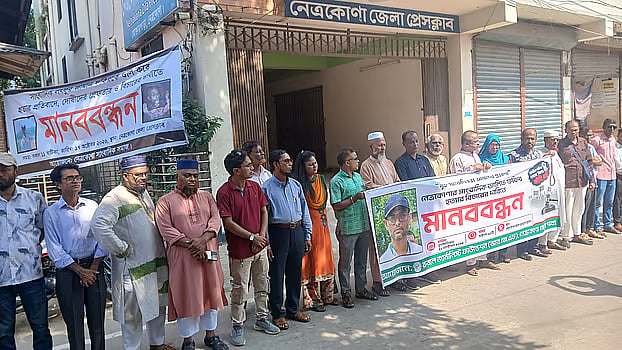
Haider Jahan Chowdhury, convener of the voluntary organisation Janaudyog and former district commander of the Muktijoddha (Freedom Fighters) Unit in Netrokona, told Prothom Alo, “We are stunned by the way journalist Alif was shot dead. Unless those responsible are identified quickly, brought to justice and given exemplary punishment, such incidents will continue to happen.”