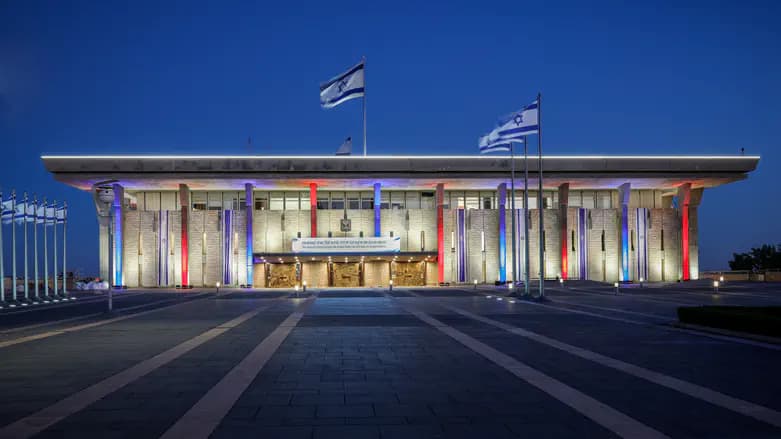
Most non-Israelis donot know that Israel operates without a second legislative chamber. They do not know that the nationwide electoral system used at the founding of the state drew upon the political traditions of the pre-state Yishuv, was adopted under the extraordinary circumstances of war and mass immigration, and then became the permanent architecture of Israeli elections. They do not know that no political party in the history of the republic has ever won the 61 seats necessary to govern alone.
This widespread ignorance is not simply an accident of poor education. It is encouraged by a global commentary industry that prefers to view Israeli politics through the dramatic, emotional lens of personal rivalries and moral grandstanding. Western observers look at Jerusalem, see five elections in four years, massive street demonstrations, and frantic midnight coalition negotiations, and comfortably declare: The system is broken.
They are looking at the wrong thing.
To look at Israel’s political friction and call it simply a failure of design is to misunderstand the nature of the design itself. The Israeli electoral system is not broken in the conventional sense. It is functioning with remarkable fidelity to the incentives embedded within it from the founding years of the state: inclusion, proportional representation, coalition government, and a profound resistance to the permanent domination of the political system by any single faction.
What the world frequently interprets as chronic paralysis is, at least in part, the predictable consequence of a system extraordinarily effective at preventing anyone from acquiring enough power to govern alone.
To understand why this is so, one must look at three structural mechanics -not as isolated quirks, but as an integrated, self-reinforcing architecture of institutional distrust.
First, consider the single nationwide electoral district. When the new state adopted one national constituency and allocated Knesset seats through nationwide proportional representation, it created a remarkably inclusive political system. Post-Holocaust refugees, immigrants from the Middle East and North Africa, secular socialists, religious traditionalists, nationalists, communists, minorities, and numerous other political communities could all compete for representation without having to dominate a particular geographic constituency.
The structural consequence, however, was the elimination of geographic parliamentary accountability. In a constituency-based system, such as those used for congressional elections in the United States or parliamentary elections in the United Kingdom, a lawmaker represents a physical piece of the country. If the voters of that district become dissatisfied, they can remove that representative. In Israel, a member of the Knesset represents no geographic constituency at all. An MK’s electoral future instead runs through a national political party, with candidate lists determined through primaries, party institutions, leadership decisions, or some combination of them. The result is a parliament in which the relationship between voter and legislator is mediated through the party rather than through the neighborhood, town, or region in which the voter lives.
Second, consider the mathematical curiosity that is the coalition bazaar. Because proportional representation has made outright single-party majorities extraordinarily difficult to achieve, election night in Israel is rarely the end of the process. It is the opening bell of an auction.
This is where the reader’s “I didn’t know that" frequently turns into genuine surprise. In many democratic systems, elections manufacture a relatively clear governing majority. Israel does something different. A small party holding five indispensable seats can sometimes exercise influence vastly disproportionate to its numerical size. If those seats are necessary to construct or preserve a viable coalition, the party can demand budgets, ministries, legislative commitments, or policy concessions from a much larger prospective governing party. Its five seats have not magically become thirty. Their value derives from their position in the parliamentary arithmetic.
This is not necessarily corruption, nor is it primarily a personal failing of individual political leaders. It is rational behavior inside an architecture that rewards leverage as well as mandate. The tail does not wag the dog out of malice; under certain coalition configurations, the rules make the tail indispensable to keeping the dog standing.
Finally, consider the ultimate constitutional anomaly: the missing chassis. Israel has no upper legislative chamber to review national legislation, no federal division of sovereign legislative power, and no single completed written constitution establishing one uniformly entrenched set of rules governing political power.
Instead, the state operates through Basic Laws that collectively form much of its constitutional framework. Some are entrenched and require 61 votes to alter, certain provisions require still larger majorities, and others can be changed through legislative procedures much closer to those governing ordinary laws. The result is a constitutional structure in which a governing coalition can sometimes possess not merely the authority to administer the state, but sufficient parliamentary strength to alter important rules under which the state itself operates.
That helps explain the extraordinary importance acquired by Israel’s Supreme Court. Critics of judicial power see unelected judges exercising authority that should properly belong to an elected Knesset. Defenders see precisely the opposite danger: in a unicameral parliamentary system without a completed constitution or the multiple structural veto points familiar to Americans, an independent judiciary provides an essential restraint upon temporary political majorities. The argument has become so ferocious because both sides are ultimately fighting over the same unresolved question: where, in a constitutional system never fully completed, does final political authority reside?
When you assemble these three elements-the single district, the coalition bazaar, and the unfinished constitution-the full picture emerges.
And buried inside that picture is an uncomfortable conclusion.
Israel may represent democracy in something approaching its purest form. Virtually every significant political tribe can seek a voice. Minority factions that would disappear inside winner-take-all districts can enter parliament. Votes are translated into representation with comparatively little concern for manufacturing an artificial governing majority. No dominant national party can easily sweep aside every competing constituency and simply announce that it speaks for the country.
It is difficult to imagine a more democratic aspiration.
And perhaps that is precisely the problem.
Democracy has two obligations that are frequently treated as though they were identical. They are not. The first is to represent the governed. The second is to produce a government capable of governing. Israel’s system is exceptionally accomplished at the first and chronically troubled by the second. By attempting to translate the extraordinary diversity of the electorate into parliamentary representation, it repeatedly produces a legislature in which almost everyone has a voice but no one has enough votes to act alone.
Israel did not fail to create democracy. It may have created too much of it.
That is the paradox at the center of the entire system. The mechanisms that frustrate Israelis most-the endless bargaining, the power of small parties, the coalition compromises, the inability of electoral victors to simply impose their program-are also mechanisms that make it extraordinarily difficult for one political tribe to extinguish the influence of another. Efficiency and representation are not always allies. Sometimes they are adversaries.
Israel chose representation.
The choice was understandable. The state was created from a collection of communities carrying radically different histories, languages, religious traditions, political ideologies, and conceptions of what a Jewish state should ultimately become. A political system capable of containing those disagreements required accommodation. The electoral architecture that emerged became an extraordinarily effective mechanism for forcing those communities to remain inside the same political room.
But accommodation is not the same thing as resolution.
This brings us to the ultimate paradox confronting anyone who looks at this architecture and asks where the country goes from here. Every few years, reformers propose seemingly sensible fixes: introduce regional constituencies, change the electoral threshold, alter the method of selecting the executive, or finally complete a written constitution.
Israel has experimented with some of these ideas before-the most dramatic being the direct election of the prime minister-and has repeatedly modified portions of its electoral rules. Yet fundamental reform has proved extraordinarily difficult because parties operating successfully within the existing architecture possess powerful incentives to preserve it, while changing one component of such an interconnected system can produce consequences very different from those reformers intended.
More fundamentally, however, changing the mechanics cannot by itself resolve the underlying reality. The mechanics are merely a mirror.
Israel is a nation composed of distinct, deeply entrenched cultural and political communities-secular liberals, traditionalists, the haredim, religious Zionists, Arab citizens, and others-whose visions of the proper character of the state can differ profoundly. Completing a constitution has proved extraordinarily difficult precisely because many of the questions a constitution would ordinarily settle remain the questions Israelis continue to debate: the relationship between religion and state, the meaning of a Jewish and democratic republic, the protection of minority rights, the authority of the judiciary, and the limits of majority rule.
The chaos of Israeli politics is therefore not simply evidence that democracy is failing. It is the physical manifestation of a society continuously negotiating the terms of its existence in real time. The single ballot box and the chaotic coalition room are pressure valves through which disagreements that might otherwise become irreconcilable are forced back into politics.
The next time you watch an Israeli election unfold, clear away the hysterical commentary and the surface-level drama. Look instead at the architecture beneath it. The system is not teetering on the edge of collapse. Much of what appears dysfunctional is the predictable result of a political structure that forces competing tribes into the same room and demands that they bargain with one another before anyone can govern.
It is noisy. It is fragile. It is endlessly exhausting.
And it may be democracy in its purest form.
Which leaves Israel with a rather uncomfortable question after seventy-eight years: what happens when the purest expression of democracy becomes an obstacle to the fundamental purpose of democratic government-to govern?
For another incisive and informativeTeplitzky article on the elections, click here.