
Judge rejects Edmund Pickett's house arrest request for role in interprovincial drug trafficking conspiracy
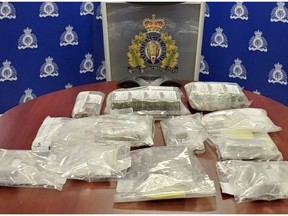
A pickup carrying $1.4 million of hidden high-purity cocaine was stopped near Dover, NL during the COVID-19 pandemic, but the conspiracy behind the shipment had been developing long before that.
Subscribe now to access this story and more:
- Unlimited access to the website and app
- Exclusive access to premium content, newsletters and podcasts
- Full access to the e-Edition app, an electronic replica of the print edition that you can share, download and comment on
- Enjoy insights and behind-the-scenes analysis from our award-winning journalists
- Support local journalists and the next generation of journalists
Subscribe or sign in to your account to continue your reading experience.
- Unlimited access to the website and app
- Exclusive access to premium content, newsletters and podcasts
- Full access to the e-Edition app, an electronic replica of the print edition that you can share, download and comment on
- Enjoy insights and behind-the-scenes analysis from our award-winning journalists
- Support local journalists and the next generation of journalists
Create an account or sign in to continue your reading experience.
- Access additional stories every month
- Share your thoughts and join the conversation in our commenting community
- Get email updates from your favourite authors
Sign In or Create an Account
Edmund Dorman Pickett, whom a jury found guilty — along with two other men — of conspiring to traffic cocaine, has been sentenced to 34 months in prison after a Newfoundland and Labrador Supreme Court judge concluded his role in the operation warranted a custodial sentence despite his age, health, and family responsibilities.
In an Oct. 6, 2026 decision, Justice Leanne O’Leary in Gander rejected Pickett’s request for house arrest.
Pickett, 65, was charged as part of RCMP Project Bootstrap, which began in 2018 and saw Mounties intercept phone communications, conduct surveillance and execute search warrants and traffic stops while investigating suspected drug trafficking between Ontario and Newfoundland.
The focus of the investigation was Steven Thomas Armstrong of Newmarket, Ont., whom police noticed was making frequent, short trips to the island on the ferry. In December 2019, police discovered Armstrong and an accomplice, Dion Wilson Lee Rodgers, were travelling individually on the ferry between North Sydney, NS, and Port aux Basques. Officers stopped Armstrong as he got off the ferry and searched him and his vehicle, but found no drugs.
Investigators determined Armstrong travelled to the Dover area, tracking his cell phone to Pickett’s residence.
In the months that followed, the RCMP tracked communications between Armstrong and others, including Pickett. Police began monitoring the phone calls in August 2020, and learned Armstrong was having difficulty getting into the province due to the government’s pandemic-related travel restrictions. He attempted to arrange transport of a motorcycle, but changed the plan and decided to transport a Honda Ridgeline truck instead.
Conversations between Armstrong and Pickett, an RCMP expert testified at trial, included veiled drug references common among those involved in trafficking.
In September 2020, police learned Armstrong had left Ontario in a Ridgeline and was travelling to the ferry in North Sydney. He parked the truck at the ferry terminal.
Rodgers and another man, who had crossed the ferry to Nova Scotia from Port-aux-Basques, picked the truck up and brought it back to the island.
RCMP stopped the truck in Dover and at first didn’t find any drugs, but learned some new information as they continued monitoring communications: there were 3.4 kilograms of cocaine in the truck, hidden inside a modified side air bag module, in a compartment with a customized hydraulic release system.
The RCMP said the drugs were between 84 and 87 per cent pure, and were worth at least $1.4 million under inflated pandemic street prices. Its volume, after cutting and processing, could be two to four times that, the expert testified.
The judge determined the quantity and purity of the cocaine were aggravating factors for Pickett’s sentencing.
She also noted Pickett had denied, in a pre-sentence report, having any knowledge of the intent to traffic drugs.
“I find that the evidence supports he played an integral role in the conspiracy to traffic,” O’Leary wrote. “I find the September 2020 communications between Mr. Armstrong and Mr. Pickett placed an order for cocaine, the amount and the costs to the Newfoundland operation.
“Further, in the September 14, 2020 call, Mr. Armstrong confirmed to Mr. Pickett his plans to circumvent the pandemic restrictions on travel to the province. I find his communication of this updating information to Mr. Pickett is further evidence of Mr. Pickett’s trusted role in the conspiracy and the process of importation.”
The Crown sought a 42-month prison sentence for Pickett, 65. The defence sought house arrest, arguing Pickett has no prior criminal record, suffers from several health problems, and is the main caregiver for a family member.
O’Leary concluded those factors don’t outweigh the need to denounce the crime and deter others from committing similar offences, and she sentenced Pickett to 34 months behind bars.
Rodgers, 50, was sentenced in late August to 39 months in jail.
Armstrong, who has pleaded guilty, is being sentenced in Ontario.
This website uses cookies to personalize your content (including ads), and allows us to analyze our traffic. Read more about cookies here. By continuing to use our site, you agree to our Terms of Use and Privacy Policy.