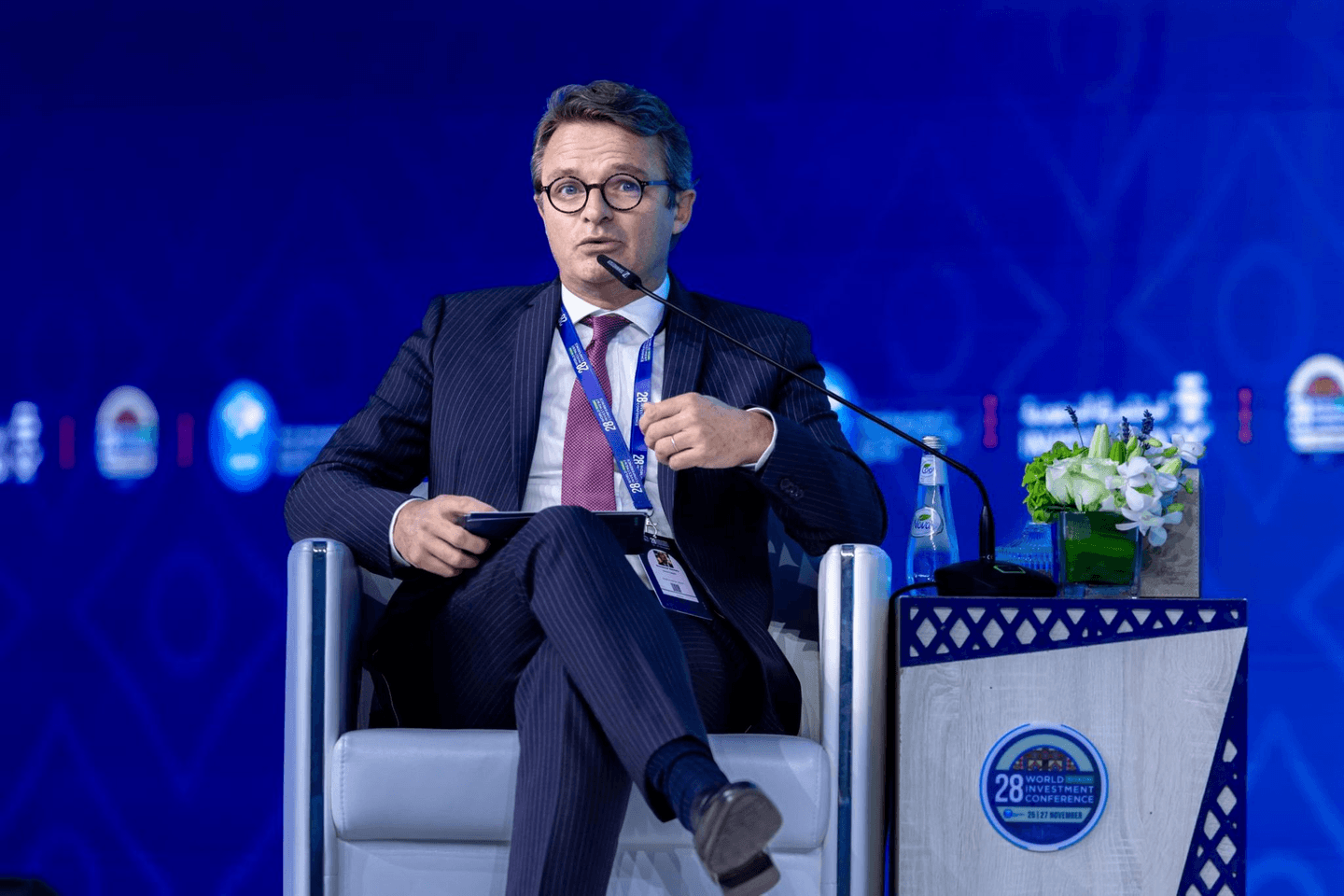
Through ANIMA’s extensive work across Europe, the Mediterranean, the Middle East and Africa, how do you see the startup and innovation landscape evolving across these regions, and where are the most significant opportunities emerging?
Entrepreneurs are, above all, problem solvers. This is particularly true across the Southern Mediterranean and Africa, where challenges are immense – ranging from climate change impacts and funding gaps to infrastructure deficits, food dependency and healthcare access.
Over the past decade, a new generation of impact-driven entrepreneurs has emerged, putting the public interest at the core of their business models. The green transition and the AI revolution present a massive reservoir of opportunities to address these population-wide challenges.
Another key driver is nearshoring. Industry 4.0 and sustainability imperatives are pushing companies to relocate production closer to consumer markets. We are already seeing this shift in motion, with Chinese manufacturers establishing bases in North Africa to serve both European and African markets.
Cyprus occupies a unique geographical and economic position at the crossroads of Europe, the Eastern Mediterranean, the Middle East and North Africa. How can it leverage this position to become a stronger regional hub for startups, innovation and investment?
Cyprus can activate three major levers:
- Geographical positioning: It serves as a natural bridge for business leadership across the Eastern Mediterranean and a safe, stable doorway to MENA markets.
- Shared challenges: Facing acute climate realities – such as water scarcity and extreme heat waves – Cyprus is directly incentivised to invent and pilot scalable solutions.
- Research and innovation ecosystems: Host to numerous EU centres of excellence, Cyprus can leverage this top-tier research talent to catalyse its entrepreneurial dynamics.
ANIMA brings together investment promotion agencies, business networks, innovation organisations, investors and research institutions across multiple countries. From this experience, what are the essential ingredients that enable a relatively small ecosystem such as Cyprus to become internationally competitive?
- Facilitation: Welcoming investors and entrepreneurs by speaking their language and offering seamless landing support.
- Flexibility: Tailoring services to the evolving needs of founders and delivering robust aftercare for established companies.
- Connectivity: Developing infrastructure, services and networks that bridge market opportunities – specifically between the EU and the Gulf – with competitive production bases in North Africa.
A central part of ANIMA’s work involves strengthening enterprises and helping entrepreneurs and SMEs develop, internationalise and create sustainable value. What more can ecosystems such as Cyprus do to help promising startups make the transition from early-stage ventures into scalable, internationally competitive companies?
Scaling requires three core assets: access to capital, access to markets and access to talent. Cyprus must expand its venture capital and private equity landscape, deepen its integration into regional and global value chains and actively attract and nurture top talent in strategic sectors like Greentech, IT, finance and trade.

Access to finance remains one of the major challenges for startups and growing enterprises. What are investors looking for today when assessing companies from smaller or emerging innovation ecosystems, and how can Cyprus make its startups more visible and attractive to international capital?
Cyprus has the potential to position itself as the premier bridge for MENA startups seeking access to EU markets and innovation networks – a value proposition that is highly attractive to international investors.
ANIMA and Invest Cyprus are actively building this bridge. Through our Euromed iHouse initiative in Nicosia, we organise annual international gatherings that connect innovation ecosystems. The next logical step is launching dedicated landing programmes to host and support cohorts of international startups in Cyprus each year.
How important is it to build stronger connections between startups and established enterprises? Can greater corporate involvement – through investment, partnerships, procurement, mentoring or technology adoption – help accelerate the development of Cyprus’ innovation ecosystem?
Open innovation and corporate mentoring routinely unlock strong commercial partnerships and direct investments. ANIMA has previously supported structured corporate mentoring schemes delivered through the Cyprus Chamber of Commerce and Industry with excellent results.
ANIMA has considerable experience connecting entrepreneurs with investors and developing cross-border business and investment opportunities. What mechanisms have you seen work particularly well in bringing international investors together with promising companies from emerging ecosystems?
Our most effective initiatives involve angel investors directly in the investment-readiness preparation of founders, as well as engaging senior diaspora executives to mentor African and MENA entrepreneurs. In both cases, this hands-on engagement opens investors’ eyes to the caliber of the teams and the commercial opportunities in local markets, translating directly into deals and strategic partnerships.
Cyprus is developing innovative companies across areas such as fintech, AI, cybersecurity, maritime technology, green technology, health and other sectors. Where do you see the greatest opportunities for Cypriot startups to collaborate with or expand into markets across the wider Mediterranean, Middle East and North Africa?
These verticals are critical across the Mediterranean and MENA region. Cyprus’ strategic focus on these domains allows it to build robust ecosystems – attracting corporate players, technology providers and investors, while expanding the infrastructure necessary to scale startups operating in these fields.
How important are Euro-Mediterranean partnerships and EU-backed programmes in connecting innovation ecosystems that might otherwise operate independently? What opportunities could Cyprus pursue more actively through these networks?
Since 2008, ANIMA has led EU-cofunded initiatives linking European and MENA ecosystems. These programmes have fundamentally shaped the regional landscape – driving the establishment of science parks, incubators, clusters, early venture funds and angel networks.
Through its active involvement with ANIMA, Cyprus gains direct access to these cross-border networks and can forge targeted bilateral collaborations across the region.
Looking ahead over the next five to ten years, what role could Cyprus realistically play within the wider Euro-Mediterranean startup and investment landscape, and what should it prioritise today to establish itself as a recognised innovation and investment hub?
Double down on key vertical expertise and maximise its unique geography. Cyprus can consolidate its role as a secure operational base and launching pad, offering private sector players a trusted environment to access expanding Mediterranean and European markets.