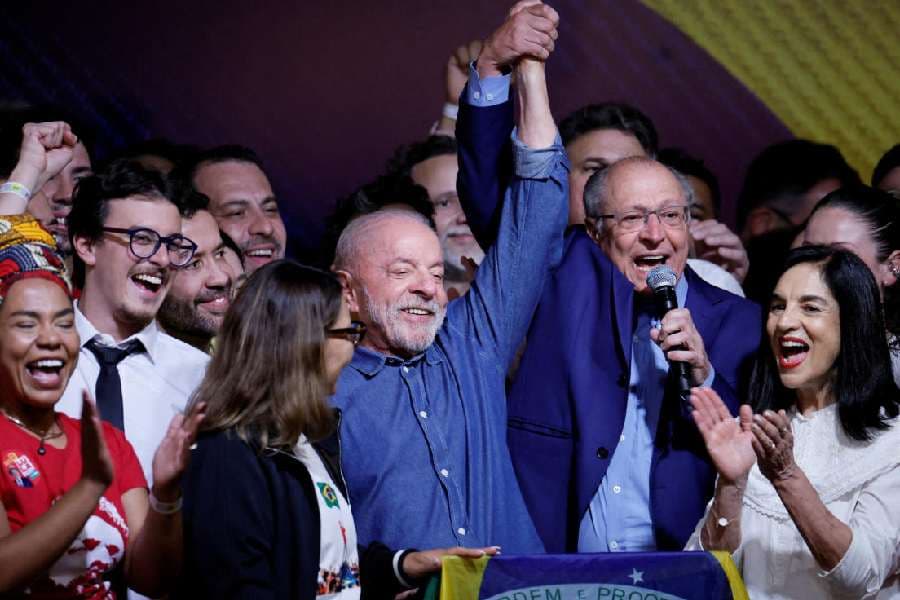
Moreover, the Congress in Brazil has a pronounced tilt to the Right. This will make it challenging for Mr Lula to pass the policies that he wants
The Editorial Board Published 27.10.26, 07:53 AM
Luiz Inácio Lula da Silva File picture
Morning may not always show the day in electoral politics. Having drawn fewer votes than his right-wing rival, Flávio Bolsonaro, in the first round of the presidential election in Brazil, not many would have expected the three-term, Leftist president, Luiz Inácio Lula da Silva, to turn things around. Yet, that is exactly what Mr Lula has gone on to do, winning over 50% of the votes and providing ballast to a besieged Left in Latin America while deepening the furrows on Washington’s countenance. Two factors may have helped Mr Lula turn the tide against his opponent who, quite predictably, has decided not to concede. First, Mr Lula’s triumph could be attributed to his organisational skills. Having fallen behind in the earlier round, he worked harder to mobilise Brazil’s electorate, both on social media and on the street. The consequences were stunning. The margin of Mr Lula’s victory over Mr Bolsonaro was almost double that of his earlier win against the latter’s father. Second — this is significant — Mr Lula’s victory is also a testament to the fact that his country, despite the sweeping rise of the Right in the continent, has not quite given up on the vision of the Left. Mr Lula’s appeal continues to endure on account of his claims to address economic inequality and environmental justice, among other pledges. Washington, of course, will be miffed with the outcome. Mr Lula is a thorn in the side of the United States of America in Latin America that Washington views as its courtyard. It will be interesting to see how the Donald Trump administration goes about tackling Brazil, the largest economy in South America and the 10th biggest in the world on the basis of nominal GDP.
An adversarial America is not the only headache that Mr Lula has to confront. In his fourth term, he will encounter a country that remains deeply polarised: Mr Bolsonaro’s Liberal Party pocketed the biggest gains in these polls. Whether Mr Lula’s new form of governance succeeds in building bridges remains to be seen. Moreover, the Congress in Brazil has a pronounced tilt to the Right. This will make it challenging for Mr Lula to pass the policies that he wants. Finding a charismatic successor to lead his Workers’ Party would be another issue that would weigh on the mind of Brazil’s ageing president.
Get accurate news by selecting Telegraph India on Google
