
October the 26th, 2026 – Croatia is the world’s leading charter power, yet it earns less than Greece does from the same sector. The big questions is why?
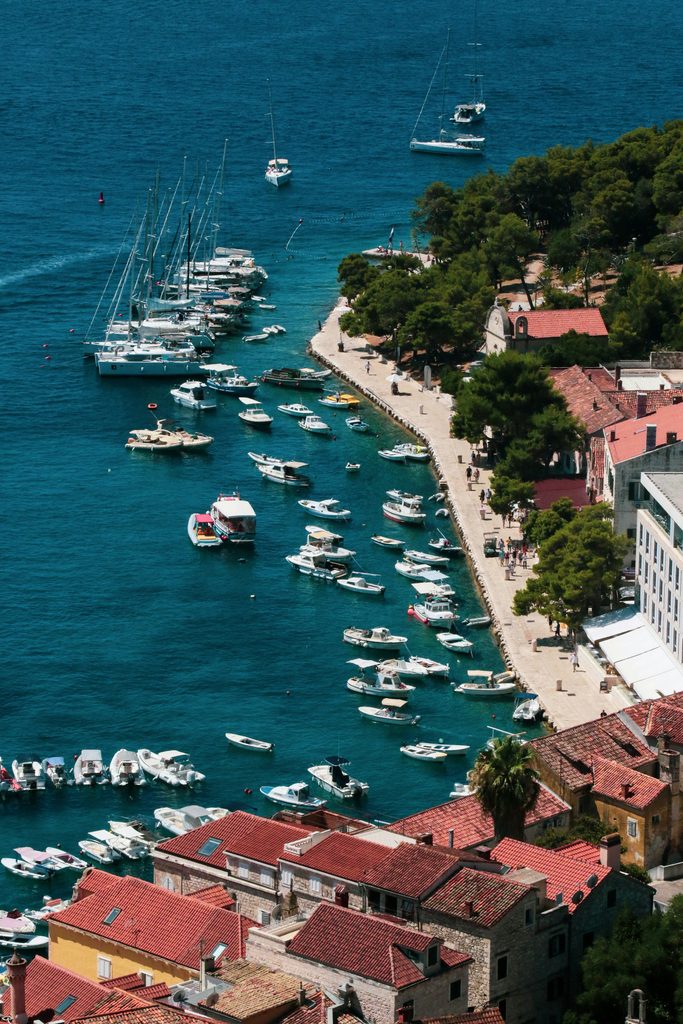
Croatia is the number one charter power in the world with nearly five thousand vessels in its fleet. In the first eight months of this year, more than 431 thousand charter guest arrivals and more than 2.7 million overnight stays were recorded. However, market saturation has led to charter prices, especially for sailing yachts, falling by 50 percent or more during the peak season. As Alenka Juricic Bukarica reports for Glas Istre, this is not only the case this year. At the same time, competition in other Mediterranean countries is growing, especially in Greece, which last year had just over 3,000 vessels in charter. That is still fewer than Croatia, but with a clear upward trend.
Rising operating costs in recent years have also significantly changed conditions on the Croatian charter market, particularly for smaller vessels, and have negatively affected the return on investment and, consequently, the interest of new investors. Croatia is no longer perceived as a cheap destination, and there has also been a change in the structure of guests: instead of professionals, charter is increasingly chosen by people who are not normally involved in sailing, which increases demand for skippers and hostesses. Ultimately, people from the industry say that in some cases better prices can be achieved on the market in September than in the peak season…
in typical croatian style, there’s a paradox…
The current situation on the Croatian charter market was recently analysed by Ani Trstenjak, head of the Yacht Rent charter agency, and Daniela Gračan from the Faculty of Tourism and Hospitality Management (FMTU) in Opatija. Nautical charter has become, they emphasise, an important part of the tourism economy. It has attracted domestic and foreign capital and created a business ecosystem that includes vessel owners, charter companies, marinas, service providers, intermediaries and numerous providers of supporting services.
However, the success that for decades was measured by fleet growth, number of bookings and total revenue is opening an increasingly uncomfortable question – can Croatian charter continue to grow in the same way without endangering its own profitability.
“Market analysis by the vessel rental platform Yacht-Rent.com for 2026 points to an interesting paradox. Namely, Croatian sailing yachts and catamarans are among the cheapest compared to competing markets, while at the same time achieving high occupancy. Croatian charter does not primarily suffer from a lack of demand, but from a structural problem where demand is increasingly difficult to convert into revenue and profit. At the same time, it is clear that revenue is necessary to cover operating costs, financing, maintenance, depreciation and fleet renewal,” Trstenjak explained.
She clarified that Yacht-Rent’s market analysis for this year compares prices and bookings of vessels across six Mediterranean markets. It covers the operating season from 1 April to 2 November 2026, and expresses prices per person (berth) per week so that different vessel sizes can be compared on a comparable basis. According to that analysis, Croatia has the lowest average weekly price per berth among the compared markets for both sailing yachts and catamarans.
an exceptionally demanding market
Specifically speaking, sailing yachts in Croatia achieve an average weekly price per berth of €355, compared to €454 in Greece and €494 in Turkey. The price in Croatia is 22 percent lower than for a sailing yacht in Greece and 28 percent lower than in Turkey. At the same time, Croatian sailing yachts have an average of 19.4 booked weeks, slightly more than 19 weeks in Greece and significantly more than 17 weeks in Turkey. The estimated gross seasonal revenue per berth in Croatia amounts to €6,887, compared to €8,626 in Greece and €8,398 in Turkey.
The situation with catamarans is similar to that of sailing yachts. The average price of €706 per berth per week in Croatia is 16 percent lower than in Greece and 14 percent lower than in Turkey. Catamarans in Croatia are on average booked for 18.8 weeks during the season, which is close to 19.2 weeks in Greece, but significantly more than 15.4 weeks in Turkey. Despite this, the estimated gross seasonal revenue per berth in Croatia amounts to €13,273, while in Greece it reaches €16,147. Turkey achieves €12,659 in seasonal revenue per vessel.
“These data shows that Greece in the observed sample manages to combine high utilisation with a higher price. Croatia, on the other hand, achieves high capacity utilisation with a significantly lower price,” pointed out the head of the Yacht Rent agency. Adding that Croatian charter today operates on a highly competitive Mediterranean market, she also recalled that a guest can today easily compare prices, year of construction, equipment and capacity of vessels, rental conditions, additional costs and available destinations. And when vessels are very similar to each other, price becomes one of the most important decision criteria. However, she stresses, price is not the cause of the crisis, but its symptom.
higher and higher costs
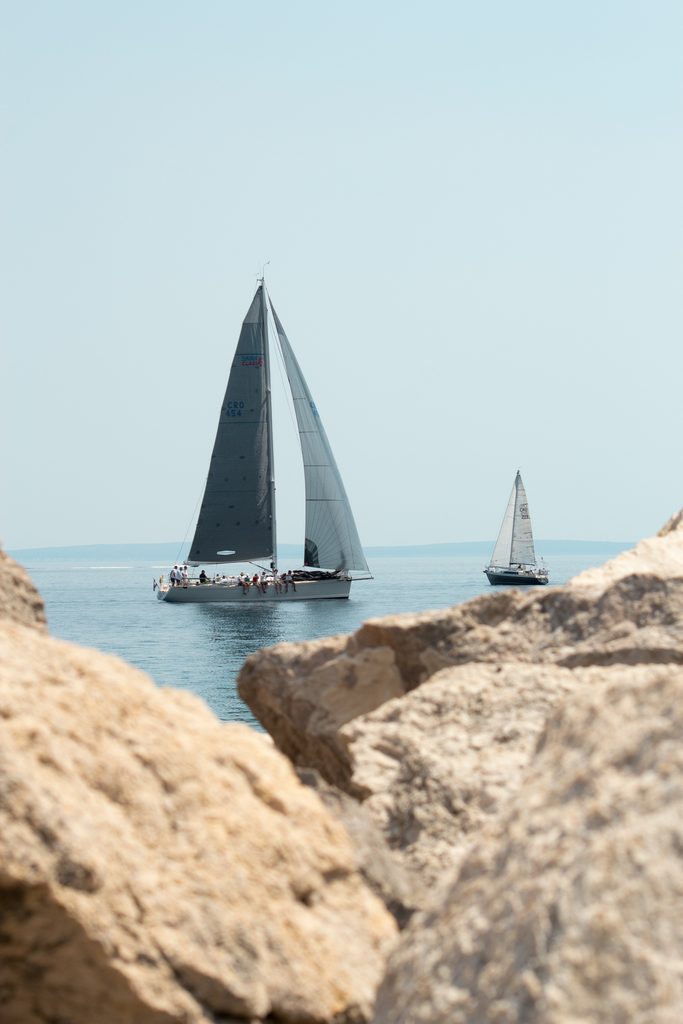
Although not all segments of charter are equally price-sensitive, Trstenjak explains that luxury crewed vessels, differentiated service, special routes and a top customer experience can have greater pricing power. A standard sailing yacht comparable to dozens of other vessels at the same destination has significantly less room to raise its price independently. Charter companies today face high costs for berths, servicing, spare parts, insurance, labour, cleaning, administration, sales and distribution. Financing, depreciation and the need for fleet renewal, berth prices and insurance also play a significant role. All of this leads charter firms to accept a lower price in order to still rent out the vessel. In the short term such a decision can be rational, our interlocutor says, if the booking covers the additional costs of the rental and contributes to covering fixed costs. However, in the medium or long term, such a decision can be disastrous.
“When discounts become a permanent way of doing business, a serious problem arises that Croatian charter has been facing since 2023. Revenue may cover part of the costs, but it very likely no longer leaves enough funds for equipment renewal, major services, vessel replacement and return on capital. A company can therefore have high turnover, positive operating profit and at the same time an insufficient return on the capital invested in charter management. Every charter company wants to have enough vessels to attract guests, expand its offer and increase turnover.
But when a large number of investors make similar decisions, total supply can grow faster than demand. The number of available vessels increases, but the number of guests and attractive periods does not necessarily grow at the same speed. Therefore, an individual discount may be rational, but collective reliance on discounts can reduce the profitability of the entire market because supply does not adjust quickly enough,” Trstenjak says.
capital investment
She also addressed the problem of charter management, i.e. the fact that many Croatian citizens or companies, as well as foreigners, have in recent years seen the purchase of a sailing yacht or catamaran as a profitable form of capital investment. For the vessel buyer, the charter company handles the rental business, while the owner can use it for part of the year and collects income from the rental. Maintenance costs of the boat are borne by the owner. In such a model, the vessel owner expects a return on capital, the charter company wants to achieve the highest possible margin, while the guest wants the best price-quality ratio.
“If the vessel was purchased with excessively high expectations regarding rental price and number of booked weeks, a change in market conditions can seriously endanger the profitability of the investment. The owner expects a return, while the charter company has to choose between a lower price and the risk of unfilled periods,” our interlocutor warned. She concludes that the Croatian charter market has matured and that it is actually very important to make better use of the season and develop the offer outside the main summer months. At the same time, marinas, anchorages and the preservation of the sea must not be neglected, because it is precisely the quality of the destination that attracts guests. “The future of the charter sector does not depend only on further growth, but on how sustainable and profitable that growth will be,” concluded Ani Trstenjak.
a charter loss of €35 million…

The HUP Nautical Sector Association presented the Blue Book of Croatian Nautics and an initiative for the establishment of a National Nautical Council that should define a common development vision until 2040 at the Biograd Boat Show.
According to HUP’s analysis, entrepreneurs in nautics last year achieved €2.8 billion in business revenue and €1 billion in export revenue, employing 18,323 people. Business revenues rose 9.4 percent and exports 14.8 percent compared to the previous year. The analysis is based on HUP’s register of more than 3,200 mapped economic entities in activities related to nautics. In the period from 2021 to 2025, exports grew 70.8 percent, from €597.1 million to more than €1 billion. The share of gross investments in fixed assets in business revenues simultaneously increased from 11.7 to 18 percent. In the Blue Book, however, a warning was issued about pressure on the profitability of charter, which last year recorded a net loss of €34.7 million. “For the further growth of Croatian nautics, safer investment conditions, faster procedures and the availability of qualified workers are needed.
The Blue Book shows that revenue per employee in the sector from 2021 to 2025 rose by 43 percent, from €108.5 thousand to €155.1 thousand, which confirms the potential for creating greater added value. We want more design, production and servicing to take place in Croatia and for a larger part of the value created to remain in the domestic economy, while preserving the sea and the coast,” said Irena Weber, Director General of HUP. Luciano Beg, president of the HUP Nautical Sector Association, also pointed out that in addition to counting berths and overnight stays, the success of nautics should be measured by the production of vessels and equipment, overhauls, innovations, exports and quality jobs, and that this requires a long-term vision and better coordination between the economy, state institutions and the scientific community.
The post Croatia is the Leading Charter Power, But Earns Less Than Greece – Why? appeared first on Total Croatia.