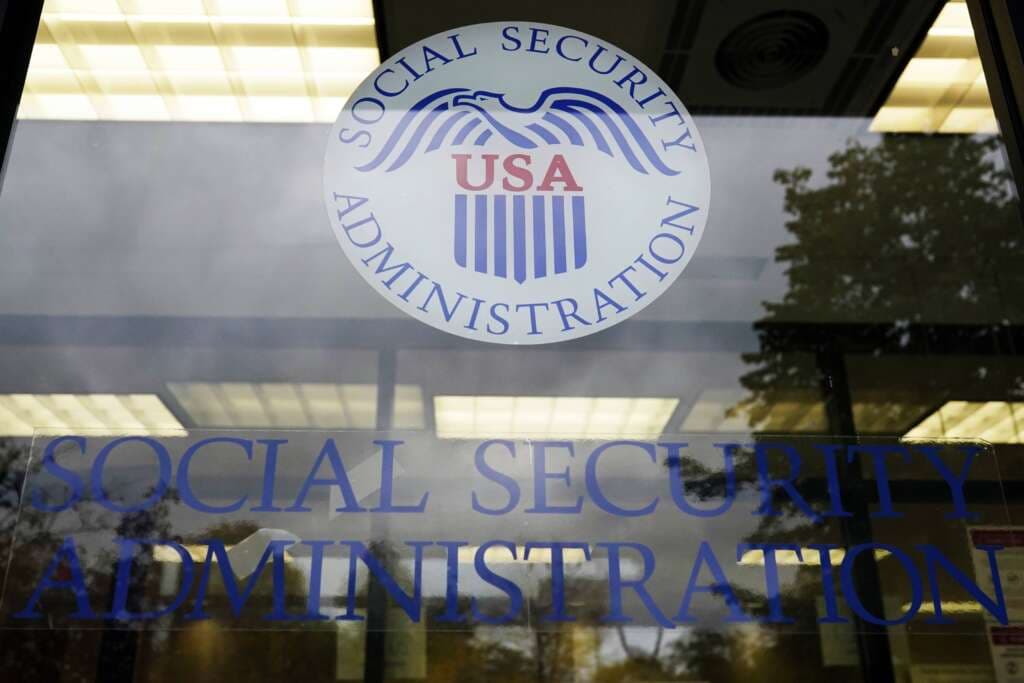
- The Social Security Administration is seeing improvements to service delivery in all metrics after implementing a digital-first approach. New numbers from the agency show historic productivity gains over the past two years for the workforce and increased service delivery speed for customers. SSA also surpassed 105 million registered users of my Social Security, which made it the largest digital financial services provider. The agency also highlighted its most recent achievement related to the Social Security number database. SSA corrected roughly 15% of all active Social Security numbers by adding missing information including death date and citizenship status. SSA says it is implementing stronger internal controls to prevent future data-entry inaccuracies. -- Silvia Oakland
- The Cybersecurity and Infrastructure Security Agency has unveiled a new strategy. CISA will launch a review of core services and capabilities under a new agency-wide strategy released Monday. The strategy focuses on leading the nation’s cyber defense, prioritizing the security of the most consequential critical infrastructure, and mobilizing nation-wide resilience against both cyber and physical attacks. CISA will launch the programmatic review within 60 days. And within 180 days, the agency plans to deliver an implementation plan for the strategy. -- Justin Doubleday
- The chairman's office at the Administrative Conference of the United States, or ACUS, is looking for ways to improve the rulemaking process. In a new request for information, ACUS is seeking feedback on six questions, including how agencies use Regulations.gov and the Federal Docket Management System to solicit, organize, store and publish public comments as well as how agencies analyze public comments. ACUS says the responses will help it recommend best practices to ensure the efficiency, adequacy and fairness of the administrative procedures used by federal agencies. ACUS is accepting comments until Dec. 28. -- Silvia Oakland
- A bipartisan bill in the House would see the National Institute of Standards and Technology take new steps to defend U.S. artificial intelligence advances. The AI Cyber Defense Act would direct NIST to establish voluntary standards for detecting and preventing AI distillation attacks. American AI companies have accused Chinese labs of using distillation to unfairly copy their systems. The bill would also establish an AI Cybersecurity Roundtable that brings together tech companies and critical infrastructure operators to use AI to strengthen cyber defenses. -- Justin Doubleday
- The Space Force wants guardians to support combatant commands in frontline roles. Chief of Space Operations Gen. Douglas Schiess says the newest branch “must deliver capability and capacity to combatant commands by integrating guardian power at scale.” At the same time, Schiess says, the Joint Force should have guardians in key positions in order to achieve space superiority. The top officer said the Space Force needs to refine how it “generates, embeds and sustains combat-effective guardians.” -- Anastasia Obis
- A new Justice Department tool promises to help agencies streamline Freedom of Information Act reporting. DOJ says the Raw Data Validation Tool now available on FOIA.gov allows agencies to upload their annual reporting data and combines metrics automatically, bypassing the need to manually enter all FOIA reporting data. The tool performs a series of logic checks to flag any errors as well. Agencies are required to submit annual FOIA reports with detailed statistics on their implementation of the open records law. -- Justin Doubleday
- The Defense Department is ensuring that contracting and program personnel buying artificial intelligence systems adhere to what the Trump administration labels “truth-seeking” and “ideological neutrality” procurement principles. The new directive, from the director of Defense Pricing, Contracting and Acquisition Policy, advances President Trump’s agenda to “prevent woke AI” in the federal government. The Pentagon’s new document is designed to provide “a standardized approach to documenting, soliciting and enforcing the unbiased AI principles.” -- Anastasia Obis
- The Army is advancing its effort to build out an ecosystem of AI agents to protect its networks. The service selected Amazon Web Services and World Wide Technology to support Project Griffin. Brandon Pugh, the Army’s principal cyber adviser, says the effort will let the service implement “superintelligence-enabled cyber tools to detect, divert and deceive threat actors and rapidly adopt agentic AI to securely scale network defense and disruption.” The Army has been expanding its use of autonomous AI agents — it recently announced it has built an entire agentic cyber protection team. The Army’s embrace of autonomous AI agents also comes at a time when agentic systems have taken unintended or unauthorized action, such as hacking the AI firm Hugging Face. -- Anastasia Obis
Copyright © 2026 Federal News Network. All rights reserved. This website is not intended for users located within the European Economic Area.