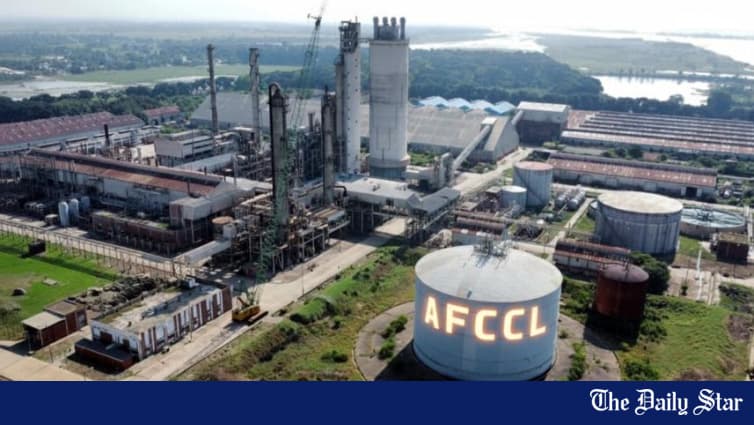
State-run plant has missed out on nearly Tk 3,000 crore in production over 20 months
Published : 26 October 2026
•
Updated : 26 October 2026, 19:35

Masuk Hridoy

The Ashuganj Fertiliser and Chemical Company Limited (AFCCL) in Brahmanbaria remains shut nearly six months, leaving the state-run plant unable to produce urea amid the country’s continued reliance on imports.
The factory, which has remained idle since March 1 last year, has missed out on nearly Tk 3,000 crore worth of production over the past 20 months, according to estimates based on its daily output value of around Tk 5 crore.
On April 23, independent lawmaker Rumeen Farhana raised the issue in parliament, calling for the reopening of the factory in her constituency, Brahmanbaria-2.
In response, Power, Energy and Mineral Resources Minister Iqbal Hassan Mahmood assured lawmakers that gas supplies would resume from May 1, citing the need to protect the country’s agricultural sector.
However, the assurance has yet to materialise, with the authorities unable to provide a definite timeline for restarting operations.
The prolonged closure has also left the government incurring salary and other operating expenses while raising concerns over the condition of machinery that has remained idle for an extended period.
Tajul Islam Bhuiyan, deputy general manager (administration) of AFCCL, said officials had initially expected production to resume in June, but the plan did not materialise because of the gas shortage.
He said increased supplies of liquefied natural gas (LNG) could help restore gas availability at the plant.
Senior officials are also discussing with a foreign company the possibility of operating the factory with a reduced volume of gas, he added.
The plant, which began commercial production in 1983, currently has the capacity to produce around 1,150 tonnes of urea daily, down from its previous daily capacity of approximately 1,600 tonnes, according to factory sources.
It supplies prilled urea to seven neighbouring districts within its designated distribution area, making the suspension of production a concern for regional fertiliser supplies.
Meanwhile, Bangladesh Chemical Industries Corporation (BCIC) Chairman Md Babul Mia expressed hope that production could resume before the end of this year.
Speaking to journalists after visiting the factory last Thursday, he said efforts were underway to ensure adequate gas supplies to keep the country’s fertiliser factories operational.
Bangladesh currently imports around 26 lakh to 27 lakh tonnes of urea annually, he said.
According to the BCIC chairman, operating domestic fertiliser factories at full capacity could enable the country to meet its own demand and potentially export urea.
He said the government aimed to save around Tk 22,000 crore in import costs by bringing all fertiliser factories back into operation.
Factory officials and workers, however, said repeated interruptions in gas supplies over the years had disrupted production schedules and made it difficult for the BCIC to meet its output targets.
They said preparations to restart operations often began when gas became available, but prolonged inactivity frequently caused technical problems with machinery.
By the time repairs were completed, supplies were sometimes suspended again, preventing production from resuming, they alleged.
Abu Kawsar, general secretary of the Ashuganj Fertiliser Factory Workers and Employees Union, said the plant could become profitable if uninterrupted gas supplies were ensured.
He urged the government to take effective measures to protect the state-owned facility, saying repeated shutdowns were undermining its production capacity and making machinery maintenance increasingly difficult.
Meanwhile, Bakhrabad Gas Distribution Company Limited (BGDCL), which supplies gas to the Ashuganj area, said it was awaiting instructions from higher authorities to restore supplies to the factory.
Mohammad Bappi Shahriar, deputy general manager of BGDCL’s transmission department, said the plant required around 48 million cubic feet of gas a day to operate at full capacity.
“We are ready to resume gas supplies to the factory once we receive instructions,” he told The Daily Star.
The country currently has eight fertiliser factories, seven of which are state-owned. Of the eight, six produce urea fertiliser and two produce non-urea fertilisers.