
An article from

Dive Brief // Obesity drugs
Novo failed to prove that Lilly’s campaign — which featured claims of obesity drug superiority — meaningfully harmed the Danish company’s sales, a federal judge ruled.
Published Oct. 27, 2026

Dive Brief:
- A federal judge denied Novo’s request to block an Eli Lilly advertising campaign comparing the companies’ respective obesity medicines Wegovy and Zepbound.
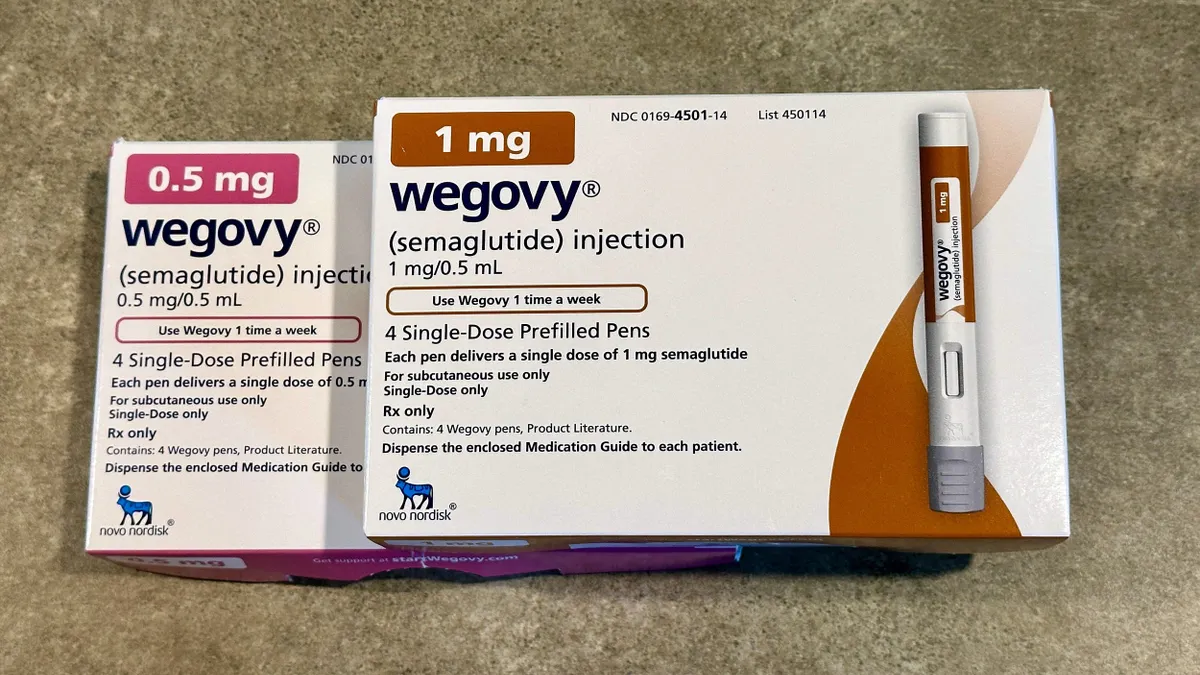
- Novo argued the advertisements used outdated studies to compare higher doses of Lilly’s medicines to lower doses of Novo’s products. The campaign caused “irreparable harm” and didn’t account for a more recently approved, higher-dose form of Wegovy, the company claimed in court documents.
- U.S. District Judge Zahid Quraishi ruled Monday that Novo failed to prove its case, as Wegovy prescription volume didn’t fall when the commercials aired and those ads acknowledged the existence of the higher-dose product. In an email to BioPharma Dive, a Novo spokesperson said the ruling didn’t “decide the question of whether Lilly’s advertising is false and misleading.”
Dive Insight:
Novo and Lilly are engaged in one of the most intense commercial battles in pharmaceutical history. Both are vying for control of a market opportunity Wall Street analysts expect to exceed $100 billion by 2030.
Novo had an early lead on its top rival. But since then, Lilly has grabbed the momentum. Zepbound bested the original Wegovy in a head-to-head trial, and Lilly quickly followed the launch of Novo’s Wegovy pill with an oral alternative of its own.
Along the way, tirzepatide, which Lilly sells as Zepbound for obesity and Mounjaro for diabetes, has become the industry’s best-selling product. The drugmaker’s outsized revenue numbers and healthy pipeline of follow-on prospects have propelled shares ever higher, helping it become biopharma’s first-ever trillion-dollar company — all while Novo’s value has sputtered.
Novo sued Lilly in July, claiming the emphasis of the head-to-head trial in Lilly’s promotions constituted deceptive advertising. The ruling handed down Monday was on Novo’s motion for a preliminary injunction to stop the campaign.
In a two-day hearing in August, the judge heard from Lilly U.S. finance chief Mark Stempel, who testified that Wegovy prescriptions remained stable during the April to July period the ads ran. Meanwhile, Novo witness Derrick Gastineau, the company’s U.S. vice president for obesity, “had not attempted to determine” any harm, Quraishi wrote in the ruling.
Furthermore, Quraishi wrote, Lilly altered the language in newer Zepbound ads following a cease-and-desist letter. Updated ads note the existence of high-dose Wegovy and specify that it wasn’t tested against Zepbound.
The judge also chastised Novo for advertising related to Ozempic, its GLP-1 shot for diabetes. Those ads claimed head-to-head superiority over a Lilly alternative called Trulicity, without revealing the availability of a higher-dose version, Quraishi wrote.
The Novo spokesperson stated that the ruling “does not constitute a final resolution of the merits of Novo's false advertising claims and instead only addresses whether the court will issue such an order at this early stage of the proceedings.”