Business Korea · সাধারণ
Samsung Commands Premium Prices for HBM
২৬/১০/২০২৬
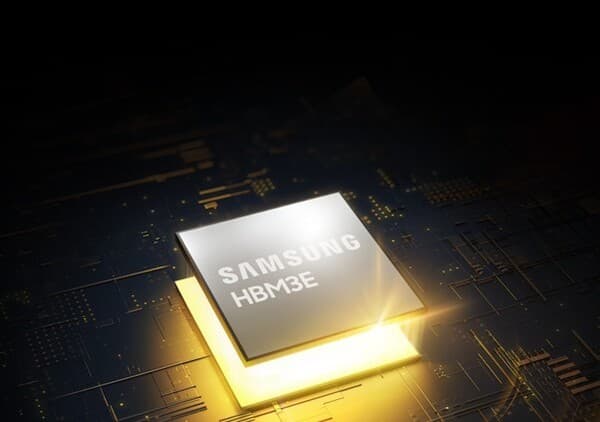
The photo shows a product image of Samsung Electronics’ HBM3E. (Photo courtesy of Samsung Electronics)
Samsung Electronics has been found to be securing pricing power by offering higher prices than its competitors, based on its stable High Bandwidth Memory (HBM) supply capacity.
As HBM supply shortages continue amid expanding investments in artificial intelligence (AI) infrastructure, this is evidence showing that big tech companies are prioritizing a stable supply chain over price.
According to foreign media and other sources on Oct. 26, the average quoted price for Samsung Electronics’ HBM was tallied at $4.50 per 1 gigabit (Gb), which is higher than Micron ($4) and SK hynix ($3.60 to $3.80). In a simple comparison, this means the price of Samsung Electronics’ products is 12.5% higher than Micron and about 18% to 25% higher than SK hynix.
The generation of HBM and the specific calculation criteria applied to this price comparison were not disclosed. According to industry estimates, prices are being formed or negotiated at about $1.5 to $2.5 per 1Gb for HBM3E and about $3 to $5 for the next-generation HBM4, based on long-term agreements (LTA).
Foreign media and others cited stable volume supply capacity as the reason why Samsung Electronics is more expensive than its competitors. As AI data center operators are paying more attention to supply schedule delays due to volume shortages rather than price, analysts state that a phenomenon of preferring Samsung Electronics’ HBM, which is equipped with mass supply capacity, is emerging.
In addition, Samsung Electronics’ ‘turnkey’ solution, which can process everything from HBM design to advanced packaging in a one-stop manner by operating memory and foundry businesses together, was pointed out as a competitive advantage.
The industry expects HBM prices to rise next year as well. Market research firm TrendForce forecast that the average selling price (ASP), reflecting the sales proportion by product of HBM in 2027, will rise by 121% compared to the previous year due to reasons such as the expanding proportion of HBM4 (6th generation HBM) and continuous supply constraints.
TrendForce’s analysis is that memory supply shortages could continue until next year as HBM and general-purpose DRAM compete for advanced processes and wafer production capacity amid continuing AI infrastructure demand. If resources invested in HBM production increase, it could also affect the production of general-purpose DRAM, raising the possibility of an increased supply and demand burden across the memory sector.
Big tech companies’ complaints surrounding memory prices are also surfacing. Previously, Tesla Chief Executive Officer (CEO) Elon Musk recently criticized through the social media X that while Micron has shown a reasonable attitude regarding future memory prices, other companies demanded excessively high prices.
Previously, Samsung Electronics, which announced its preliminary results on Oct. 8, tallied its third-quarter operating profit at 107.4 trillion won (about $81.18 billion). This is the first time in the history of a domestic company that quarterly operating profit has exceeded 100 trillion won, and the industry believes that the memory business of the DS Unit, which is in charge of semiconductors, led the overall performance.
Kim Dong-won, Head of Research at KB Securities, analyzed, “In 2027, the average selling price of (Samsung Electronics’) HBM is expected to rise by 100% to 150% compared to the previous year, driven by the effect of HBM4, which is priced at the industry’s highest level,” and “The proportion of HBM4 within HBM sales is expected to expand from 40% in 2026 to 80% in 2027.”
মূল প্রতিবেদনে যান ↗