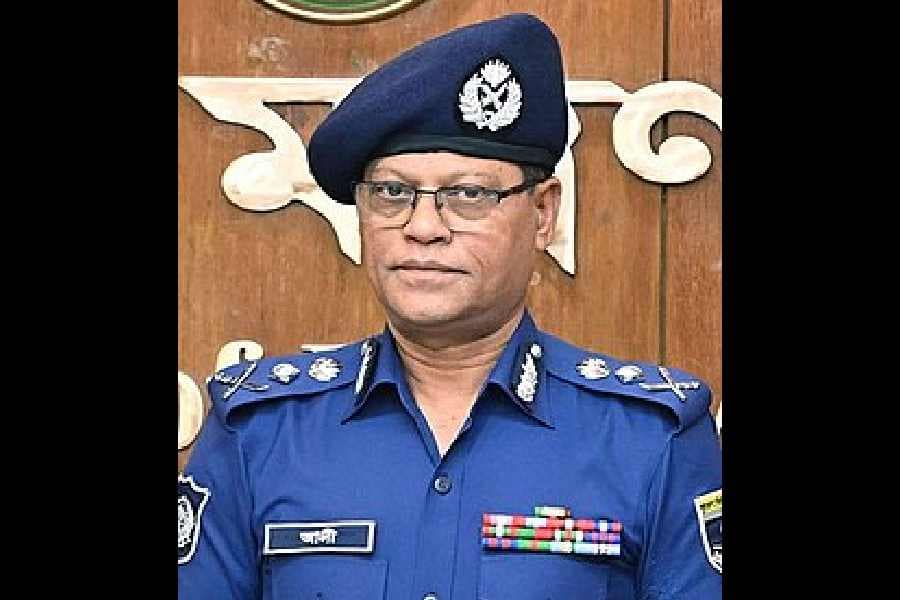
Bangladesh's police chief on Monday raised the possibility of reviving the controversial practice of "crossfire", a term widely associated with extrajudicial killings, saying law enforcement agencies could resort to it with government approval to maintain law and order.
Inspector General of Police (IGP) Md Ali Hossain Fakir made the remarks at an event in Dhaka's Chawkbazar marking the launch of Islamic banking services by Community Bank Bangladesh, which he also chairs.
"If the government permits, we will stage crossfire where it is necessary," Fakir said.
His remarks brought renewed attention to a practice that has drawn criticism from human rights organisations and political opponents over allegations of staged encounters and unlawful executions.
Fakir defended the police force, arguing that officers faced criticism regardless of how they responded to law-and-order situations.
"When the police use batons, they are called fascist police, while they remain silent, they are called weak police," he said.
He urged the public to allow officers to perform their duties within the framework of the law and said the force needed a suitable working environment to fulfil its responsibilities.
The police chief also accused a section of journalists of accepting money linked to drug trafficking and criminal activities, claiming that some portrayed the police as ineffective when they failed to receive such benefits.
"You (journalists) are not speaking out against drugs. Instead, you are secretly taking money from there. When you journalists do not get money from there, you write that the police have become ineffective," Fakir said.
A controversial history of 'crossfire'
In Bangladesh, the term "crossfire" has long been associated with alleged extrajudicial killings by police and the elite anti-crime Rapid Action Battalion (RAB), which has recently been renamed.
Security forces have traditionally described such deaths as accidental exchanges of gunfire, claiming that suspects were killed when criminals attacked patrol teams or when detainees attempted to escape with help from armed accomplices.
Human rights organisations and political opponents repeatedly criticised police and RAB over alleged extrajudicial executions, particularly during the government of former Prime Minister Sheikh Hasina.
The practice, however, predates the Awami League administration.
One of Bangladesh's earliest widely cited cases of an alleged extrajudicial killing involved ultra-left Maoist leader Siraj Sikdar, who died in police custody in 1975 under circumstances later compared with "crossfire" incidents.
The expression became widely used in the country's security establishment in March 2004, following the formation of an elite anti-crime force under the Bangladesh Nationalist Party (BNP) government led by Prime Minister Khaleda Zia.
The force drew personnel from the army, navy, air force and regular police.
Alleged "crossfire" killings were reported frequently during the BNP-led administration, in which Jamaat-e-Islami was a key coalition partner.
The practice continued under the succeeding Awami League government, which was ousted following the July Uprising on August 5, 2024.