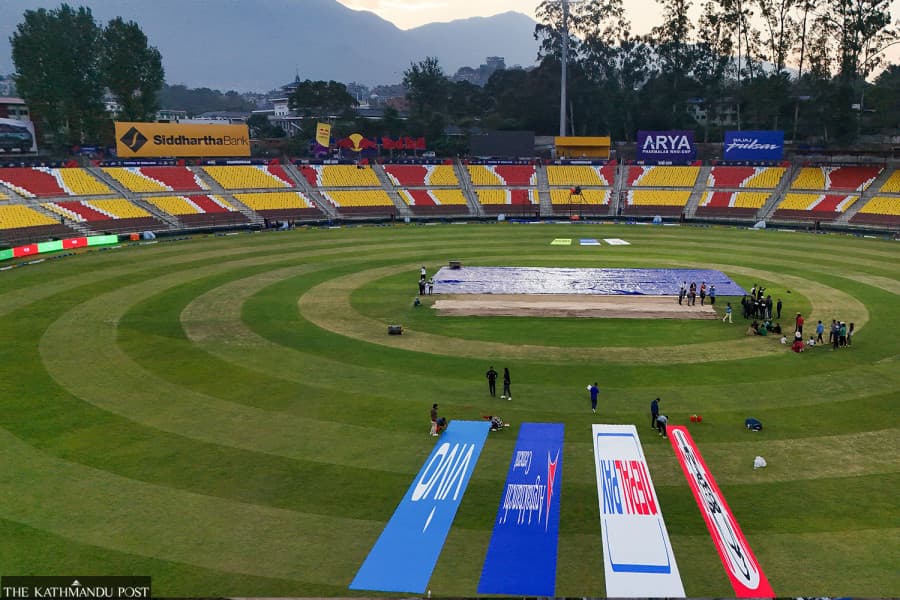
The Nepal Premier League’s third season has been disrupted by the Pakistan Cricket Board’s (PCB) restrictions on players seeking to compete in overseas leagues. The board reportedly demanded $25,000 from Pakistani cricketers for permission to play in Nepal, leaving franchises uncertain about the availability of seven players they had signed for the tournament.
Pakistan’s T20 captain Sahibzada Farhan, who had already arrived in Kathmandu, returned home despite Karnali Yaks being prepared to pay the amount. Chitwan Rhinos, meanwhile, were without any of their Pakistani signings when they faced Biratnagar Kings in Tuesday’s opening match. The uncertainty has disrupted team plans and raised questions about how Nepali franchises can protect themselves against last-minute changes to overseas players’ availability.
Here is what to know about the PCB’s NOC rule and how it has affected the Nepal Premier League.
What is the PCB’s NOC rule?
The No Objection Certificate (NOC) is an official clearance issued by the Pakistan Cricket Board (PCB) that allows its contracted and domestic players to participate in foreign franchise leagues. Under its current policy—PCB NOC Guide 2020—the PCB limits players to a maximum of three foreign leagues per year, excluding the Pakistan Super League (PSL), and retains full authority to grant, delay or revoke clearances based on international commitments and workload management.
Why does the PCB restrict its players from playing abroad?
The PCB uses the NOC mechanism to protect player fitness, manage fast-bowler workloads, and prevent injuries ahead of international series. It also ensures top talent remains available for domestic competitions while safeguarding the commercial exclusivity of the PSL.
How does this rule affect Pakistani players set to play in Nepal?
When the PCB denies or delays NOCs, Pakistani cricketers signed by Nepal Premier League (NPL) franchises are forced to withdraw or delay their arrival at the last minute. PCB had demanded USD 25,000 from the players to be allowed to play in the NPL. Without formal administrative clearance from the board, Pakistani players cannot take the field, regardless of their franchise contracts. There were seven Pakistani players signed by NPL franchises for the third season.
Karnali Yaks had announced Pakistan’s T20 skipper Shahibzada Farhan and Hussain Talat. Iftikhar Ahmed and Hunain Shah were supposed to play for Janakpur Bolts. Farhan, who had arrived in Kathmandu, returned despite Karnali being all set to pay the amount.
Chitwan Rhinos, which had announced Usama Mir, Hasan Ali and Mohammad Nawaz, were without any Pakistani players in the squad while facing Biratnagar Kings in the first match of Tuesday.
What impact did this have on Nepali franchises and the tournament?
Sudden NOC withholdings disrupt team recruitment strategies, combination plans, and promotional campaigns built around international stars. Franchises are forced into making rushed emergency replacements, while tournament organisers face operational uncertainties just as events like the NPL Season 3—which kicked off with a sold-out opening match between the Lumbini Lions and Sudurpaschim Royals—get underway.
How can Nepali leagues adapt to these administrative hurdles?
To mitigate the risk of late withdrawals, Nepali franchises will be bound to increasingly diversify their overseas recruitment. Teams will have to target players from boards with more flexible NOC policies or focus on top talent from other Associate nations and non-contracted international players who do not face strict board restrictions.
What do cricket experts say?
In an interview with Kantipur on Tuesday morning, CAN secretary Paras Khadka said that it was up to the franchises. “If the franchises fulfil the rules of PCB, which is essential, Pakistani players can play,” he said. “We must respect the rules.”
NPL had seen Pakistani players feature in the tournament before. For instance, Sohail Tanvir played the first two seasons for Chitwan. He is now the head coach of the franchise for the third season. As per franchise owners, there was no need to submit USD 25,000 before.
Shohaib Akhtar, the legendary Pakistani pacer who is in Nepal as an expert analyst, did not have much to say about the issue when asked live on Monday. He reiterated that PCB has always tried to support other cricketing nations.
NPL is not the first franchise league to suffer from PCB’s NOC restriction. A similar case had been observed in Major League Cricket earlier this year as well. Many pundits have also stressed that the rule was one of the reasons why franchise cricket around the world was hesitant to sign Pakistani cricketers.