Luiz Inácio Lula da Silva, the Brazilian President has won a fourth presidential term, defeating right-wing challenger Flávio Bolsonaro after overturning his first-round defeat in a closely contested election.
Read also:Brazil takes Nigeria to political school the second time in one month
Lula secured 51.79 percent of valid votes against Bolsonaro’s 48.21 percent, according to Brazil’s Superior Electoral Court. The final tally gave Lula 64.26 million votes, about 4.43 million more than Bolsonaro’s 59.83 million.
The result makes Lula the first candidate since Brazil’s return to democracy to lose the first round of a presidential election and go on to win the runoff. At 80, he will remain in office until 2030, extending a political career that has included two previous consecutive terms from 2003 to 2010 and his return to power in 2023.
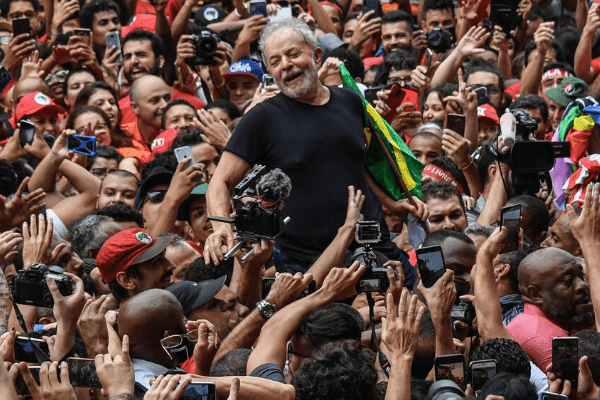
Speaking to cheering supporters in São Paulo, Lula thanked voters who, he said, had “defended Brazilian democracy”. He also declared that Brazil “will not accept being anyone’s backyard”, in a message that underscored his emphasis on national sovereignty and an independent role for the country in international affairs.
“Long live democracy,” Lula said. He promised that his fourth term would be “the best of any president in the history of this country”, adding that it would be the one in which he listened most to the Brazilian people.
Read also: Nigeria, Brazil intensify move to implement $3.5bn trade agreements
Lula’s victory followed weeks of campaigning and efforts by his supporters to mobilise voters through social media and rallies in major cities, including São Paulo and Rio de Janeiro. Voter turnout rose in the second round, with 80.8 percent of registered voters participating, while abstention fell to 19.22 per cent from 21.08 percent in the first round.
The election day was also marked by disputes over access to polling stations and voting hours. Lula’s campaign alleged that a shortage of buses in several cities had prevented some voters from reaching polling stations. Bolsonaro’s campaign raised concerns about adverse weather in southern Brazil and sought an extension of voting hours. Voting was extended by two hours.
Read also: Brazil, Malaysia, US investors eye Delta agriculture, energy projects
Bolsonaro, a senator representing Rio de Janeiro and son of former president Jair Bolsonaro, refused to accept the result, describing it as “inexplicable” and calling for the election to be annulled. However, the Superior Electoral Court declared Lula elected after completing the count.
The younger Bolsonaro, 45, campaigned on a right-wing platform that included tougher criminal penalties and more relaxed gun laws. His political approach broadly follows that of his father, who lost the 2022 election to Lula and was later convicted of plotting a coup. The elder Bolsonaro is serving his sentence under house arrest.
Lula, a former metalworker and leader of the left-wing Workers’ Party, built his political career around workers’ rights and social welfare programmes. During his earlier presidencies, he became internationally associated with efforts to reduce poverty and protect the Amazon rainforest.
His environmental record remains contested, however, particularly over his government’s support for exploratory oil drilling near the mouth of the Amazon River, which has drawn criticism from environmental groups.
The election result leaves Lula facing the challenge of governing a deeply divided country. His narrow margin over Bolsonaro shows that a substantial share of voters backed the opposition, making economic policy, public security and environmental decisions likely to remain contentious issues during his next term.
Related News

Faith Omoboye is a foreign affairs correspondent with background in History and International relations. Her work focuses on African politics, diplomacy, and global governance.

