
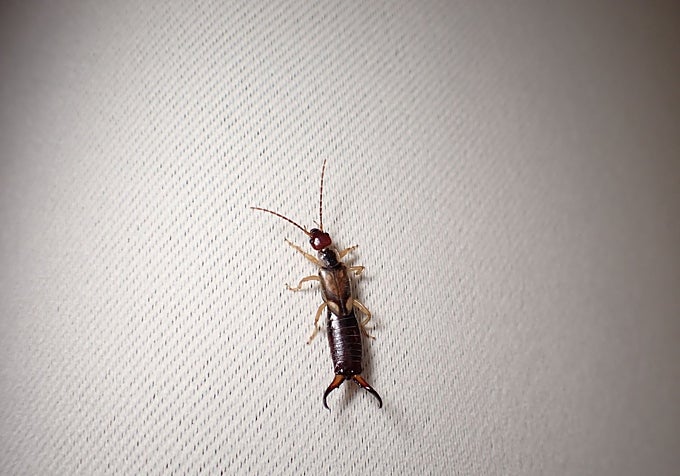
The first autumn rains and the drop in temperatures in Malaga province, however brief, have triggered the appearance of earwigs, a common name for Forfícula ... auricularia. Homes are beginning to see large numbers of these insects, which, despite their unpleasant appearance and pincers, are harmless.
This species is heavily dependent on specific humidity and temperature conditions. Changes in the weather alter its usual outdoor habitats and trigger a collective migration towards dry, sheltered environments to ensure its survival and overwintering.
Sur has recently received several messages from readers concerned about the proliferation of earwigs in Malaga. We have contacted Juan Zamudio, a supervisor at the pest control company Rapiplaga, who says that this is due to an "exodus in search of shelter".
"Prevention is always best: remove dead vegetation, fallen leaves… Exclusion systems also help. We're talking about well-fitted draught excluders and seals on doors, made of rubber rather than brush strips, as they provide a better seal," Zamudio says.
It is not unusual to see them on empty terraces, even ones without any plants, where they can often be found among drying laundry. "They look for a place of refuge and, from there, move on in search of shelter and food," Zamudio says.
On the subject of applying insecticides around the perimeter, he points out that this is of little use: "The residual effect of insecticides is very limited these days, even more so in the case of those for domestic use."
Home remedies such as traps made from a tin, vegetable oil and a drop of soya sauce are also of little use. "Traps won't yield significant results beyond something almost anecdotal. This is an exodus in search of shelter and the best approach is to create an environment around the house with no hiding places or overgrown vegetation," the expert explains.
It is advisable not to take any action, except in cases of phobia or severe infestation. In such cases, the recommended course of action is to vacuum and apply treatments both indoors and outdoors.
"It's a temporary phenomenon and they're harmless. The peaks in the number of reports we receive last two or three weeks. We also had a lot of them last year," he says.
Earwigs usually take shelter underground. When it gets cold or their burrows become flooded, they seek out dark crevices in which to lay their eggs. As they migrate, they climb to higher ground.
Biologically speaking, they are insects of the order Dermaptera, nocturnal in nature, reddish-brown in colour and between 12 and 15 millimetres in length. Despite the appearance of their abdominal pincers and the long-standing popular myth about their tendency to crawl into human ears, they are completely harmless.
These insects do not transmit diseases or damage the structure of buildings. What's more, they are valuable allies in gardens as they feed on aphids, mites and larvae during the night.
They are driven by thigmotaxis, their biological need for darkness and contact with surfaces. They usually stay in door frames, doorways, thresholds, windows, but if they get inside, they settle in kitchens, cellars, bathrooms, piles of firewood.