By Ajong Mbapndah L

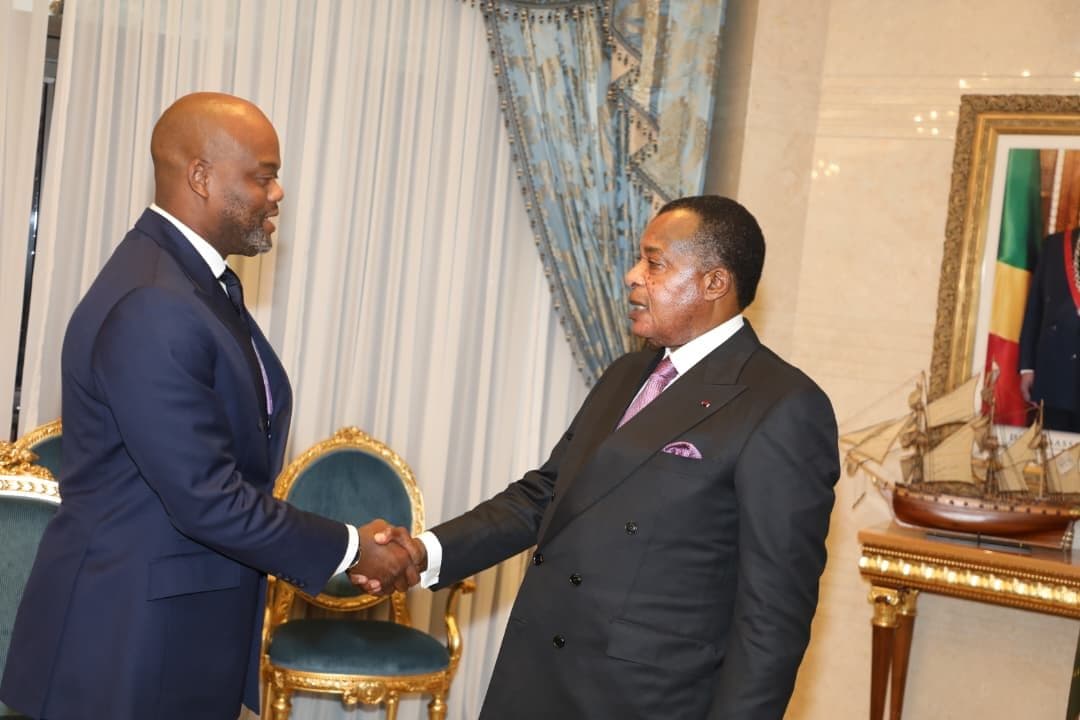
African Continental Free Trade Area (AfCFTA) Secretary-General Wamkele Mene has held high-level talks with President Denis Sassou Nguesso of the Republic of Congo, as efforts intensify to accelerate continental economic integration, dismantle barriers to cross-border commerce and create greater opportunities for women and young entrepreneurs across Africa.
The meeting, held in Brazzaville on October 23, provided an opportunity for Mene to brief the Congolese leader on the state of AfCFTA implementation and discuss measures needed to translate Africa’s ambitious free trade agenda into tangible economic benefits for businesses and citizens.
The audience took place on the sidelines of the HerAfCFTA Regional Conference for Central Africa, held from October 21 to 23, bringing together policymakers, regional institutions, development partners and stakeholders committed to expanding women’s participation in intra-African trade.
Organised by the Government of the Republic of Congo in collaboration with the AfCFTA Secretariat, the United Nations Development Programme (UNDP) and the Economic Community of Central African States (ECCAS) Commission, the conference placed particular emphasis on empowering women entrepreneurs, improving access to African markets and strengthening regional economic cooperation.
At the heart of the discussions was a growing recognition that Africa’s economic integration ambitions will remain incomplete unless women and young people, who constitute a significant share of the continent’s entrepreneurial population, are equipped to participate meaningfully in the opportunities created by the continental free trade agreement.
In his closing remarks, Mene called for a practical action plan capable of delivering measurable results within the next 12 months, moving beyond policy commitments to concrete interventions that would strengthen businesses and expand trading opportunities.
Among the priorities outlined by the Secretary-General were improving market access for women- and youth-led enterprises, facilitating access to trade finance and harnessing digital technologies to connect African businesses with customers and commercial partners across national borders.
Access to finance remains a major obstacle for many African entrepreneurs, particularly women operating small and medium-sized enterprises. Mene stressed the importance of helping businesses become bankable and mobilising African development finance institutions to provide the resources required for expansion, investment and competitiveness.

He also underscored the need to dismantle structural and administrative barriers that continue to restrict women-led businesses from participating fully in regional and continental value chains.
The conference highlighted a proposal to establish a regional HerAfCFTA network in Central Africa, which would strengthen collaboration among women entrepreneurs, encourage knowledge sharing and create opportunities for businesses to develop partnerships across the region.
Such a network could provide an important platform for connecting women-owned enterprises with regional markets, financial institutions and trade support organisations, particularly in a region where fragmented markets, infrastructure gaps and complex cross-border procedures continue to constrain commercial activity.
Congo’s Visa-Free Initiative Draws Praise
A significant development during Mene’s visit was his endorsement of the Republic of Congo’s announced decision to introduce visa-free entry for African nationals beginning January 1, 2027.
The AfCFTA Secretary-General congratulated President Sassou Nguesso and his government on the initiative, recognising the importance of freer movement of people in facilitating business exchanges, investment and trade across the continent.
The announcement comes amid renewed calls for African governments to remove restrictions that complicate travel for entrepreneurs, investors and professionals seeking opportunities beyond their national borders.
While the AfCFTA seeks to establish a single African market for goods and services, the movement of businesspeople remains an essential component of its success. Visa restrictions, costly travel arrangements and cumbersome border procedures continue to undermine the ability of African enterprises to explore markets and establish commercial relationships.
Congo’s planned visa-free policy, if implemented as announced, could strengthen the country’s position as a destination for business engagement and regional economic cooperation while contributing to broader continental efforts to facilitate mobility.
For Central Africa, where regional integration has frequently faced logistical and regulatory challenges, measures that simplify movement between countries could provide additional momentum to efforts aimed at stimulating trade, tourism and investment.
Turning Africa’s Free Trade Ambitions into Results
The Brazzaville engagements also reinforced the importance of implementation as the AfCFTA moves from negotiated commitments toward the practical development of an integrated African market.
Designed to create one of the world’s largest free trade areas by participating countries, the AfCFTA offers African economies an opportunity to expand intra-continental commerce, stimulate industrialisation, strengthen regional value chains and reduce dependence on external markets.
However, achieving these objectives requires more than tariff reductions and trade agreements. Businesses must be able to access financing, obtain reliable market information, navigate customs procedures and transport their goods efficiently across borders.
For women entrepreneurs, these challenges are often compounded by limited access to capital, business networks and opportunities to participate in larger supply chains.
The HerAfCFTA initiative seeks to address some of these obstacles by placing women at the centre of the continent’s trade transformation and encouraging governments and institutions to develop policies that support their participation.

Mene’s emphasis on measurable results over the coming year reflects the need for stronger coordination between national governments, regional economic communities, financial institutions and development partners.
Digital trade was also identified as an important avenue for expanding opportunities, particularly for smaller enterprises that may lack the resources to establish a physical presence in multiple African markets.
By embracing digital platforms and technologies, African entrepreneurs could gain access to new customers, establish cross-border partnerships and participate more effectively in emerging continental value chains.
The AfCFTA Secretariat reaffirmed its commitment to working closely with governments, regional institutions and development partners to ensure that the priorities identified in Brazzaville translate into meaningful opportunities for women and young people.
For President Sassou Nguesso and the Republic of Congo, hosting the regional conference and receiving the AfCFTA Secretary-General placed Brazzaville at the centre of renewed discussions on the future of trade integration in Central Africa.
The engagements also highlighted the growing importance of political leadership in advancing continental economic integration, particularly as African countries seek to overcome longstanding obstacles to trade and investment.
As the AfCFTA implementation process gathers momentum, the message emerging from Brazzaville was clear: the success of Africa’s single market will ultimately be measured not only by agreements signed or policies adopted, but by the number of African businesses able to access new markets, attract investment, create jobs and compete successfully across the continent.
For women and young entrepreneurs, the challenge now is ensuring that the commitments made in Brazzaville produce the financing, partnerships and market opportunities needed to turn the promise of the AfCFTA into economic reality.