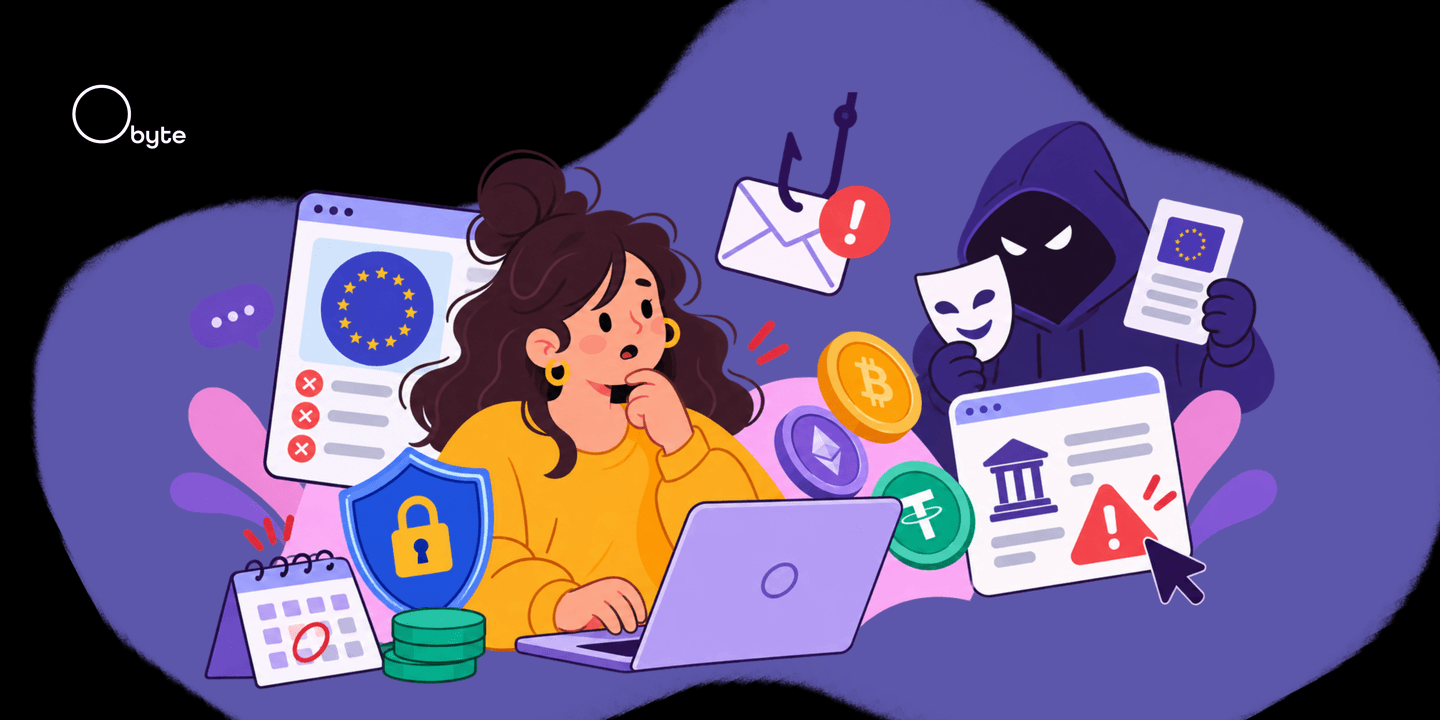
Since first proposed in 2020 by the European Commission, the MiCA (Markets in Crypto-Assets) legal framework has come a long way, entering full force by December 2024. This set of rules is designed to regulate crypto-asset markets and related companies (especially companies), in order to protect European users. That's why it's so paradoxical that crypto scammers are now using it as a tool for theft.
Even if the law was already in full force, a grace period was granted to non-registered crypto companies like exchanges or custodians to catch up with the new rules. That period ended on July 1, 2026. Since the
That’s where the scammers entered the picture.
How the MiCA Deadline Crypto Scam Looks Like
One random day, you may receive an official-looking email from a governmental authority. It could be the European Securities and Markets Authority (ESMA), France's Autorité des Marchés Financiers (AMF), Austria's Financial Market Authority, the U.K.'s Financial Conduct Authority (FCA), or any other within the European region.
The logos seem legitimate; the message is alarming: you need to move your crypto funds ASAP, because X provider is winding down operations due to the MiCA deadline. They offer instructions on how to do it and provide links to “safe” providers where you can deposit your coins. Of course, once there, your funds are gone forever, and the scam is completed.

Don’t Be Another Victim
The main rule is simple: don't let an unexpected message rush you into moving money or sharing access with anyone, no matter who they claim they are. Real regulatory changes may require action, but
- Check messages independently. Don't click links in unexpected emails or private messages. Open the exchange's official website yourself and look for the same announcement. If you need to contact a regulatory authority, do it.
- Verify the exact company. A familiar brand name isn't enough. Check whether the specific legal entity serving you appears in an official register of authorized providers.
This one here may help you. - Never send crypto to “protect” it.Requests for administrative fees, recovery payments, or transfers to a supposedly safe wallet are major warning signs.
- Always prefer self-custodial wallets over third-party services. If you really need to withdraw your funds, don’t follow urgent recommendations. Select a self-custodial wallet yourself. In
Obyte , only you have control of your funds.
-
Protect your private keys. These 12-24 random words are the only access to your funds, so mostly don’t share them with anyone, except very trusted individuals or for
inheritance purposes . In Obyte, you can create offline private keys (a textcoin ) to protect your coins and data.
-
Keep control of your devices. Don't install remote-access software or share your screen with someone claiming to help with a migration.
-
Pause before approving anything. A deadline may be genuine, but pressure to act within minutes is a scammer's favorite little shortcut.
MiCA’s new rules may bring more order to Europe’s crypto market, but scammers are already looking for confusion around the transition. So, don't trust, verify. There are traps in our way.