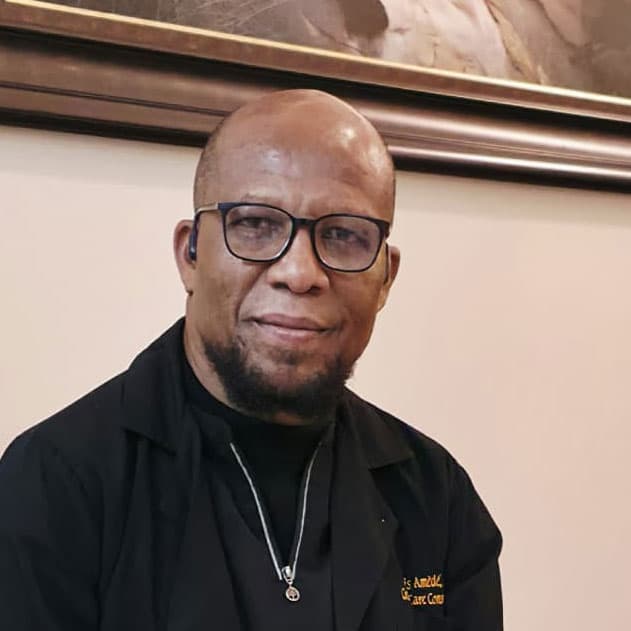
by Francis Amede, MD
In Part 1, we examined why election promises so often fail to produce lasting improvements in public safety, healthcare, and government services across Grenada and the wider Caribbean. In this concluding instalment, we examine how citizens, public institutions, and elected representatives can establish measurable accountability and implement reforms that endure beyond electoral cycles.
Making election promises measurable and enforceable
Political manifestos should no longer be treated merely as campaign literature. They should become public documents against which elected administrations are regularly evaluated. Every major election promise should identify a measurable objective, an implementation timetable, an estimated cost, a proposed funding source, and the government department responsible for delivery.
For example, a promise to improve healthcare is too vague to evaluate. A commitment to reduce average waiting times for a defined category of diagnostic tests by a specified percentage within 3 years is considerably more meaningful. Likewise, a pledge to modernise public administration should specify how many services will be integrated, how long transactions should take, and when improvements will become available.
Grenada and other Caribbean countries should consider establishing an independent Election Promise and Government Performance Observatory. Such an institution, ideally supported by legislation or a credible independent civic partnership, could monitor manifesto commitments, examine budget allocations, assess implementation progress, and publish accessible reports. Its findings should distinguish between promises fulfilled, partially fulfilled, delayed, abandoned, and those that cannot yet be independently verified.
Governments must also have the opportunity to explain legitimate obstacles, including natural disasters, unexpected economic shocks, or changes in available funding.
Accountability should not become a simplistic exercise in political accusation. It must be fair, evidence-based, and consistent across administrations.
Parliamentary committees, auditors general, civil society organisations, professional associations, independent journalists, and ordinary citizens all have important roles in this process.
Ultimately, voters must be willing to judge political leaders by demonstrated performance rather than party affiliation alone.
Strengthening institutions and confronting the culture of impunity
Grenada does not need to invent every accountability mechanism from the beginning.
Section 82 of the Constitution establishes the Office of the Director of Audit, with responsibilities for examining public accounts and reporting to Parliament. The Public Accounts Committee provides another important mechanism for parliamentary scrutiny (Government of Grenada, n.d.).
Nevertheless, oversight institutions are effective only when they have adequate resources, timely access to information, institutional independence, and the ability to ensure that their findings receive serious attention.
A particularly troubling historical example appears in Grenada’s Fiscal Responsibility Oversight Committee’s 2022 annual report, which stated that audited public accounts had not been submitted to Parliament since 2016. This finding does not establish the position as of October 2026, but it illustrates the seriousness of weaknesses that can develop when accountability requirements are not consistently observed (Fiscal Responsibility Oversight Committee, 2023).
Government should therefore establish mandatory timelines for responding to audit findings, publish corrective-action plans, and require responsible officials to explain unresolved deficiencies.
Public procurement should be transparent, with accessible information on major contracts, project costs, completion dates, and material variations in expenditure.
Public-sector appointments and promotions should be guided by competence, professional qualifications, ethical conduct, and demonstrated performance rather than political connections.
Civil servants must also receive adequate training, reasonable working conditions, and the authority to recommend improvements without fear of retaliation.
The objective is not to humiliate public employees or create a punitive bureaucracy. It is to build a professional public service that rewards excellence, identifies weaknesses, and corrects problems before they become national scandals.
A practical reform agenda for Grenada and the Caribbean
Meaningful transformation does not require every problem to be solved simultaneously. It requires a credible sequence of reforms, realistic budgets, and a willingness to measure results.
Grenada could begin with a 5-year National Service Delivery and Accountability Programme supported, wherever possible, by broad parliamentary and civic agreement.
During the first year, government should commission an independent assessment of its most frequently used public services, identify unnecessary administrative steps, and publish baseline measurements of waiting times, processing costs, and citizen satisfaction.
Within 2 years, a pilot One-Stop Government Services Centre could be established, integrating selected high-demand services. Successful elements could then be expanded to other communities, including Carriacou and Petite Martinique, with appropriate provision for remote access.
Healthcare reform should begin with a national service-capacity assessment, followed by measurable targets for essential medicines, diagnostic access, emergency care, and specialist referrals.
Public-safety reform should establish an integrated strategy that combines professional policing, effective investigations, youth development, community participation, and judicial efficiency.
All major programmes should have publicly available budgets, responsible officials, implementation milestones, and annual performance reviews.
Regional cooperation through Caricom, the Organisation of Eastern Caribbean States, the Caribbean Development Bank, and other development partners could reduce duplication and help smaller countries share technical expertise.
The World Bank’s approach to government modernisation emphasises citizen-centred services, accessible digital systems, institutional reform, and public participation. These principles offer a practical framework for Caribbean governments seeking more effective administration (World Bank, 2019).
But reform cannot succeed through technology alone. A poorly designed administrative process does not become efficient merely because it is transferred onto a computer. Government must first eliminate unnecessary procedures, clarify responsibilities, train employees, and establish enforceable service standards.
Citizens must become active guardians of democracy
Accountability is not solely the responsibility of politicians, auditors, journalists, or parliamentary committees. It is also a civic responsibility.
Citizens must demand evidence rather than slogans, examine public budgets, question unexplained delays, attend public consultations, and insist that elected representatives provide regular accounts of their stewardship. Professional associations, churches, trade unions, business organisations, universities, youth groups, and community institutions should contribute constructively to national policy discussions. The media must remain independent, investigative, and willing to scrutinise every administration by the same standards.
Equally important, political leaders must recognise that legitimate criticism is not disloyalty. A citizen who questions hospital conditions, police effectiveness, public expenditure, or administrative inefficiency is not necessarily attacking the government. That citizen may be exercising the highest form of democratic responsibility.
We must move beyond the dangerous assumption that supporting a political party requires defending every decision it makes.
True patriotism demands loyalty to the country and its people above loyalty to any political organisation.
Conclusion: The Caribbean deserves government that works
Grenada and the wider Caribbean possess extraordinary human talent, educated professionals, resilient communities, and considerable opportunities for development.
Our limitations are real. Small populations, restricted fiscal resources, exposure to natural disasters, international economic pressures, and the migration of skilled professionals complicate governance. Nevertheless, these challenges cannot become permanent excuses for avoidable inefficiency, inadequate planning, and repeated failures to deliver essential services.
A citizen should not have to spend an entire day obtaining a routine document. A patient should not face unnecessary danger because basic medical systems are poorly coordinated. A community should not have to endure preventable insecurity while successive governments recycle the same promises. And taxpayers should never be expected to accept perpetual explanations without measurable progress.
The standard by which we judge political leadership must change.
Instead of asking only what a candidate promises during an election, we must ask what was accomplished during the previous term, what remains unfinished, how public money was spent, and what evidence supports the next set of commitments. The real measure of government is not the grandeur of its announcements, but the quality, efficiency, fairness, and reliability of the services it delivers.
The Caribbean does not suffer from a shortage of political promises. What it urgently needs is a stronger culture of implementation, accountability, and measurable results. Until that culture takes root, election seasons will continue to offer new hopes while too many old problems remain.
Our citizens deserve better. Our institutions can do better. And our political leaders, regardless of party affiliation, must be required to do better.
References
Fiscal Responsibility Oversight Committee. (2023). 2022 annual report. Ministry of Finance, Government of Grenada. https://www.finance.gd/docs/2023/FROC%202022%20Annual%20Report.pdf
Government of Grenada. (n.d.). Audit Department. https://www.gov.gd/index.php/audit
World Bank. (2019). Grenada digital government for resilience project (Project No. P167588). https://documents1.worldbank.org/curated/en/370621567389621226/pdf/Grenada-Digital-Government-for-Resilience-Project.pdf
NOW Grenada is not responsible for the opinions, statements or media content presented by contributors. In case of abuse, click here to report.