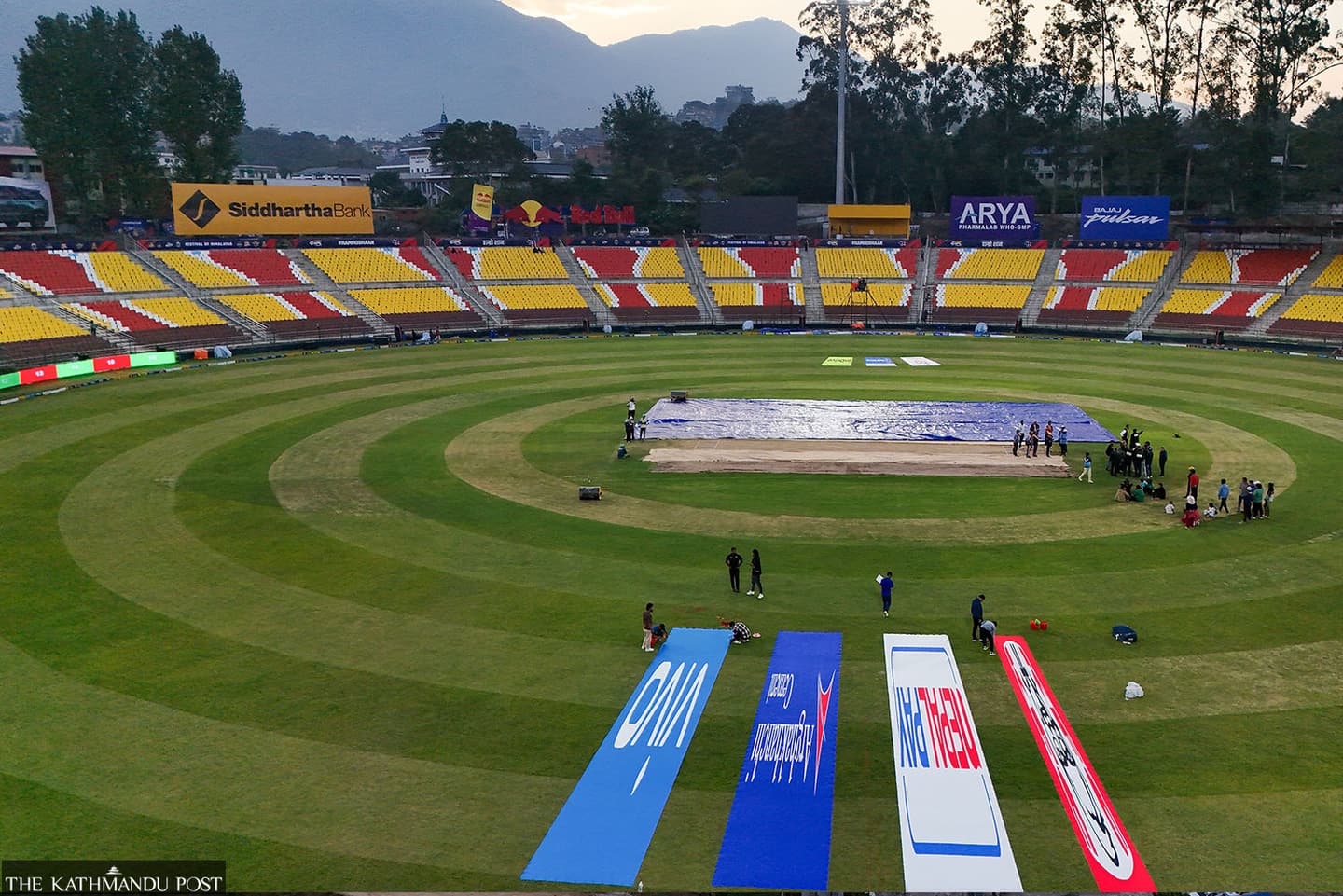
The third season of the Nepal Premier League begins on Monday, with the impact of dew emerging as one of the factors that could shape the tournament. How much it affects playing conditions could influence both match tactics and results.
Of the 32 matches, 21 will start at 5pm under floodlights, while the remaining 11 are scheduled for 12.30pm. Dew is unlikely to affect the afternoon fixtures, but it could become a factor in the evening games.
The tournament’s biggest matches will mostly be played under lights. The final, both qualifiers and the eliminator are all scheduled for the evening, making the conditions particularly important for the teams involved.
Dew can make the ball slippery and harder for bowlers to grip, giving batters an advantage. It can also make fielding more difficult, with players struggling to hold on to the ball or execute accurate throws.
Much will depend on the weather in Kathmandu over the coming weeks, including how cold it gets. The final four matches are scheduled for mid-November, when conditions could be different from those at the start of the tournament.
Sunday’s conditions at the TU International Cricket Ground in Kirtipur suggested that dew might not play a decisive role, at least during the opening half of the competition.
Dew was not a concern in the inaugural season, when every match was played in the afternoon. During the second season, it made little difference to the evening fixtures. This year’s tournament is being held about a month earlier than last year’s, which could also affect how much dew develops.
At a media day held a week before the tournament, Cricket Association of Nepal secretary Paras Khadka predicted that dew would have only a limited impact. Umpire Devendra Subedi shared that assessment. Both, however, stressed that the outcome would depend largely on the weather in the days ahead.
Of the six pitches available at the Kirtipur ground, up to four will be used during the tournament. They are expected to offer a reasonably balanced contest between bat and ball, although the early expectation is that they may favour batters slightly.
If the pitches do provide an advantage to batters, teams with stronger batting line-ups could have the upper hand. Their ability to put up competitive totals and chase targets may prove more important than the contribution of their bowlers alone.
That raises another question: how much will the toss matter?
The expectation is that it will not be a decisive factor. Losing the toss should not, in itself, be seen as a reason for defeat. Whether to bat or bowl first will depend on the conditions on the day and the strengths of the team.
In evening matches, batting first could sometimes be the better choice, but there is no universal rule. The opening fixtures should offer a clearer picture of how the pitches behave, whether dew becomes a problem and how teams should approach the toss.
By then, the balance between batting and bowling, the effect of dew and the value of batting first or chasing should become easier to judge.