
analysis Singapore
While the reduction is unlikely to significantly affect Singapore's electricity supply or prices, analysts say it raises broader questions about energy security for both Singapore and Indonesia.

Analysts say the move could signal a longer-term shift in how Indonesia balances its domestic energy requirements against export commitments. (Photo: iStock)
New: You can now listen to articles.

This audio is generated by an AI tool.

26 Oct 2026 06:33PM
SINGAPORE: Indonesia's move to reduce natural gas exports to Singapore has raised questions about its growing domestic energy needs and the economic trade-offs involved in keeping more gas at home, even as analysts expect the immediate impact on Singapore to be limited.
Indonesia began reducing natural gas exports to Singapore on Saturday (Oct 24), diverting 31 million standard cubic feet of gas a day from Natuna and Sumatra to meet domestic electricity needs.
Analysts told CNA that this could signal a longer-term shift in how Indonesia balances its domestic energy requirements against export commitments, with implications for Singapore's future gas supplies.
David Broadstock, lead energy economist at the Energy Studies Institute (ESI) at the National University of Singapore, said Indonesia's stated need to prioritise domestic energy supply reflects a challenge faced by countries around the world: whether to export their energy resources or retain them for domestic use.
"If this does constitute a pivot in Indonesia's stance towards energy trade, then there is a chance that the trend will continue and potentially deepen," he said.
Indonesia's upstream oil and gas regulator SKK Migas said the cuts were intended to safeguard domestic gas supplies for electricity generation.
Roger Fouquet, principal research fellow at ESI, said Indonesia's economic growth could be driving higher demand for electricity and the natural gas needed to generate it.
The Indonesian economy has been growing at about 5 per cent annually for several years, translating into broadly equivalent increases in electricity demand, he said.
The expansion of data centres could add to this demand, pushing future electricity needs much higher than anticipated when the gas supply contracts with Singapore were drawn up.
Mr Alvin Chew, a senior fellow at the S Rajaratnam School of International Studies (RSIS), said Jakarta may be reducing gas exports in a bid to support stronger growth in non-oil and gas sectors.
"Economically, Indonesia will stand to gain more if it exports its natural gas to Singapore at higher prices compared to reserving it for its domestic use," he said.
All the same, Indonesia's international reputation as a major gas supplier could take a hit if its exports were immediately reduced while contractual agreements remained in place, rather than through a clearly communicated future timeline, said Mr Chew.
Nevertheless, strong bilateral ties between Singapore and Indonesia could help pave the way for the original gas supplies to be reinstated, he added, though he also said political considerations could be behind Indonesia’s move.
Mr Chew pointed to remarks by Indonesia's Energy and Mineral Resources Minister Bahlil Lahadalia on Oct 22 in warning that Jakarta could review energy exports to countries that did not show it "mutual respect", as reported by CNBC Indonesia.
Singapore's Minister for Energy, Trade and Industry (Energy and Industry) Tan See Leng on Sunday (Oct 25) said the cuts are unlikely to have much impact on electricity prices in the short term, as much of Singapore's gas is priced against global benchmarks.
"(Indonesia) may have some domestic supply needs and bottlenecks, which we can understand," he said, reaffirming the strong relationship between the two countries.
ESI's Dr Broadstock said that Singapore and Indonesia could use the opportunity to renew discussions on how to balance their respective energy security needs, while strengthening broader energy cooperation across ASEAN.
LONGER-TERM ENERGY SECURITY
While Indonesia has good reason to prioritise its domestic energy requirements, redirecting more gas to such efforts would require investment in infrastructure, said Mr Prateek Pandey, head of APAC Oil & Gas Analysis at Rystad Energy.
Producers would also need commercially viable prices to sustain production, adding another consideration to Indonesia's efforts to retain more gas supplies at home.
On Monday, Mr Rayendra Sidik, vice-president of commercial at SKK Migas, was in Singapore to speak in a special session for Singapore International Energy Week.
He said Indonesia was facing challenges in balancing growing domestic demand for natural gas, particularly from the fertiliser sector among others.
Demand from various sectors was increasing simultaneously, Mr Rayendra added, making it difficult to plan for future gas requirements.
With Indonesia also seeing growing demand from hyperscalers which require firm, round-the-clock energy supply, meeting this need would require careful planning, he said.
When approached by the media after the session with questions on the export cuts, Mr Rayendra declined to comment, referring queries instead to the ministerial office in Indonesia.

Rystad Energy's Mr Pandey said there were limits to how much more gas Indonesia could divert to domestic use over the next few years, with upcoming projects such as Mako expected to meet Batam's demand, while pipeline capacity and other infrastructure constraints would restrict further diversions.
Beyond a certain point, he added, cutting exports could force Indonesian producers to reduce production rather than simply redirecting gas to another buyer.
He noted that some changes to gas flows had already been planned as early as 2024, signalled by arrangements such as gas sales and swap agreements relating to gas fields such as Jambi Merang.
On the whole, the latest cuts should be "manageable" for Singapore, which has been preparing for potential disruptions by diversifying its gas supply, said Mr Pandey – barring any further changes such as deeper reductions or field production disruptions.
While the latest reduction is expected to be manageable, the bigger test for Singapore could come after 2028, when existing gas export contracts start expiring, he added.
Dr Broadstock noted that Singapore had already been reviewing and reconfiguring its gas imports following disruptions to global energy supply chains caused by the Middle East conflict.
It should be "relatively easy" to find alternative supplies in the international gas market, he added.
Dr Fouquet highlighted liquefied natural gas (LNG) from Australia and the United States as potential options.
However, RSIS' Dr Chew said that expanding LNG infrastructure and diversifying supply would not make Singapore invulnerable to energy risks.
Instead of depending on imported resources, developing domestic electricity generation capacity through solar or nuclear energy would give Singapore a greater degree of energy independence, he said.
Nuclear power, in particular, could provide a low-carbon source of electricity capable of meeting continuous demand, he added.
Singapore is also expanding its sources of low-carbon electricity imports as part of efforts to decarbonise its power sector.
The Energy Market Authority (EMA) on Monday (Oct 26) announced that it had granted conditional approval to Sembcorp Utilities to import 1.3 gigawatts of electricity into Singapore.
Sembcorp Utilities is working with MY Energy Consortium and Petrovietnam Technical Services Corporation to source and integrate low-carbon electricity, including offshore wind from Vietnam and solar power from Malaysia, with imports targeted to begin by 2035.
Singapore has also granted conditional approvals and licences to electricity import projects from Australia, Cambodia, Indonesia, Malaysia and Vietnam.
However, Dr Broadstock cautioned that the implications of countries prioritising their domestic energy needs could extend beyond natural gas imports.
If such an approach becomes more widespread in the region, Singapore may need to carefully review its energy dependencies including low-carbon electricity imports, he said.
LIMITED IMMEDIATE IMPACT
Despite these longer-term concerns, all four analysts told CNA the latest reduction was unlikely to significantly affect Singapore's energy security or electricity prices, echoing the government's earlier assessment.
The cut would not itself affect international gas prices, making its impact more manageable, said Dr Broadstock of ESI.
EMA on Saturday said that the cut in Indonesian natural gas exports amounts to less than 2 per cent of Singapore's daily demand, adding that the country had sufficient supplies and contingency plans in place to manage such disruptions.
Natural gas accounts for about 95 per cent of Singapore's electricity generation, with supplies coming through pipelines from Indonesia and Malaysia, as well as LNG shipments from international suppliers.
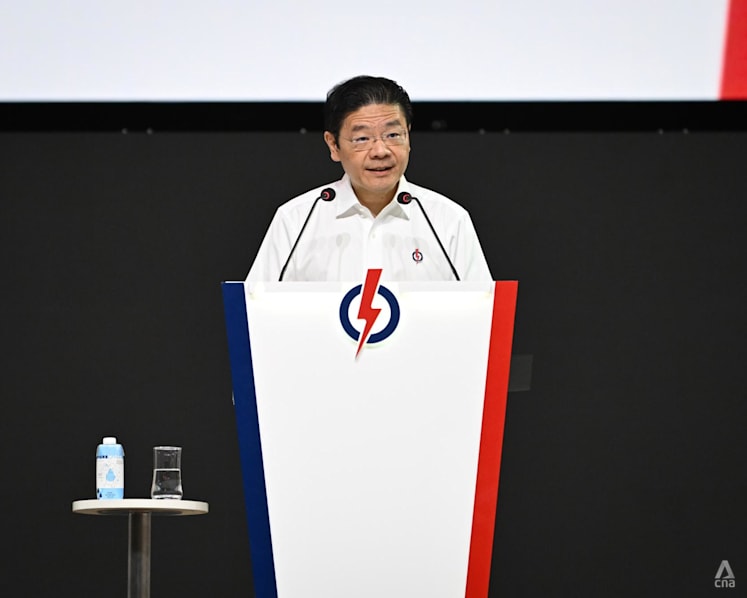
Speaking at the People's Action Party convention on Sunday (Oct 25), Prime Minister Lawrence Wong said Singapore expects all parties to honour their commercial gas supply agreements.
"Singapore's gas importer will take the necessary steps to protect its rights and interests under these contracts," he said.
Mr Wong added that Singapore had been preparing for such risks by investing in LNG terminals, allowing it to import gas from different countries without relying solely on pipelines.
Dr Broadstock said there could be some short-term price disruptions if additional LNG had to be purchased on the spot market to meet power generation needs. However, he added, the volume involved was "fairly modest", as would be any changes in costs.
Additional reporting by Koh Wan Ting.
Source: CNA/jw/ml