It is an established fact that a sound network of quality roads and highways is essential for promoting economic and industrial growth in any region or State. Without all-weather road connectivity to most towns and cities, a State can seldom be expected to reap the full benefits of development. Reliable road connectivity that ensures safe travel is, therefore, a prerequisite for a resource-rich but fund-deficient State like Assam to benefit from improved infrastructure. While advanced States like Maharashtra, Karnataka, Andhra Pradesh and Tamil Nadu have made rapid strides in developing modern four-lane and six-lane national highways, Assam’s experience in this regard remains frustrating.
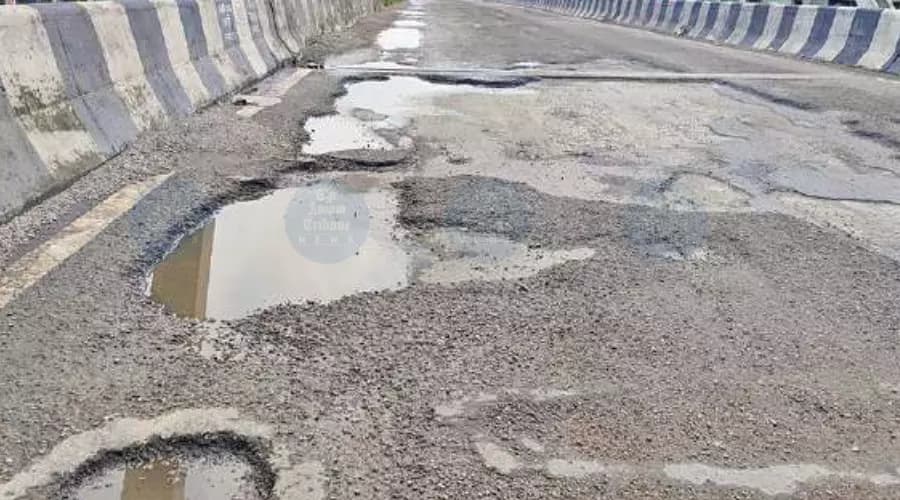
Regular monitoring and periodic reviews of major infrastructure projects are crucial, as poor-quality construction often results in large potholes and damaged road surfaces. Stagnant water can further aggravate the problem, forcing motorists to slow down cautiously to negotiate the hazards. Pedestrians, too, face difficulties when vehicles passing through water-filled potholes splash dirty water onto them, roadside shops and commercial establishments. Broken surfaces, potholes, inadequate drainage and waterlogging are common sights on many stretches of Assam’s roads and highways.
The situation in hilly areas worsens during the rainy season. Rainwater from nearby hills fills potholes, leaving motorists struggling to judge their depth and negotiate them safely. If drivers fail to slow down in time, their vehicles may plunge into deep potholes, lose balance and collide with other vehicles, resulting in serious accidents.
The problem is particularly acute on highways and roads connecting towns and semiurban areas. Repairs to damaged surfaces and potholes are undertaken on some stretches, only for the damage to recur with the next rainfall. Such patchwork repairs do not offer a long-term solution. The figures on road accidents are deeply disturbing.
Assam recorded 1,168 potholerelated accidents on national highways between 2020 and 2024, resulting in 395 deaths and 1,152 injuries. These tragic deaths and serious injuries have highlighted the apparent neglect of highway maintenance by the authorities concerned and the denial of travellers’ right to safe journeys, despite their payment of tolls to use the roads.
Recently, a fatal accident occurred on National Highway 27 at Tetelia near Khetri in Kamrup Metropolitan district, claiming seven lives and leaving several others seriously injured. The accident was reportedly triggered by a large pothole on the highway. A Guwahati-bound passenger vehicle from Nagaon reportedly lost control after hitting the pothole, crossed the divider and collided head-on with an oncoming truck.
Preventing the recurrence of such fatal accidents requires timely and proper repairs, backed by regular maintenance. Ironically, the National Highways Authority of India (NHAI), which is responsible for developing and maintaining national highways, appears to have paid insufficient attention to road conditions in the region. Poor repairs and inadequate maintenance continue to put highway users at risk.
Ensuring safe journeys for commuters who pay tolls is the responsibility of the highway authorities. In the case cited above, however, road users’ right to safe travel was compromised despite their payment of tolls. When travellers are legally required to pay tolls, they are entitled to expect safe and properly maintained roads. This principle was reflected in a recent observation by the Kerala High Court and upheld by the Supreme Court.
Unfortunately, travellers have had to pay tolls even on stretches riddled with potholes and damaged surfaces. A welcome development came in June 2024, when Union Minister Nitin Gadkari, speaking at a global workshop on satellite-based tolling, said that highway agencies should not collect tolls if roads were not in good condition.
Earlier, in 2024, a tragic accident on National Highway 37 at Balijan near Dergaon claimed 12 lives when a picnic bus collided head-on with a coal-carrying truck. The accident was attributed to the prolonged noncompletion of highway construction. Why was the work delayed for so long? Such delays are not uncommon in infrastructure projects.
For instance, the four-laning of the Demow-Moran bypass section has reportedly been delayed by 102 months. If the Central government is aware of this delay, what steps has it taken to expedite the project’s completion? In 2024, the Union Ministry of Development of North Eastern Region (DoNER) reportedly set up a special dashboard to monitor ongoing Central projects in Assam and elsewhere in the Northeast.
This raised hopes that the repair and maintenance of damaged road surfaces and pothole-ridden highway stretches would receive prompt attention, with urgent action wherever necessary.
However, the continuing toll of highway accidents in Assam points to serious shortcomings in road maintenance by the agencies concerned, both in Assam and across the region. Better monitoring, timely repairs and accountability for poor-quality construction are essential if roads are to serve their purpose of connecting people safely and supporting development.
By
Dwaipayan