
People with intellectual disabilities are full and equal members of society. Their lives, voices, choices and rights matter.
See more Toronto Sun on Google — save as a Preferred Source

Subscribe now to read the latest news in your city and across Canada.
- Unlimited online access to articles from across Canada with one account.
- Get exclusive access to the Toronto Sun ePaper, an electronic replica of the print edition that you can share, download and comment on.
- Enjoy insights and behind-the-scenes analysis from our award-winning journalists.
- Support local journalists and the next generation of journalists.
- Daily puzzles including the New York Times Crossword.
Create an account or sign in to continue with your reading experience.
- Access articles from across Canada with one account.
- Share your thoughts and join the conversation in the comments.
- Enjoy additional articles per month.
- Get email updates from your favourite authors.
Create an account or sign in to continue with your reading experience.
- Access articles from across Canada with one account
- Share your thoughts and join the conversation in the comments
- Enjoy additional articles per month
- Get email updates from your favourite authors
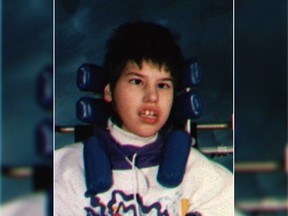
More than three decades after Tracy Latimer was killed, people across the country must continue to remember her — not simply as a name in Canadian legal history, but as a child whose life had inherent value and dignity.
For those unfamiliar with her story, here is some of Tracy’s background. She was born in 1980 and grew up with her family on a farm near Wilkie, Sask. She was the eldest of four children. She attended the same school as her brothers and sister, travelled by school bus, and spent time with other children. Tracy enjoyed music, aquatics, pet therapy, walks, sleigh rides and family gatherings. She enjoyed conversation and being loved, and those who knew her remembered her smiles and laughter.
These details matter because Tracy’s life should not be reduced to the circumstances of her death.
Tracy was 12 years old when she was killed by her father. Her death became the centre of a national debate about disability, dignity, and whose lives our society considers worthy of protecting. Robert Latimer was convicted of second-degree murder in 1997. In 2001, the Supreme Court of Canada upheld his conviction and the mandatory sentence.

Your noon-hour look at what's happening in Toronto and beyond.
By signing up you consent to receive the above newsletter from Postmedia Network Inc.
A welcome email is on its way. If you don't see it, please check your junk folder.
The next issue of Your Midday Sun will soon be in your inbox.
We encountered an issue signing you up. Please try again
But Tracy was more than the case that followed her death.
She was a daughter. She was a sister. She was a student and a member of her community. She was a child with relationships, experiences, preferences and a life of her own.
That is why, all these years later, we must continue to confront the terrible message that her death can send: that some lives can be viewed as less valuable because a person has a disability or requires support.
We cannot accept that message.
Rembrance carries responsibility
People with intellectual disabilities are full and equal members of society. Their lives, voices, choices and rights matter. Equality cannot be conditional on independence, productivity, communication, or the level of support or help a person requires.
This belief is at the heart of the disability movement.
Inclusion is about defending human rights and challenging the systems, attitudes and practices that exclude people with intellectual disabilities from full citizenship. It means standing up for the right to make decisions, to live with dignity, to access healthcare and justice, to belong in our communities, and to receive equal protection under the law.
It also means challenging assumptions about disability — assumptions about quality of life, dependence and what makes a life meaningful.
People in Canada must remember Tracy because remembrance carries responsibility.
Remember Tracy by insisting that every life has equal worth, by listening to people with disabilities themselves and ensuring that their voices lead conversations and decisions about their lives. And remember Tracy by speaking clearly when disability rights are threatened.
That responsibility remains urgent today. It requires all of us to challenge laws and practices that treat disability as a reason for offering death when the supports required to live with dignity remain unavailable. It requires us to oppose the discrimination embedded in Canada’s Track 2 medical assistance in dying regime and refuse to allow it to become normalized.
And we remember Tracy by continuing the work.
For the broader disability movement, Tracy’s story is a solemn reminder of why we must remain vigilant, courageous and unwavering in defending the inherent value, worth and rights of people with intellectual disabilities.
Tracy’s life mattered.
It matters still.
And our commitment must ensure that the dignity, equality and human rights of every person are never treated as negotiable.
— Krista Carr is Chief Executive Officer of Inclusion Canada, a national federation working to advance the full inclusion and human rights of people with an intellectual disability and their families.
Join the Conversation





This website uses cookies to personalize your content (including ads), and allows us to analyze our traffic. Read more about cookies here. By continuing to use our site, you agree to our Terms of Use and Privacy Policy.