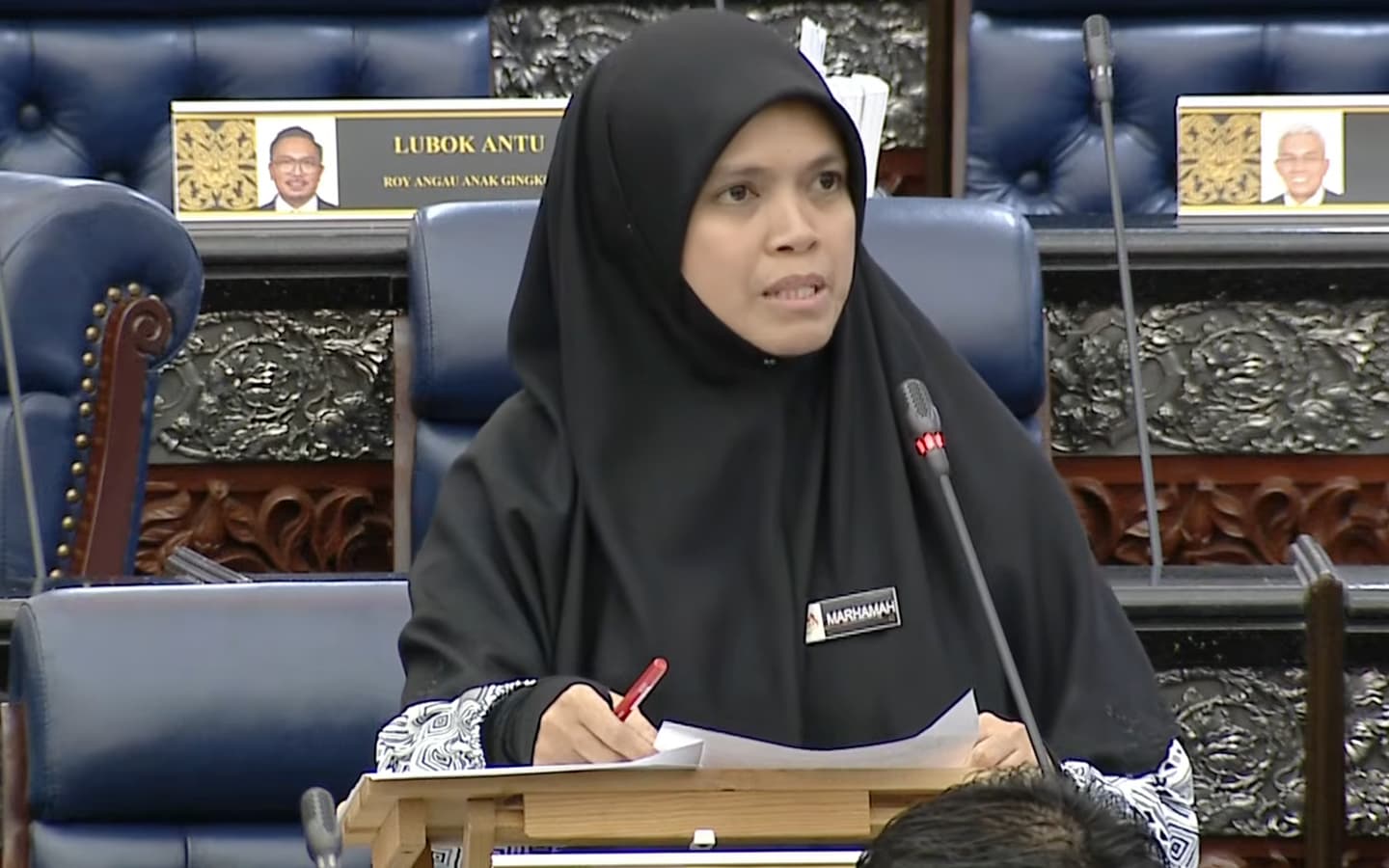
KUALA LUMPUR: The government is planning changes to the law to make it easier for shariah courts to take action against those who deliberately ignore orders to provide their wives and children with nafkah.
Under Islamic family law, nafkah refers to the financial support a person is legally required to provide for a spouse, former spouse or children, depending on the circumstances. It covers basic needs such as food, housing and other living expenses.
Deputy religious affairs minister Marhamah Rosli told the Dewan Rakyat that the shariah judiciary department (JKSM) was also proposing checks to determine whether prospective spouses previously failed to pay nafkah.
She said Muslim men seeking permission to marry more than one wife must apply to the shariah court, which would assess their ability to support their existing wives and children.
“Failure to comply with a (nafkah) order cannot be taken lightly as it amounts to disobeying a court order,” she said.
Marhamah said the courts already had the power to order salary deductions, seize and sell property, or jail those who disobey orders to pay nafkah. However, these measures require a court order and cannot be automatically imposed.
She said JKSM’s family support division aimed to resolve at least 75% of unpaid nafkah cases each year.
The division is also working with agencies such as the EPF, the Social Security Organisation, the Inland Revenue Board and the national registration department to track down those who fail to pay nafkah.
Marhamah said JKSM was exploring ways to improve financial assistance for families awaiting nafkah payments, including aid that recipients would not need to repay. However, those ordered to pay nafkah will remain responsible for fulfilling their obligations.
She was responding to Zulkifli Ismail (PN-Jasin), who asked what the government was doing about shariah court cases involving unpaid nafkah that had dragged on for years.
In June, women's rights group SIS Forum (Malaysia) proposed a federal law and a dedicated agency to help Muslim and non-Muslim women recover unpaid nafkah.
Its legal clinic, Telenisa, handled 869 child nafkah cases and 170 spousal nafkah cases between 2016 and 2025.