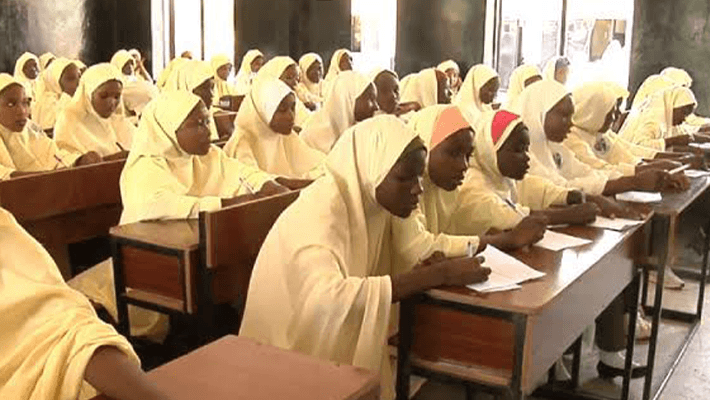
The World Bank-supported Adolescent Girls Initiative for Learning and Empowerment (AGILE) Project has improved learning conditions for 778,000 students in Katsina.
The coordinator, Abubakar Abdulhamid, said this at a two-day media roundtable on implementing the project’s communication strategy in Katsina.
The event was organised in collaboration with the Katsina Ministry of Basic and Secondary Education.
Mr Abdulhamid said the project, supported by the World Bank and the state government, was tackling inadequate infrastructure, poor sanitation, limited learning materials and barriers to girls’ education. He said Phase One initiated 75 new secondary schools, with 69 completed and handed over, while 581 schools received grants for priority improvements.
He added that 3,099 classrooms had been renovated and 279 new ones constructed, along with the rehabilitation of 5,286 toilets and the construction of 747 new facilities.
The coordinator said the project also supplied 236,382 student desk sets and 955 teachers’ desks, while 401 junior and senior secondary schools received sports facilities. He said fencing had been completed in 19 schools to improve the safety of students, teachers and school property.
Mr Abdulhamid said AGILE also provided life skills training, mentorship, digital literacy and financial assistance to encourage adolescent girls to remain in school. He said 113,572 girls enrolled in life skills training, while 50,400 completed the Safe Space programme curriculum.
He said the programme was operating in 161 secondary schools, supported by 824 trained mentors working with participating girls.
On digital education, Mr Abdulhamid said 200 secondary schools had received information and communication technology facilities, internet connectivity and 10 kVA solar power systems. He added that 71,132 students had enrolled in digital literacy training, while 730 teachers had received training to promote technology-assisted teaching.
The coordinator also said 104,111 schoolgirls had benefited from conditional cash transfers intended to ease family financial pressures and encourage parents to keep their daughters in school. He said the project was introducing Alternative Learning Spaces to help girls who had dropped out of formal education resume learning and acquire practical skills.
According to him, 77 alternative learning centres were planned across Katsina’s 34 Local Government Areas (LGAs), targeting 21,000 adolescent girls.
He said 10 centres had been identified, while about 1,000 girls had commenced learning under the pilot phase. Mr Abdulhamid explained that the centres would provide foundational literacy, numeracy, livelihood skills and life skills to rebuild beneficiaries’ confidence and improve their economic prospects.
(NAN)
We have recently deactivated our website's comment provider in favour of other channels of distribution and commentary. We encourage you to join the conversation on our stories via our Facebook, Twitter and other social media pages.