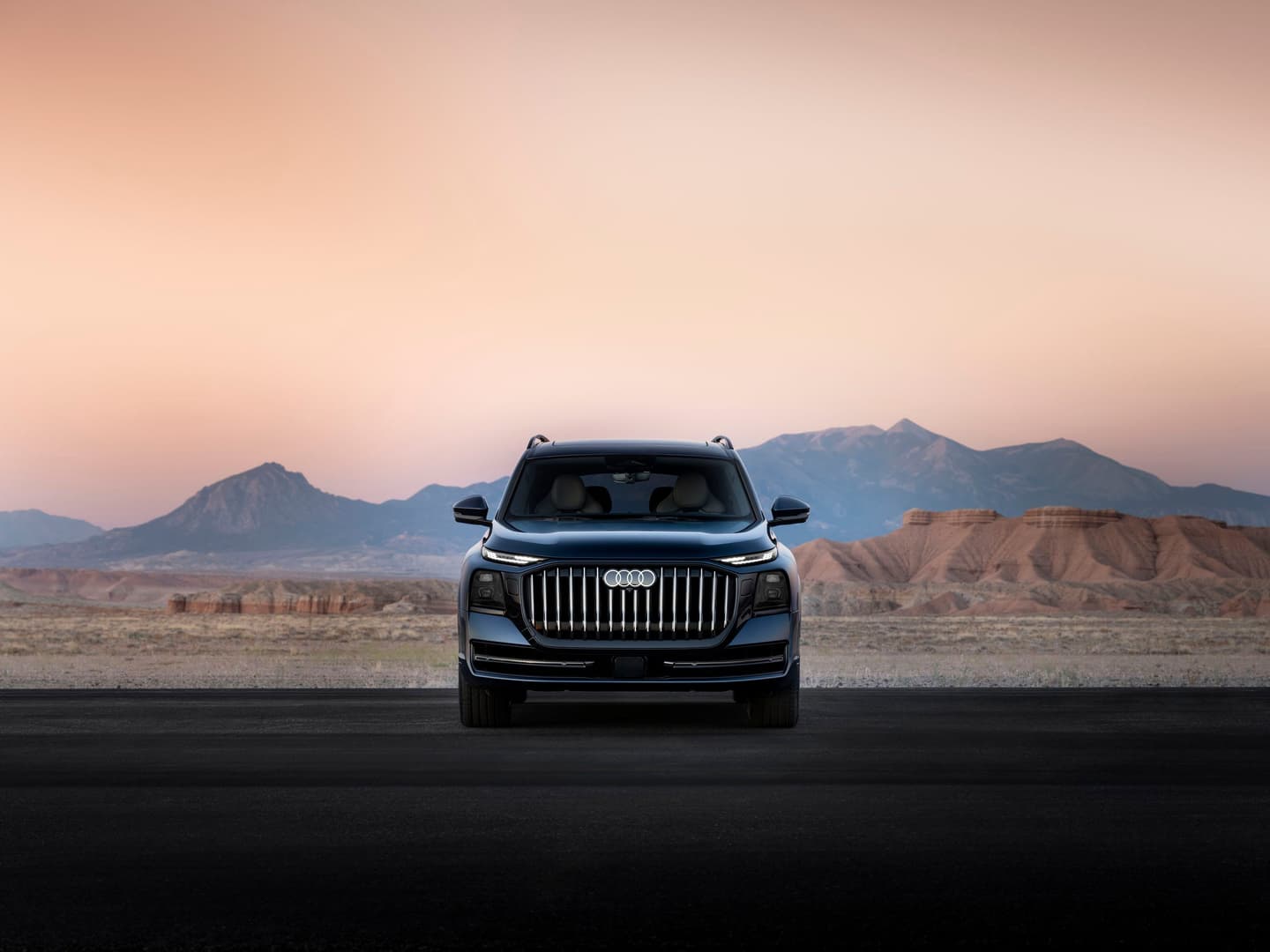
- Audi has announced plans to build its first factory in the United States, selecting a site in Macon, Georgia.
- Construction is slated to start in 2027, with production expected to begin in the early 2030s.
- Audi is investing $4 billion into the project and says that it will create around 4500 new jobs.
The Trump administration’s tariffs sent automakers scrambling in 2025, with profits plunging as many companies opted to eat the costs of the import taxes rather than risk alienating customers with higher prices. But that approach couldn’t continue forever, and automakers began plotting how to better shield themselves from future trade wars. To that end, Audi has now announced that it will build its first U.S. factory in Georgia, with production at the new site expected to start in the early 2030s.
A report first emerged in June 2025 that Audi was considering a new production facility in the United States, although the company declined to comment at the time. Now we know that Audi’s first U.S. factory will be in Macon, Georgia, with construction set to begin in 2027.

Audi will invest around $4 billion in the new factory and says that the project will create roughly 4500 new jobs. The new facility will focus on building SUVs designed for the North American market, with a planned annual capacity of up to 200,000 vehicles. While most of the vehicles will likely be destined for sale in North America, some SUVs are also expected to be exported.
Production is still quite a ways away, but we wouldn’t be surprised to see future iterations of the three-row Q7 and the even-larger Q9 shift from the Bratislava, Slovakia, plant to Georgia. Reuters reports that a U.S. official said the production plans will include the Q7, Q8, and Q9 SUVs. The official also reportedly stated that Audi plans to build 25,000 vehicles per year at the new $2 billion plant that’s being built in Blythewood, South Carolina, for new VW Group subsidiary Scout Motors, although this has not been publicly confirmed by Audi.
Audi says the new factory is a key part of its long-term growth strategy, given that the U.S. is the world’s second-largest premium market. It will also insulate the brand against future tariffs, since Audi currently imports all of its U.S. models from Europe or Mexico. Tariffs cost the VW Group $4 billion in 2025, with $1.4 billion of that loss coming from Audi. While the factory won’t be able to ease that burden in the near term, it will provide insurance against future trade wars. According to Automotive News, a U.S. official also said the Trump administration will hold talks with VW over some form of tariff relief in exchange for the commitment to building a new factory in the U.S.
➡️ Skip the lot. Let Car and Driver help you find your next car.
Caleb Miller began blogging about cars at 13 years old, and he realized his dream of writing for a car magazine after graduating from Carnegie Mellon University and joining the Car and Driver team. He loves quirky and obscure autos, aiming to one day own something bizarre like a Nissan S-Cargo, and is an avid motorsports fan.