
PARAGUAY · CULTURE
Key Facts
- —The country Paraguay counted 6,109,903 people in its 2022 census, including 140,049 Indigenous people, and Spanish and Guaraní are both official languages.
- —Heritage Four traditions sit on UNESCO’s intangible heritage lists: tereré (2020), the Poncho Para’i de 60 Listas (2023), the guarania (2024) and the ñai’ũpo ceramic craft (2025).
- —Music The guarania, created by José Asunción Flores (born 27 August 1904), joined UNESCO’s Representative List on 3 December 2024.
- —Literature Augusto Roa Bastos (1917 to 2005) won the Cervantes Prize in 1989 and wrote Hijo de hombre and Yo el Supremo.
- —Film Las herederas won the best actress award and the Alfred Bauer Prize at the 2018 Berlin film festival.
- —Football Paraguay reached the World Cup Round of 16 in 2026 and lost 1-0 to France on 4 July.
- —Power Index Paraguay ranks 10th of 14 in The Rio Times Latin America Power Index, with 36.0 points (October 2026 edition).
Paraguay culture rests on two official languages, four UNESCO intangible heritage elements and a small group of artists and athletes known far beyond a country of 6.1 million people (2022 census). The list runs from the guarania, created by the composer José Asunción Flores, to a film that won two awards in Berlin.
This guide follows the people, places and institutions that define that culture in October 2026, from writers and harpists to potters and footballers. Figures carry their dates, and any claim that only one outlet carries is attributed to it.
Paraguay Culture in Numbers
Paraguay counted 6,109,903 people in its 2022 census, including 140,049 Indigenous people, according to the statistics institute INE. The median age rose from 24 in 2012 to 29 in 2022, and 25% of residents were aged 0 to 14.
A 2022 INE household survey, reported by Última Hora on 21 February 2023, found that 34.3% of people aged five and over speak both Guaraní and Spanish most often at home. Another 32.6% speak only Guaraní, 30.4% only Spanish and 2.4% a language such as German, Japanese, Korean or Portuguese.
INE’s Indigenous census puts the Indigenous population at 140,049 people in five language families, and 49.7% of those aged five and over communicate in Guaraní while 48.6% use an Indigenous language. The Guaraní family is the largest with 76,506 people, and the Mbya Guaraní (28,278) and Ava Guaraní (22,705) are the two biggest peoples.
Article 140 of the 1992 Constitution calls Paraguay a multicultural and bilingual country and makes Castilian and Guarani official languages. It adds that Indigenous languages, and those of other minorities, are part of the nation’s cultural patrimony.
In Plain English
Guaraní The Indigenous language spoken across Paraguay, official alongside Spanish.
Guarania A slow, syncopated song form from the early 20th century, sung in Guaraní.
Ñandutí Traditional lace inspired by spider webs, celebrated at a national festival in Itauguá.
Tereré A cold infusion of yerba mate and medicinal herbs sipped through a metal or cane straw.
Ñai’ũpo Blackish hand-built cookware from the potters of Itá, Tobatí and Yaguarón.
Culture secretariat The Secretaría Nacional de Cultura (SNC), the state culture body, headed by a minister.
UNESCO Heritage, From Jesuit Ruins to Tereré
UNESCO lists four Paraguayan elements of intangible heritage: tereré in 2020, the Poncho Para’i de 60 Listas in 2023, the guarania in 2024 and the ñai’ũpo ceramic craft in 2025. Tereré and the guarania sit on the Representative List, while the poncho and the ñai’ũpo are on the list of heritage in need of urgent safeguarding.
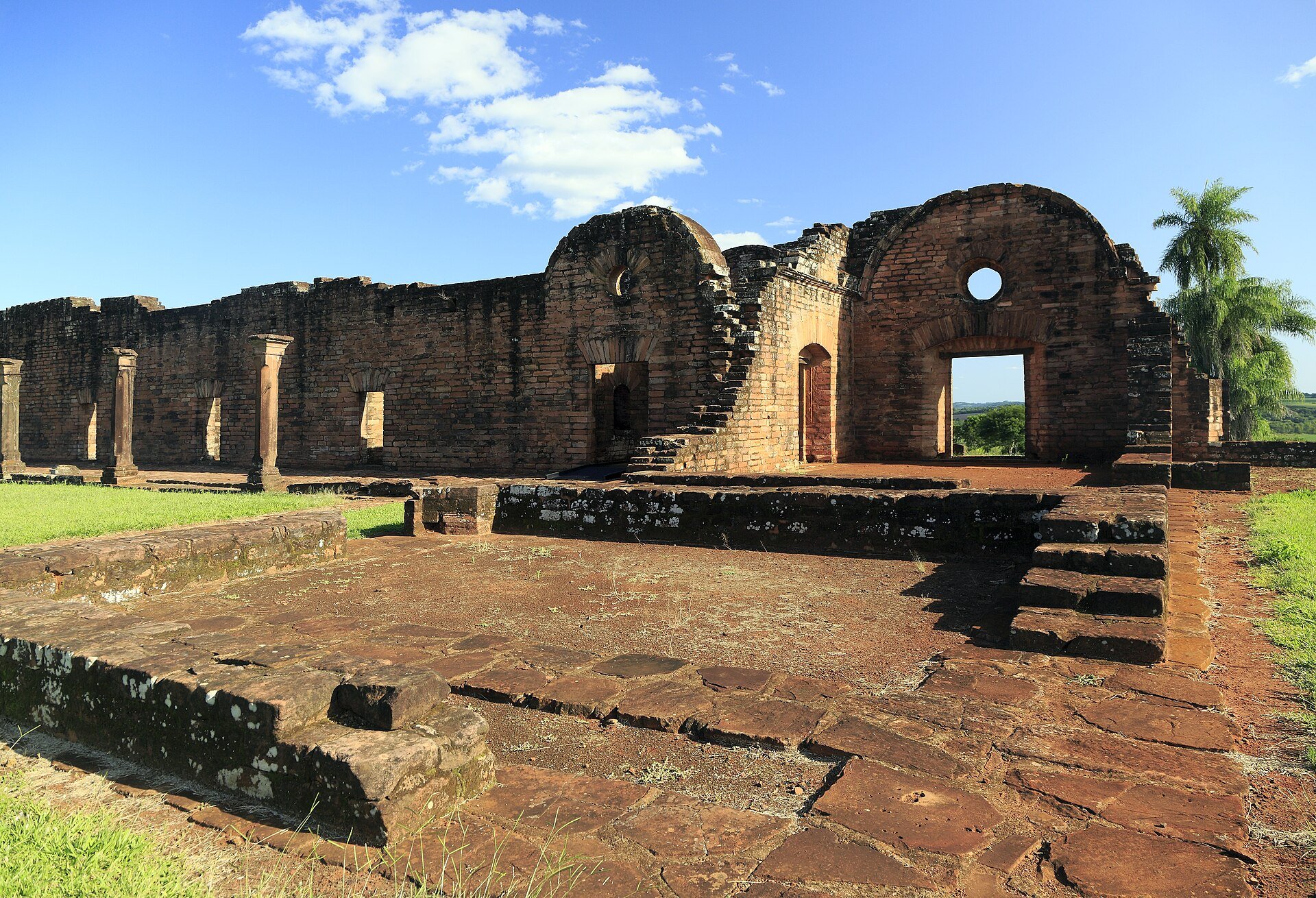
Paraguay’s World Heritage listing, inscribed in 1993, covers the Jesuit missions of La Santísima Trinidad de Paraná and Jesús de Tavarangué, which UNESCO describes as part of a series of 30 missions in the Río de la Plata basin established by the Society of Jesus in the 17th and 18th centuries. Seven of the 30 were in Paraguay, UNESCO says, and the rest lie in present-day Argentina and Brazil.
Tereré is a drink of cold water mixed with crushed medicinal herbs known as pohã ñana, served in a glass pre-filled with yerba mate and sipped through a metal or cane straw. UNESCO calls its preparation an intimate ritual with pre-established codes, and links the herbs’ health benefits to popular wisdom passed down through generations.
In October 2026 the culture secretariat announced that restoration of the San Buenaventura church in Yaguarón, built between 1755 and 1772 and on UNESCO’s tentative World Heritage list, had uncovered 13 colonial coins, 11 of them laid in the shape of a cross. Scientific studies will test whether the find is a foundation deposit, and the secretariat estimates 30 working days for the studies planned outside the church and the return of the pieces.
The restoration belongs to Tekorenda, a government programme for urgent safeguarding of material heritage that covers eight sites in Asunción and six departments. The secretariat puts the investment at US$5 million, backed by the development bank CAF, the UN Development Programme, the Itaipú Binacional hydropower company and its technology park.
Guarania, the Harp and the Sound of the Country
The guarania is a slow, syncopated song form created in the early 20th century and sung in Guaraní, and UNESCO says its slow tempo is inspired by the Paraguayan polka and that it is often accompanied by guitar and double bass. It was created by José Asunción Flores, who was born on 27 August 1904 in the Chacarita district of Asunción.
The Asunción municipal chamber orchestra played works by Flores at the Day of the Guarania ceremony on 27 August 2026, which also marked 100 years since his first sung guaranias of 1926. Those early titles include Arribeño resay, with lyrics by Rigoberto Fontao Meza, and Ñasaindýpe, with verses by Félix Fernández.
The government named 2025 the National Year of the Guarania under Decree 3377. A commission reported more than 150 activities in Asunción, the interior and abroad, in countries including the United States, Spain, France, Germany and Russia.
Agustín Pío Barrios, known as Mangoré, was born in San Juan Bautista, Misiones, on 5 May 1885 according to one culture secretariat page (another gives 1887), and died on 7 August 1944 in San Salvador. The secretariat calls him the most universal Paraguayan guitarist and composer, and his works include Danza Paraguaya, La Catedral and Caazapá.
Paraguay marks National Harp Day on 9 June in honour of the master harpist Félix Pérez Cardozo, and the culture secretariat calls the harp one of the most representative instruments of the country’s musical identity. At the 16th World Harp Festival in 2023, President Santiago Peña and Culture Minister Adriana Ortiz presented Living National Treasure recognitions to master harpists.
Paraguay Culture Calendar
9 June National Harp Day, honouring Félix Pérez Cardozo.
June Fiesta de San Juan, celebrated across the country.
27 August Day of the Guarania, the birthday of José Asunción Flores.
19 to 22 November 2026 MICSUR Paraguay market in Asunción.
8 December Festival of the Virgin of the Miracles in Caacupé.
4 to 6 January Santo Rey Ára festival in Compañía Rosado, Tobatí.
7 to 9 March 2024 45th National Ñandutí Festival in Itauguá.
Writers Who Carried Paraguay Abroad
Augusto Roa Bastos, born in Asunción on 13 June 1917, won the Miguel de Cervantes Prize for literature in the Spanish language in 1989 and died in Asunción on 26 April 2005. His foundation’s chronology lists the novel Hijo de hombre, which won an international fiction competition run by the publisher Losada in 1959, and Yo el Supremo, published in Buenos Aires in 1974.
The foundation groups Hijo de hombre, Yo el Supremo and El fiscal as a Paraguayan trilogy on power. Roa Bastos lived in exile in Buenos Aires and Toulouse, where he taught Latin American literature and the Guaraní language, and Spain granted him nationality in 1983 after he was expelled from Paraguay in 1982 and left stateless.
Gabriel Casaccia, born in Asunción on 20 April 1907, is called the founder of contemporary Paraguayan narrative by La Nación. He died in Buenos Aires on 24 November 1980 and was buried in Areguá, the town where he set all his novels except Los Exiliados and which he called his Macondo.
Josefina Plá was born on 9 November 1903 in a lighthouse on the Isla de Lobos in the Canary Islands and married the Paraguayan ceramist Andrés Campos Cervera, known as Julián de la Herrería. ABC Color’s 2013 profile calls her a singular voice, and a 2021 lecture series on her life was announced for her former house in Asunción.
Names to Know: Music and Letters
José Asunción Flores Composer who created the guarania, born 27 August 1904.
Agustín Barrios Mangoré Guitarist and composer who died in 1944, born in San Juan Bautista, Misiones.
Félix Pérez Cardozo Master harpist honoured on National Harp Day, 9 June.
Augusto Roa Bastos Novelist (1917 to 2005), Cervantes Prize 1989.
Gabriel Casaccia Novelist (1907 to 1980), author of Areguá novels.
Josefina Plá Writer born in 1903 in the Canary Islands who made Paraguay her home.
Adriana Ortiz Semidei Culture minister, head of the Secretaría Nacional de Cultura in October 2026.
Film, Television and the Press
Las herederas (The Heiresses), directed by Marcelo Martinessi, competed in the main competition of the 2018 Berlin International Film Festival and won two awards on 24 February 2018, the best actress prize for Ana Brun and the Alfred Bauer Prize. The Berlinale lists it as a co-production of Paraguay, Uruguay, Germany, Brazil, Norway and France.
Paz Encina’s Hamaca paraguaya, her first film, screened in the Un Certain Regard section at Cannes in 2006 and is set on 14 June 1935 during the Chaco War. The Cannes page describes an elderly peasant couple waiting for a son who went to fight, and for rain that does not come.
7 Cajas (7 Boxes), directed by Juan Carlos Maneglia and Tana Schembori, turns Asunción’s Mercado 4 into the setting for a chase film about a teenage wheelbarrow carter. Variety, reviewing it at the Toronto festival on 7 September 2012, said it was certain to be one of the first titles from Paraguay to make a serious dent in the international marketplace.
Reporters Without Borders (RSF) ranked Paraguay 88th of 180 countries in its 2026 press freedom index, with a score of 54.67, down from 84th in 2025. RSF says four groups, Grupo Cartes, Grupo Vierci, Grupo Zucolillo and Grupo Albavisión, control the traditional press and lists ABC Color, La Nación and Última Hora among the main outlets.
Article 29 of the Constitution says journalism is free and needs no prior authorisation, but RSF notes that Paraguay has no press law and that a bill to protect journalists is before the Senate. It names three journalists murdered in Pedro Juan Caballero, on the Brazilian border, between February 2020 and February 2023.
Lace, Pottery and the Museo Del Barro
Ñandutí is a lace inspired by spider webs, which the culture secretariat calls a symbol of identity woven by women with skills passed down through generations. Its main showcase is the National Ñandutí Festival in Itauguá, which began in 1970 and held its 45th edition from 7 to 9 March 2024.
Areguá, on the shore of Lake Ypacaraí about 30 km from Asunción, has more than 450 pottery workshops and belongs to UNESCO’s Creative Cities Network as a city of crafts and folk art. UNESCO says its Nativity Crèche Fair draws over 200 artisans in November and December and that this fair and the Strawberry Fair together bring nearly US$500,000 to the local community.
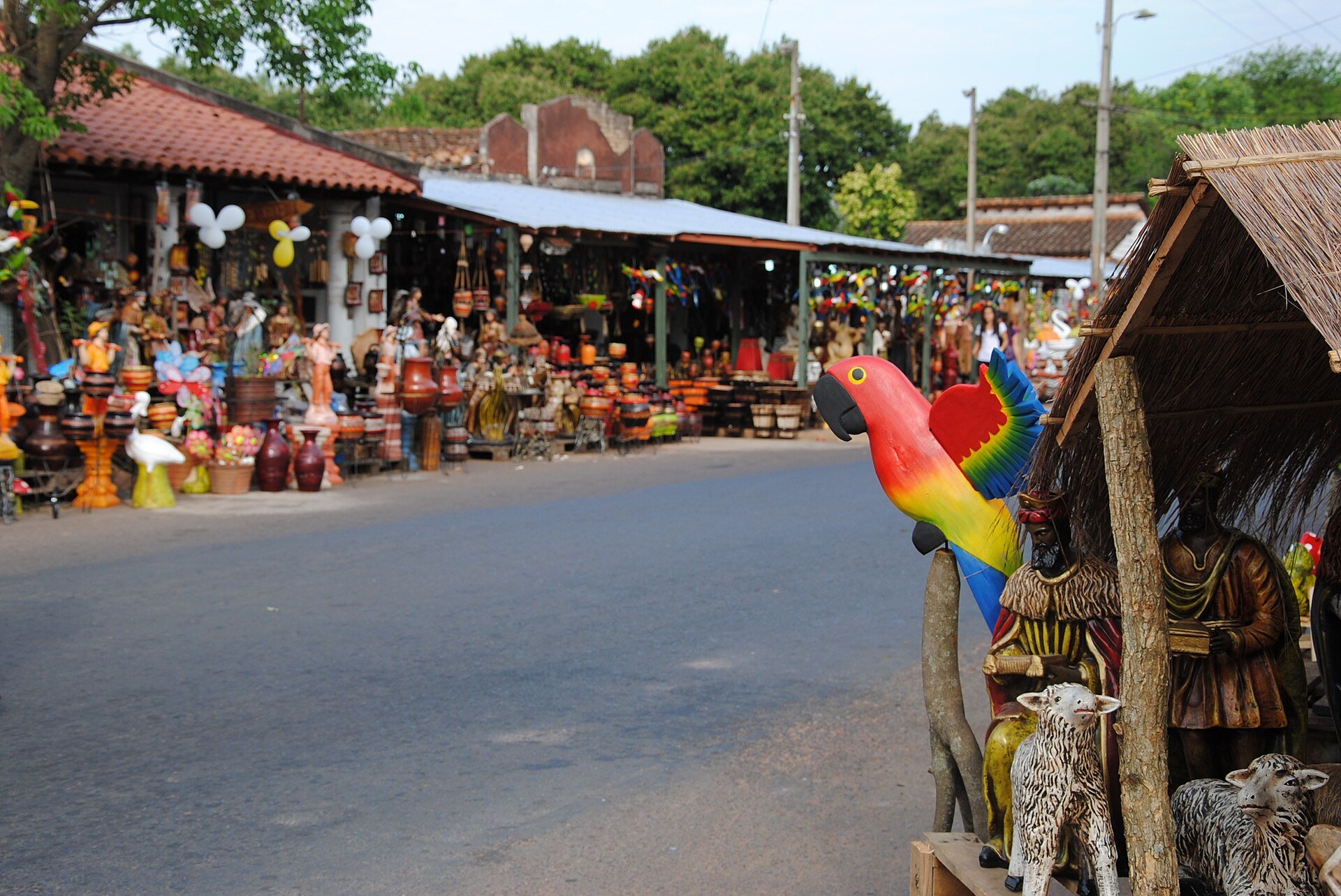
The ñai’ũpo, blackish hand-built cookware from Itá, Tobatí and Yaguarón, joined UNESCO’s urgent safeguarding list on 9 December 2025. UNESCO says the potters gather wild clay from swamps, knead in brick dust, stack rolls of clay and fire the pieces in wood ovens, and that women lead the craft and teach it in Guaraní.
The Poncho Para’i de 60 Listas of Piribebuy is woven by women who each specialise in one of its three parts, the body, the fringes and the guard. UNESCO put it on the urgent safeguarding list in 2023 and names ageing practitioners, falling youth interest and insufficient pay among the threats.
The Museo del Barro in Asunción, created in 1979 and opened in 1980 in San Lorenzo with about 800 pieces of Itá and Tobatí pottery, lists more than 4,000 pieces of mestizo art from the 17th century on and more than 1,750 Indigenous works. Its Centro de Artes Visuales site joins three museums and three views of Paraguayan art, urban, rural and Indigenous.
Olga Blinder and Carlos Colombino created the travelling collection in 1972 that became the base of the museum’s contemporary art holdings, which the museum describes as the only permanent collection of current Paraguayan painting, drawing, printmaking, installation and sculpture. The Indigenous art collection was gathered and curated by Ticio Escobar.
Football, From World Cup Runs to Olympic Silver
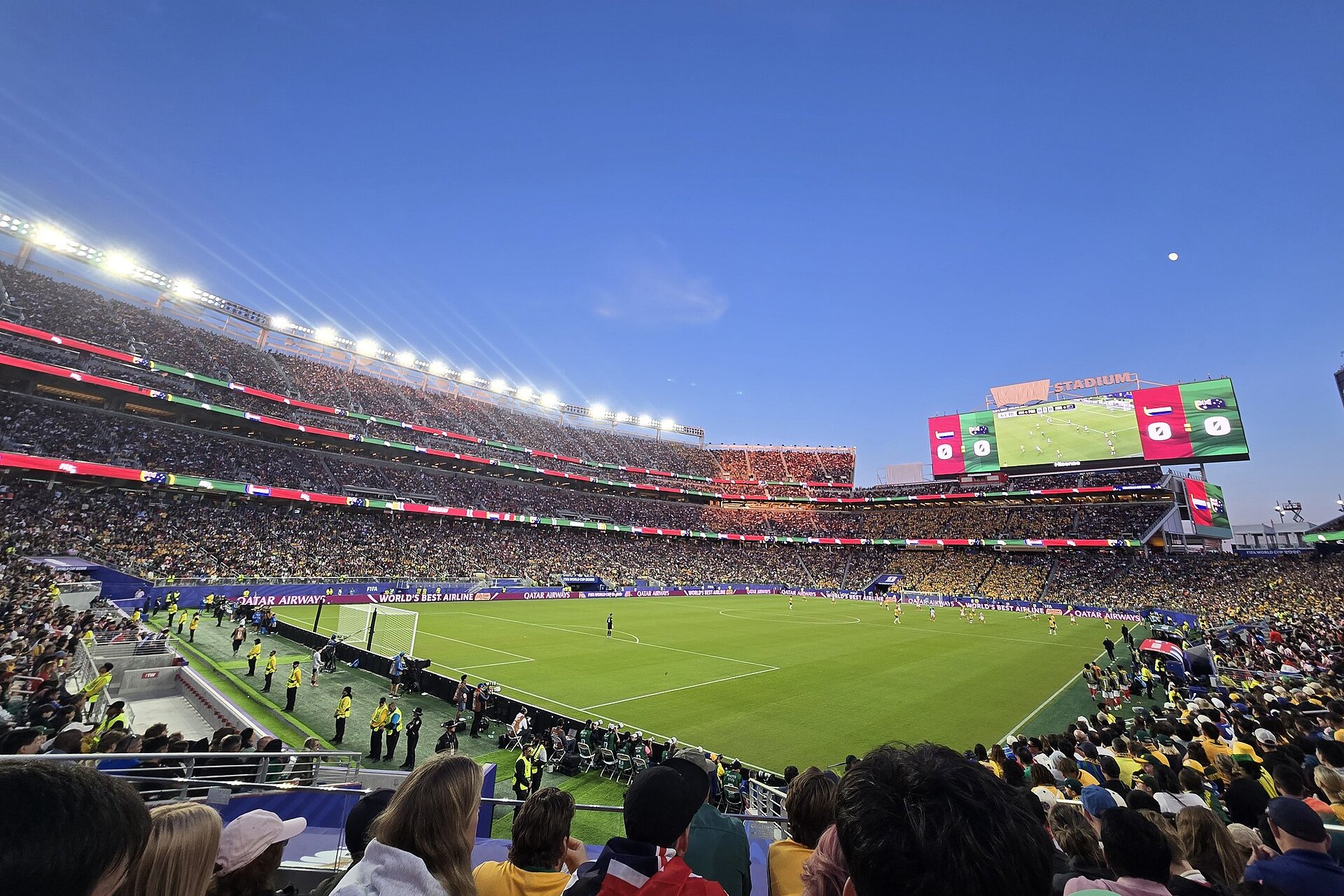
Paraguay reached the Round of 16 at the 2026 World Cup, losing 4-1 to the United States on 12 June, then beating Türkiye 1-0 on 19 June, drawing 0-0 with Australia on 25 June and beating Germany 4-3 on penalties after a 1-1 draw on 29 June. France won the Round of 16 match 1-0 in Philadelphia on 4 July, according to FIFA’s official match reports.
Miguel Almirón wore No. 10 for Paraguay at the World Cup and plays for Atlanta United in Major League Soccer. The club says he won the 2018 MLS Cup there, moved to Newcastle United in January 2019 and returned in January 2025 on a contract through the 2027 season.
The football statistics body IFFHS included the goalkeeper José Luis Chilavert among the 48 football legends it announced in September 2022. Olympedia records that Paraguay’s only Olympic medal is the silver won by the football team in 2004, after a loss to Argentina in the final.
Festivals, Faith and the Money Behind Them
Caacupé, in Cordillera department, draws thousands of pilgrims each year to the festival of the Virgin of the Miracles, which the culture secretariat declared national intangible heritage by Resolution 791/2025, signed on 1 December 2025. A plaque was unveiled in front of the basilica at the 6:00 Mass on 8 December 2025, where Minister Adriana Ortiz Semidei called the pilgrimage part of what Paraguayans are as a nation.
The secretariat declared the Fiesta de San Juan, celebrated across the country in June with traditional games such as toro candil and pelota tata, national intangible heritage by Resolution 370/2026 of 23 June 2026. On 9 October 2026 it did the same for the traditional cocido, a yerba mate drink, at an event in the Centro Cultural del Puerto in Asunción.
A national safeguarding committee chaired by the secretariat approved nominations to UNESCO’s Representative List for the chipa, a traditional food, and the pesebre nativity tradition, the latter a joint bid with Spain and Italy. The committee also heard progress on a third nomination, the Frazada de Trapo.
The Atyguasu fund of the culture secretariat, the First Lady’s office and the craft institute IPA offered 50 million guaraníes (US$8,673 at the central bank rate of 5,764.73 per US$ on 23 October 2026) to each of three festivals older than five years and 10 million guaraníes (US$1,735) to each of eight newer ones. Applications ran from 18 July to 18 August 2026, and the winning projects were published on 4 September 2026.
MICSUR, the Southern Cultural Industries Market run under Mercosur Cultural, takes place from 19 to 22 November 2026 in Asunción under the motto “Cultura + Territorio + Futuro Digital”, with the Centro Cultural del Puerto as its centre. Pitching applications for audiovisual, music and video game projects close on 30 October 2026, and each selected project gets 10 minutes before buyers and programmers.
What It Means for US Readers
The most direct US link is football, since the 2026 World Cup took Paraguay to Los Angeles, the San Francisco Bay Area, Boston and Philadelphia. Miguel Almirón plays for Atlanta United, and the club says his contract runs through the 2027 MLS season.
Travellers can build a trip around the heritage calendar, with the Caacupé pilgrimage around 8 December and the MICSUR market in Asunción from 19 to 22 November 2026. The Rio Times guide Is Paraguay Safe for Expats and Foreign Residents covers security, and Paraguay Residency Visa Income Test Changed 6 July 2026 covers those who want to stay.
For trade and investment, public money is flowing into culture, with US$5 million for the Tekorenda heritage programme and festival grants under Atyguasu. The wider picture is in Who Runs Paraguay’s Economy, the Key Players in 2026 and Paraguay Politics Explained, Who Holds Power in 2026, and the country’s regional standing is tracked on the Latin America Power Map.
The next heritage decisions to watch are the UNESCO nominations for the chipa and the pesebre, which Paraguay approved at home in 2026. Any inscription would add to the four elements already listed and, for the pesebre, would be shared with Spain and Italy.
What Is Not Known
The 2022 census total of 6,109,903 was about 1.34 million below the 7,453,695 that INE had projected for the end of 2022, and ABC Color reported in 2023 that many people questioned the result. It also noted that the 2012 census, with 74.4% coverage, could not be validated.
No count of practising weavers, potters or harpists appears in the UNESCO and culture secretariat pages used here, although UNESCO lists few and ageing practitioners as threats to the poncho and the ñai’ũpo. Whether UNESCO will accept the chipa and pesebre nominations, and in which year, has not been announced.
The meaning of the 13 coins at Yaguarón is still a hypothesis, since the secretariat says only scientific studies can show whether they mark the church’s foundation. No figure for the value of Paraguay’s creative economy appears in the INE, UNESCO or culture secretariat pages used here.
Frequently Asked Questions
What languages are official in Paraguay?
Spanish and Guaraní are both official under Article 140 of the 1992 Constitution. In a 2022 INE household survey, 34.3% of people aged five and over spoke both most often at home.
Which Paraguayan traditions are on the UNESCO heritage list?
Four: tereré (2020), the Poncho Para’i de 60 Listas (2023), the guarania (2024) and the ñai’ũpo ceramic craft (2025). The Jesuit missions of La Santísima Trinidad de Paraná and Jesús de Tavarangué are on the World Heritage List.
Who created the guarania?
Composer José Asunción Flores, born on 27 August 1904 in Asunción’s Chacarita district, created it. UNESCO added the guarania to its Representative List on 3 December 2024.
Which Paraguayan film won awards in Berlin?
Las herederas (The Heiresses), directed by Marcelo Martinessi, won the best actress award for Ana Brun and the Alfred Bauer Prize in 2018. The Berlinale lists it as a co-production of six countries.
Which Paraguayan writer won the Cervantes Prize?
Augusto Roa Bastos (1917 to 2005), author of Hijo de hombre and Yo el Supremo, received the Cervantes Prize in 1989. His foundation’s chronology also lists two Guggenheim fellowships.
How far did Paraguay go at the 2026 World Cup?
Paraguay reached the Round of 16, beating Germany 4-3 on penalties after a 1-1 draw on 29 June 2026. France won the Round of 16 match 1-0 on 4 July.
What is the Museo del Barro?
It is an Asunción museum complex created in 1979, with more than 4,000 mestizo pieces and more than 1,750 Indigenous works. The museum says it holds the only permanent collection of current Paraguayan art.
Sources: UNESCO, Paraguay elements on the heritage lists, accessed 26 October 2026; UNESCO, Guarania, inscribed 2024; UNESCO, Tereré, inscribed 2020; UNESCO, Poncho Para’i de 60 Listas, inscribed 2023; UNESCO, Ñai’ũpo, inscribed 2025; UNESCO World Heritage Centre, Jesuit Missions of La Santísima Trinidad de Paraná and Jesús de Tavarangué, accessed 26 October 2026; UNESCO Creative Cities, Areguá, accessed 26 October 2026; Constitution of Paraguay (1992, rev. 2011), Constitute Project, English translation; INE, final results of the 2022 census, August 2024; La Nación, INE presents final census data, 22 August 2024; INE, IV Indigenous Census 2022 summary, 2024; Última Hora, languages spoken at home, 21 February 2023; ABC Color, census population, 1 September 2023; ABC Color, UNESCO meeting in Asunción, 8 December 2024; Secretaría Nacional de Cultura, Yaguarón find, 12 October 2026; Secretaría Nacional de Cultura, Mercosur culture ministers and Tekorenda, 17 June 2026; Secretaría Nacional de Cultura, MICSUR 2026 pitching, 14 October 2026; Secretaría Nacional de Cultura, Guarania Week, 27 August 2026; Secretaría Nacional de Cultura, chipa and pesebre nominations, 9 February 2026; Secretaría Nacional de Cultura, Paraguayan harp, 30 September 2025; Secretaría Nacional de Cultura, 16th World Harp Festival, 9 October 2023; Secretaría Nacional de Cultura, Barrios Mangoré, 31 May 2017; Secretaría Nacional de Cultura, Barrios birthplace, 28 August 2019; Secretaría Nacional de Cultura, Josefina Plá lectures, 7 August 2021; Secretaría Nacional de Cultura, Ñandutí, 30 September 2025; Secretaría Nacional de Cultura, National Ñandutí Festival, 8 March 2024; Secretaría Nacional de Cultura, Ñai’ũpo on the UNESCO list, 9 December 2025; Secretaría Nacional de Cultura, Caacupé festival, 8 December 2025; Secretaría Nacional de Cultura, Fiesta de San Juan, 24 June 2026; Secretaría Nacional de Cultura, Santo Rey Ára of Tobatí, January 2026; Secretaría Nacional de Cultura, cocido, 9 October 2026; Secretaría Nacional de Cultura, Atyguasu call, 18 July 2026; Secretaría Nacional de Cultura, Atyguasu winners, 4 September 2026; Fundación Augusto Roa Bastos, chronology, accessed 26 October 2026; La Nación, Gabriel Casaccia, 27 November 2017; ABC Color, Josefina Plá, 26 May 2013; Berlinale, Las herederas | The Heiresses, 2018; Festival de Cannes, Hamaca paraguaya, 2006; Variety, 7 Boxes review, 9 September 2012; Reporters Without Borders, Paraguay, 2026 index; Museo del Barro, accessed 26 October 2026; Museo del Barro, history, accessed 26 October 2026; FIFA, USA v Paraguay match report, 12 June 2026; FIFA, Türkiye v Paraguay match report, 19 June 2026; FIFA, Paraguay v Australia match report, 25 June 2026; FIFA, Germany v Paraguay match report, 29 June 2026; FIFA, Paraguay v France match report, 4 July 2026; Atlanta United, Miguel Almirón profile, accessed 26 October 2026; Olympedia, Paraguay, accessed 26 October 2026; IFFHS, 48 football legends, 13 September 2022. Conversions use the Banco Central del Paraguay rate of 5,764.73 guaraníes per US$ on 23 October 2026.