
Russia’s Rosselkhoznadzor to inspect Georgian laboratories
From 2 November 2026, specialists from Russia’s agricultural watchdog, Rosselkhoznadzor, will visit Georgia to inspect Georgian laboratories, the agency said in a statement.
The Russian specialists will examine Georgia’s phytosanitary certification system for fruit and other plant products intended for export to Russia. They will also inspect a laboratory that tests such products for pesticide and agrochemical residues.
- Russia bans imports of several drinks from Georgia
- Russia destroyed 40,000 Armenian roses shipped via Belarus
Phytosanitary certification confirms that plant-based products meet the requirements of the importing country. Laboratory tests for pesticide and agrochemical residues, meanwhile, detect the presence of these chemicals in products.
According to Rosselkhoznadzor, the visit follows an invitation from Georgia’s National Food Agency. The agency said the aim was to develop a common approach to monitoring products subject to quarantine controls.
The Russian agency did not specify which laboratory its specialists would visit. It also remains unclear whether the inspection will lead to any changes in the conditions for exporting Georgian products to Russia.
The Georgian side has yet to provide official information. Georgia’s National Food Agency promised JAMnews it would clarify the details, but subsequently stopped answering calls.
Background: the context for the planned visit by Russian specialists to Georgia
The planned inspection of laboratories in Georgia coincides with Russia’s ban on imports of several Georgian-made drinks.
The restrictions cover both alcoholic and non-alcoholic beverages. They affect seven major Georgian companies, including producers of Coca-Cola and Nabeglavi water in Georgia. The companies affected by the ban account for around 75–80% of Georgia’s wine exports to Russia. Russia’s embargo on Georgian drinks came into force on 10 October.

Later, from 20 to 22 October, Rosselkhoznadzor specialists visited Tbilisi to attend a regional seminar organised by the World Organisation for Animal Health. During the visit, they also discussed bilateral co-operation with representatives of Georgia’s National Food Agency.
Following these meetings, Rosselkhoznadzor announced on 22 October that it would allow two Georgian dairy processors to access the Russian market from November. The agency also said it was ready to inspect six Georgian fish and seafood producers interested in exporting their products to Russia.
The statement also noted a 26% increase in Russian exports of live pigs to Georgia, while onion supplies had tripled. Meanwhile, Georgia’s exports to Russia of products such as blueberries, apples, plums and mandarins continue to grow.
According to Rosselkhoznadzor, Russia had imported 70,500 tonnes of fruit and vegetables from Georgia by 24 October 2026.
Imports increased across several product categories:
- Nectarines — 17,900 tonnes, up 7.8%;
- Apples — 15,300 tonnes, up 17.5%;
- Blueberries — 9,500 tonnes, up 46.7%;
- Plums — 6,700 tonnes, up 74.2%;
- Mandarins — around 3,400 tonnes, up 59%;
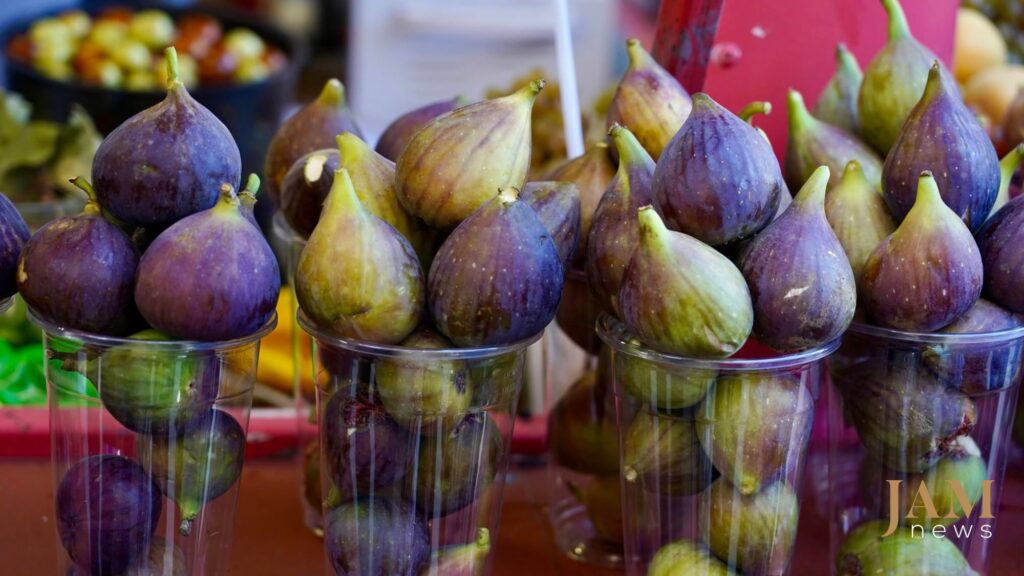
- Figs — more than 1,900 tonnes, up 21.2%;
- Watermelons — 1,400 tonnes, up 59.5%.
What are the risks? — expert assessments
Khatia Dekanoidze, one of the leaders of the Unity – National Movement party, sees the invitation to Russian specialists as a sign that relations with Moscow are entering a new phase.
In her view, the decision raises questions about the reliability of Georgia’s own inspection systems. It also gives Russia additional leverage to exert economic pressure on the country.
“How can you invite a Russian expert to Georgia and give them the authority to inspect our products? What does this tell us? That they do not trust the food safety standards we have established ourselves. It also makes Georgia’s economy even more dependent on Russia. We know that Russia turns economic leverage into a tool of blackmail — as it demonstrated just a few weeks ago when it imposed an embargo on goods produced in Georgia.”
Teona Akubardia, a security expert, also points to risks to national security. She says Russia could selectively restrict access to its market for Georgian products and use that leverage for political purposes.
“There is a risk that Russia will be able to grant or deny access to its market at its own discretion. The state will have no means of protecting itself. With the process of integration with the West frozen, Russia will use this leverage even more actively for political purposes, seeking to bring Georgia fully under its control. This poses a threat to national security. Moreover, the Georgian Dream party is not only failing to neutralise this threat but is creating additional risks under the current circumstances.”
Russia’s Rosselkhoznadzor to inspect Georgian laboratories