He’s barely got settled in his own office, but Andy Burnham’s already looking disapprovingly into our larders. We should all have enough food and water to survive a three-day emergency, the government has said. And while it sounds alarming, actually, the advice is sensible, says Lucy Easthope, Britain’s leading authority on emergency planning and disaster recovery. ‘This isn’t about neurotically obsessing over some impending Apocalypse,’ she explains. ‘A lot of Europeans, Australians and Americans already do this.’
So in the interest of preparedness, not panic, exactly how much water does one need for three days?
Nine litres per person. But….
The government guidelines suggest we store three litres of water, per person, per day. But there’s a catch: that’s just for drinking. You’ll need more for cooking and washing, they point out. So it’s a good idea to aim for 10 litres per person in your home.
What sort of water?
‘Unopened, commercially bottled water is the safest and most reliable source of water in an emergency,’ according to the US Centre for Disease Control and Prevention. So buy your water, if possible, instead of decanting from the tap.
What size of bottle should you buy?
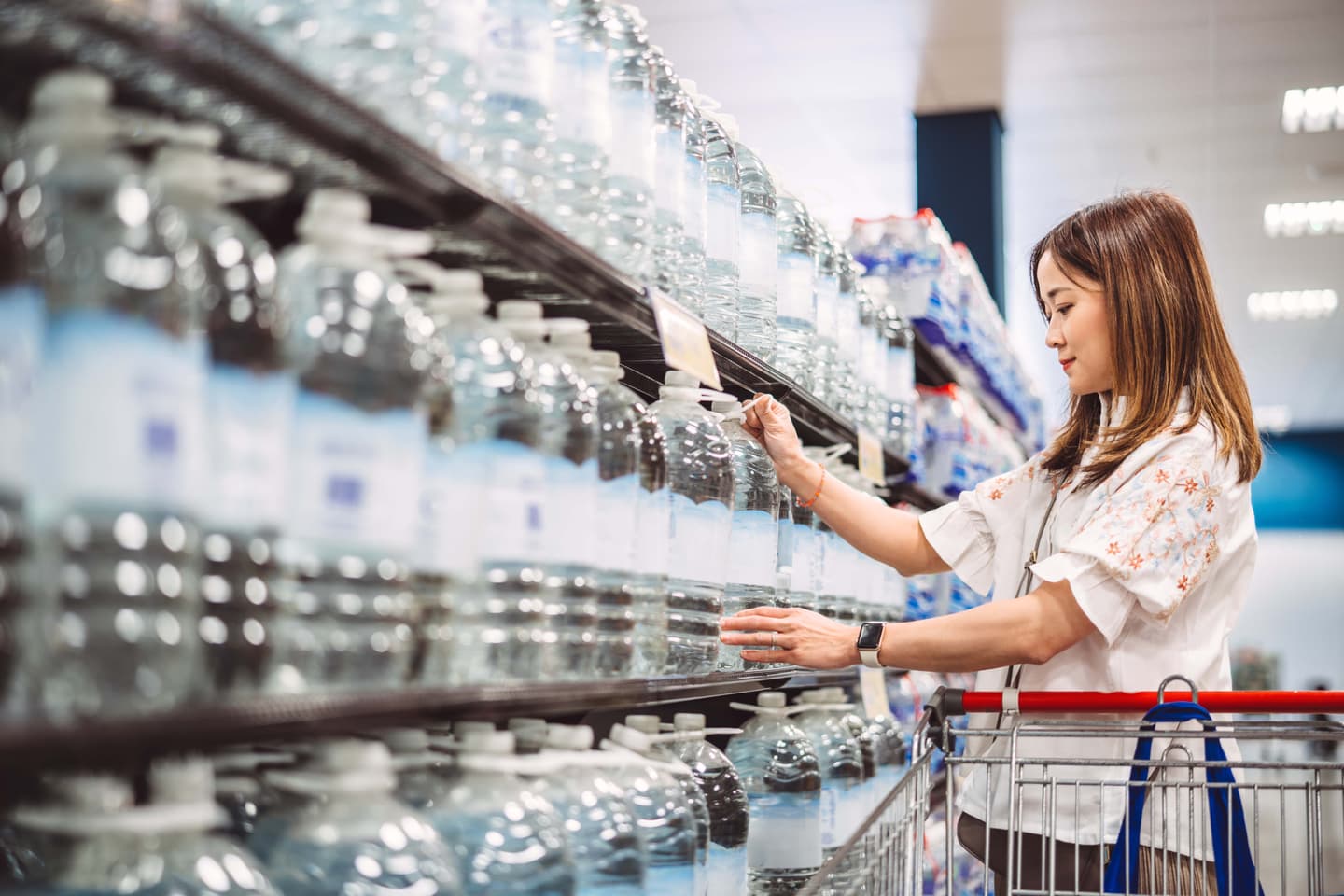
The outdoor and survival community UKSN points out that ‘while large barrels (eg 100-litre drums) are suitable for stationary storage, smaller containers (eg 5 to 25 litres) are portable and easier to handle during evacuations.’ So have a mix of both.
Sparkling or still?
The US government’s emergency planning advice cautions against prepping sparkling water. Why? It’s all about the bubbles. When you drink sparkling water, the carbon dioxide gas expands inside your stomach, giving you the impression of satiety. The risk, then, is that you won’t drink enough for your hydration needs. It can also give some people a stomach ache – the last thing you need in a crisis.
Plus, there’s shelf life to consider. Pure, still water has a long chemical shelf life when properly sealed. Sparkling water, on the other hand, has a limited shelf life of roughly 12 to 18 months before it degrades in quality and physical stability.