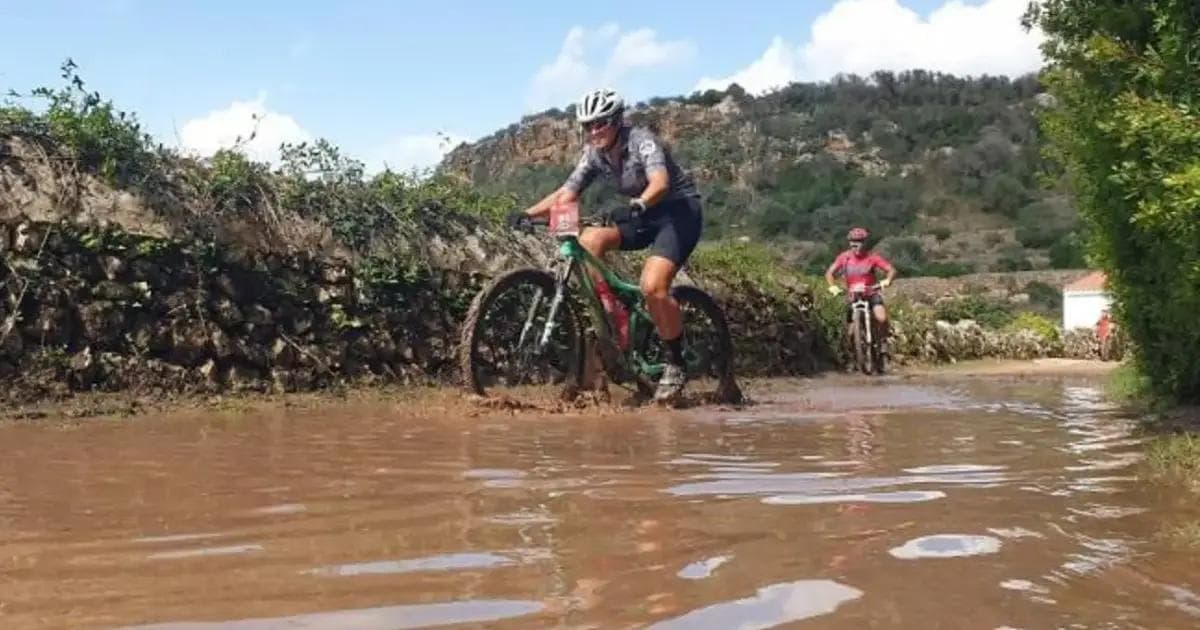
In the event of orange or red alerts, various factors will be assessed, such as the type of activity, the location, the duration, the time of day, the number of participants, their age, evacuation routes, communications coverage and response capacity. | Photo: Majorca Daily Bulletin reporter
Humphrey CarterPalma26/10/2026 15:45
The Balearic Government has activated an action protocol for sports federations and clubs in the event of adverse weather conditions, with measures ranging from the suspension or modification of training sessions to the evacuation of athletes or the cancellation of competitions.
The Regional Minister for Tourism, Culture and Sport, Jaume Bauzá, explained at a press conference on Monday that this protocol assesses the level of danger posed by various weather phenomena and how they may affect the smooth running of different sporting activities. He pointed out that “a basketball match is not the same as a sailing regatta”.
The document provides for coordinated and preventative action between the administration, emergency services and sports federations and clubs. It also identifies storms, heavy rain, snow, wind, extreme temperatures and coastal phenomena as factors that may disrupt sporting activities.
In the event of orange or red alerts, various factors will be assessed, such as the type of activity, the location, the duration, the time of day, the number of participants, their age, evacuation routes, communications coverage and response capacity.
The Regional Minister for the Presidency, Coordination of Government Action and Local Cooperation, Antònia Maria Estarellas, emphasised that “the best response to an emergency begins long before it happens” and that the protocol prioritises prevention and coordinated communication even before adverse weather events occur.
Depending on the weather warning and the nature of each activity, training sessions and competitions may be suspended or modified, and championships on the calendar may be rescheduled. The decision to cancel a training session or competition shall rest with the chief referee, the competition organiser, the person in charge of the venue, the relevant regional sports federation or the Government’s Directorate-General for Sport.
Furthermore, activities involving children will be subject to an additional level of precaution. If sporting activities are interrupted, the organiser must ensure that the children remain under supervision in a safe area until they are collected.
The interrupted activity may resume once the weather event has ended or its intensity has subsided, or once it has been verified that the facilities are safe, access points and evacuation routes are clear, and communications are functioning correctly.
Furthermore, the protocol classifies sports according to their level of vulnerability. Those involving the highest level of risk are those carried out at non-permanent venues where evacuation is particularly difficult, such as sailing regattas, open-water swimming, triathlons, sea kayaking or mountain activities.
In the next category, considered to be activities with high vulnerability, are those practised at non-permanent venues where evacuation procedures are complex. Examples of these include road cycling, canoeing on a course and marathons.
Moderate vulnerability is considered to apply to outdoor activities held at permanent sports facilities from which participants can be easily evacuated, such as athletics, tennis, padel, football and rugby.
Finally, the sports posing the least risk are those taken up in sports halls, gyms, indoor swimming pools and enclosed facilities, such as martial arts, boxing, five-a-side football or badminton.