

The Briefing:
- The Inter-American Press Association condemned three journalist murders directly linked to their reporting in Mexico, plus six additional killings under investigation, as part of its October 25 findings from Bogotá.
- Mexico sits at #122 out of 180 countries in the 2026 RSF World Press Freedom Index and ranks an even more alarming #160 on the safety-specific indicator — the weakest of its five measured dimensions.
- Fewer than 1% of journalist killings in Mexico over the past two decades have been fully prosecuted, according to Reporters Without Borders, a structural impunity that press freedom groups say is the root cause of the ongoing violence.
Three murders confirmed to be linked to journalism. A Navy unit forcing reporters to erase footage. A state law that landed communicators in jail before judges struck it down. On October 25, 2026, the Inter-American Press Association closed its 82nd General Assembly in Bogotá with a damning portrait of press freedom in Mexico — one that has grown only darker since its April mid-year meeting.
Three Names the IAPA Will Not Let Go Unsolved
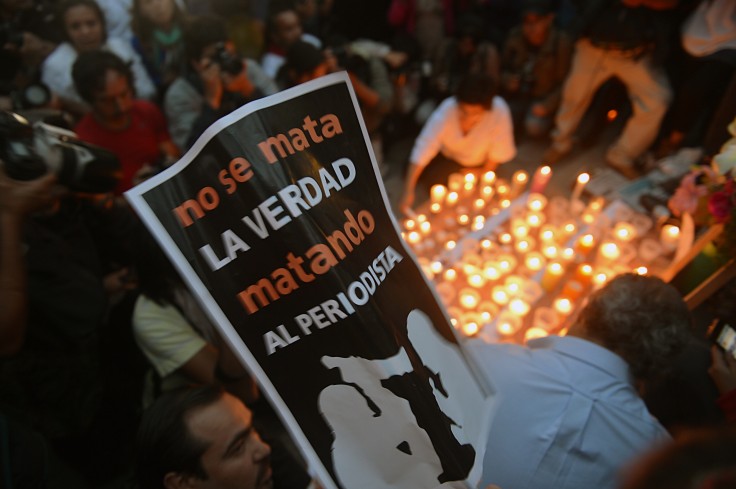
The IAPA's Mexico report named three journalists whose deaths the organization directly tied to their work: Josué Martínez Contreras, director of Noticias San Martín Texmelucan, shot dead in July in Puebla; Francisco Alejandro Leyva Aguilar, a columnist and former director of Oaxaca's public radio and television network who routinely criticized authorities, killed at a restaurant in Oaxaca in July; and Ricardo Zúñiga Rosas, a photographer and content creator murdered in August, also in Puebla.
The geographic concentration in Puebla is not coincidental. The state has become one of the deadliest corridors for local reporters covering crime and municipal governance. Together with the IAPA, the Committee to Protect Journalists and Reporters Without Borders demanded exhaustive investigations that treat journalistic activity as a primary motive — not an afterthought.
The report also documented three additional killings recorded since the April meeting for which available evidence, at the time of publication, had not established a clear connection to the victims' reporting. The IAPA called for those cases to remain open to reassessment as investigations develop.
State Actors and Press Suppression: The Navy Incident
Beyond targeted murders, the IAPA documented a pattern of intimidation that extends beyond organized crime and into the conduct of state institutions. In one of the most alarming episodes, two journalists in Tamaulipas reported that personnel from Mexico's Secretary of the Navy coerced them into deleting footage they had captured of an apparent fuel spill in the Pánuco River. The journalists had used a drone to document environmental damage caused by the discharge near a PEMEX facility; naval officers physically intervened and ordered the images erased, citing undisclosed claims about federal installations.
The incident was condemned by Article 19 and later referenced in the IAPA's Mexico dossier as evidence that press suppression does not come from criminal networks alone — it can come from the uniform.
A Government List and a Denial
The IAPA also flagged a document produced by the legal office of President Claudia Sheinbaum's administration that identified journalists, commentators, and analysts as alleged participants in a digital influence network. Press freedom organizations, including Article 19 and the Alianza de Medios MX, warned that publishing such a list posed a direct intimidation risk to the reporters named in it. The government maintained that the document was an analysis of social media dynamics and denied any intent to stigmatize the press.
The Ley Serrano: When the Law Became the Weapon
One of the more tangible examples of legal pressure against the press came from San Luis Potosí, where a November 2025 reform to the state penal code — quickly dubbed the "Ley Serrano" after the lawmaker who pushed it — criminalized the improper use of artificial intelligence, including AI-generated content designed to simulate someone's voice, identity, or appearance. Penalties ranged from one to six years in prison.
On May 21, 2026, authorities arrested three communicators under the law: journalists Eréndira Reyes Aguillón and her daughter Alejandra Hermosillo, along with content creator Christian Herrera — all charged with distributing AI-generated material that questioned the state governor. Two were released after reaching a judicial agreement; Herrera's case continued longer. The CPJ demanded their release as early as May 25, calling the arrests a direct attack on press freedom.
The state congress voted to repeal the law in July 2026. But the damage — arrests, legal costs, and a documented chilling effect on local coverage — had already landed.
The IAPA additionally raised concerns about new audience rights regulations approved on August 26, warning that certain provisions could enable government interference in editorial decisions. President Sheinbaum rejected that interpretation.
The Impunity Engine: <1% Solved Over 20 Years
The structural explanation for why the cycle repeats lies in a single statistic. According to Reporters Without Borders, 169 journalists were murdered in Mexico over the past two decades — and fewer than 1% of those cases were fully prosecuted to a conviction. When the cost of killing a reporter is effectively zero, the incentive to stop never materializes.
Journalists enrolled in Mexico's official Protection Mechanism in Chiapas and Oaxaca told the IAPA that the existing safety measures failed to eliminate the real risks tied to their reporting — an indication that the official infrastructure for protecting the press is structurally insufficient relative to the threat level reporters actually face.
Mexico's Place in a Wider Hemispheric Crisis
The IAPA's conclusions placed Mexico's crisis inside a broader continental breakdown. In the six months since the organization's April midyear meeting, nine journalists were killed across the Americas: three in Mexico, two in Colombia, two in Guatemala, one in Haiti, and one in Peru. Elsewhere, 12 journalists and media workers died in Venezuelan earthquakes in June, and digital attacks on reporters in Brazil numbered in the thousands within a single four-week window.
The IAPA's message to Mexico's government emerging from Bogotá is unambiguous: investigate these murders as journalism-related crimes from the outset, prosecute those responsible, and build protection systems that actually work. Until the impunity breaks, the conditions that produce these murders stay fully intact.
© {{Year}} Latin Times. All rights reserved. Do not reproduce without permission.