
Dubai: Social engineering is the most common way attackers try to hurt people, and Dubai Municipality is training its staff to spot it and report it.
Engineer Nasser Hassan, Manager of the Corporate Security Office at the municipality, shared some of the common threats the authority faces at the Dubai Municipality cyber security awareness event. He said phishing emails lead the list and is followed by malicious phone calls and video calls to vulnerable members of the public.
Detection is only half the job, Hassan notes. He emphasizes on how employees must know how to detect and report an attempt properly. The awareness push extends beyond staff to the wider community as well.

Hassan describes Dubai’s approach as pragmatic. “Laws and regulations dictate how information security is built, and government entities follow local best practice alongside international standards such as ISO 27001.” He explained how Dubai government entities already run AI security policies and post-quantum cybersecurity policies.
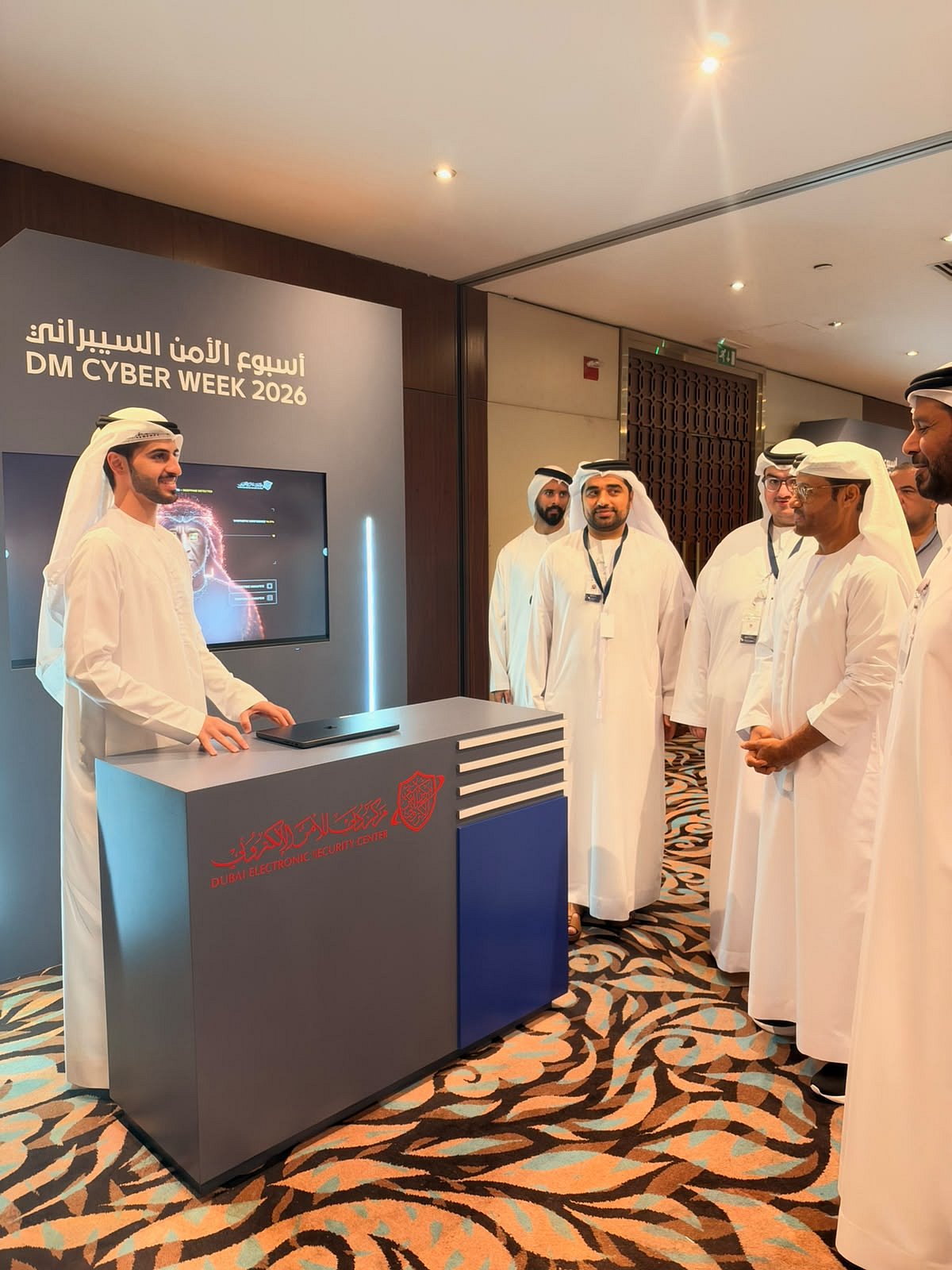
When asked on how the municipal authority tackles such threats, Hassan said they have a multi-pronged approach. “The Dubai Electronic Security Center issued an information security regulation more than a decade ago. That carries over 300 security controls that entities must meet. The centre has also released an AI security policy.
Then the Dubai Digital Authority adds its own guidelines, and each government entity runs internal initiatives on top.” With so many layers in place, if followed thoroughly, Hassan says there is no reason why Dubai can’t be the most cyber-secure city in the world.
But how real is the AI threat?
AI sits inside that framework and Hassan splits the issue into two angles. The first is corporate use. Organizations set policies and a governance framework to confirm that an AI system does what it was built to do. The second check is that it keeps doing exactly that. He points to incidents elsewhere in the world where AI systems broke their guardrails and went beyond their remit. Government regulation helps keep that in check here in Dubai he says.
But these checks and balances can’t be restricted to the government alone. The second angle is that of personal use and Hassan offers three pieces of advice that can benefit the common man.
Know what personal data you share before you talk to an AI tool.
Know how confidential your documents are before you hand them over.
Never trust the output blindly.
Hassan calls AI a tool that facilitates work, not a source of truth. Residents should scrutinise what it produces and ask it for its sources. The message to residents is direct. Attackers target people before systems, and the first defence is awareness, concluding that information security remains one of the municipality’s top priorities.