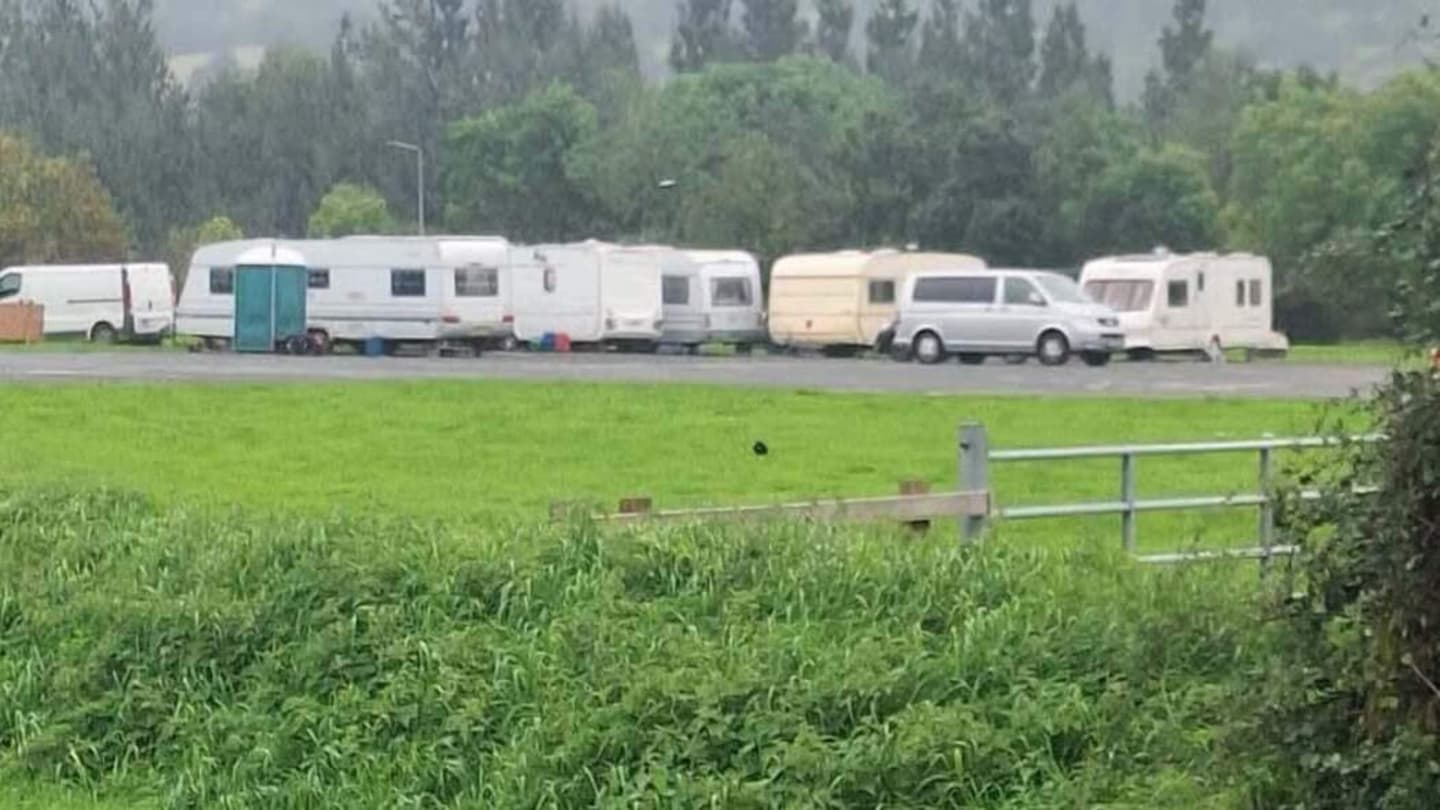
People in Tipperary were put off visiting their loved ones’ graves after people set up camp there earlier this month, prompting councillors to review bylaws to prevent a repeat.
Councillor Pat English called on Tipperary County Council to strengthen its burial ground bylaws following the incident at St Patrick’s Cemetery in Clonmel.
Numerous caravans could be seen parked in the St Patrick’s Cemetery car park, prompting concerns from visitors to the cemetery and local councillors.
Speaking at the October meeting of the Clonmel Borough District, Cllr English said it was “totally disrespectful” of people to set up camp there.
“This is an ongoing problem we have with our local cemetery, lately, it was the third time that St Patrick’s Cemetery was used as a parking area for a number of days. It’s totally disrespectful for the people who are visiting their loved ones and the ones that are buried there,” he said.
“I went through the bylaws and there’s pages of legislation that An Garda Síochána and ourselves have with removing people that wilfully break and enter into our premises, but the cemetery is someplace that should be respected,” Cllr English added.
Cllr English said that the council’s burial ground bylaws should be updated and made stronger so it would be easier for the council to move people on.
Seconding his call, councillor Richie Molloy said that the situation at the graveyard put people off going to visit loved ones.
“It caused an awful lot of upset at the time and it has happened a number of times now that people are parking there overnight, and it really isn’t on,” he said.
“A lot of people visit family graves on a daily basis and they were put off by that number of caravans in the area,” Cllr Molloy added.
Cllr Molloy also called for security at the cemetery to be reviewed, suggesting that a height-restricting barrier be installed at the entrance to prevent large vehicles from accessing the car park.
In response to the calls, district manager Jonathan Cooney said that the council had sought legal advice on the matter at the time.
“We discussed it ourselves and we actually wrote to our legal counsel to know, going forward, how could we strengthen the bylaws to make them stronger than what they are currently.
“Like Cllr English, we thought we had good bylaws, we thought they were strong, so we were interested to know so that the next time this happens, we would be in a better position,” Mr Cooney said.
Mr Cooney said the council had been advised that planning legislation was the strongest legal avenue available in such cases, rather than relying on its burial ground bylaws.
“The legal advice to ourselves was that we have good bylaws, but in the event of something like that happening again, the planning laws are the ones we would be using, as opposed to our own bylaws,” Mr Cooney said.
He added that the council did get a court date in relation to the case at St Patrick’s Cemetery, but that they didn’t need to go to court in the end as the caravans moved on before the date came.
Funded by the Local Democracy Reporting Scheme