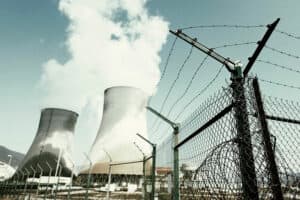
Last week, on Oct. 20 and 21, I attended the World Nuclear Supply Chain (WNSC) 2026 Conference and the Philippines International Nuclear Energy Forum, jointly and respectively sponsored by the World Nuclear Association (WNA) and the Department of Energy (DoE), at the Grand Hyatt Manila in BGC, Taguig.
Keynote speeches were given by DoE Secretary Sharon Garin and WNA Director-General Dr. Sama Bilbao y Leon. Among the participants were friends like former Philippines Nuclear Research Institute (PNRI) Director Caloy Arcilla, Argentina Ambassador to the Philippines Ricardo Luis Bocalandro, current PNRI Director Vallerie Samson, among many more.
Dr. Sama Leon showed charts about the global trend in nuclear power development. I checked the WNA website to get the table and not just a chart. As of 2025, there were 443 operable nuclear power plants in the world with a total capacity of 405,667 megawatts (MW).

In Table 1, “Operable” are power plants already connected to the grid; “Under Construction” have had the first concrete for the reactor poured, and keel laying for floating plants; “Planned” have approvals, funding, or commitments in place, and are mostly expected to be in operation within the next 15 years; “Proposed” have specific program or site proposals but the timing is very uncertain.
The US is still the world’s number one in nuclear energy production and capacity, with 94 power plants and 786 terawatt-hours (TWh) of generation. But China will soon overtake the US, with nuclear plants with a total of 43,327 MW capacity under construction on top of operable plants producing 65,085 MW.
Ambassador Bocalandro said his country is promoting nuclear technology not only in power generation but also in nuclear medicine, healthcare, agribusiness, and other sectors. Vietnam has plans for 2,400 MW of nuclear plus proposed plants to produce 4,800 MW.
Among our ASEAN neighbors, Indonesia has proposed two small modular reactors (SMRs) with a capacity of 500 MW, and Myanmar also has two proposed SMRs with 110 MW capacity. The DoE has targeted 1,200 MW nuclear for the Philippines by 2032, but we are slow — it looks like this may be postponed to the mid-2030s.
Refurbishing the Bataan Nuclear Power Plant (BNPP) should be a priority as there are a number of nuclear vendors and developers in Asia and North America who think it is still economically feasible.
I saw a paper by Dr. Art Romero — a Filipino geophysicist in the US, and a Department of Science and Technology – Philippine Nuclear Research Institute (DoST-PNRI) Balik Scientist — titled “Load Demand Correction to the Levelized Cost of Electricity (LCOE): A Better Measure of Comparing Intermittent to Dispatchable Power Generation Technologies” (2024).
Dr. Romero had improved on his previous paper on the LCOE of various energy sources to include intermittency, time of use, and other fluctuations in any given power source. Baseload generators like coal, gas, and nuclear provide “hidden” subsidies to intermittent generators like solar and wind to meet load demand.
So, the LCOE of intermittent sources is corrected to come up with Load demand-corrected cost of electricity variance (LCOEV).
By Dr. Romero’s computations, the cheapest LCOEV is nuclear long-term operation (LTO) life extension at only $34 per megawatt-hour (MWh), followed by BNPP rehabilitation and operation at $44/MWh, then LNG combined cycle (CC) at $50/MWH.
The highest LCOEV is concentrated solar power (CSP) at $160+ per MWh, then solar photo voltaic at $103/MWh (see Table 2).

Conventional baseload energy sources — coal, gas, nuclear, hydro, geothermal — are generally cheaper and dependable because they do not normally need backup power; they store the fuel input, not the electricity output.
Variable and intermittent energy sources — solar and wind (onshore and offshore) — are expensive because they need backup power from conventional and fossil fuel plants, plus they need batteries to store electricity output.
There are many ways to reduce electricity prices in the Philippines, foremost of which is to expand overall power generation and supply, then reduce or abolish the many subsidies like the universal charge for missionary electrification (UCME). Off grid islands and provinces that run on expensive diesel gensets must consider setting up small coal or gas plants, even SMRs, and then, someday, the UCME subsidy can slowly evaporate towards zero.
The Visayas grid and its sub-grids — Samar-Leyte, Panay, Negros, Cebu, Bohol — and also the Luzon and Mindanao grids, must consider having nuclear plants, large or SMRs.
Economic resilience is impossible without energy security and abundance. Our energy transition should be from energy poverty to energy abundance. Then we can realistically dream of Philippine industrialization and economic resilience.
Bienvenido S. Oplas, Jr. is the president of Bienvenido S. Oplas, Jr. Research Consultancy Services, and Minimal Government Thinkers. He is an international fellow of the Tholos Foundation.