A used car that has travelled 49,900 miles may seem like a better deal than one showing 50,000 miles on its odometer. Although the difference is only a hundred miles, that small change in the numbers can make the vehicle appear significantly more attractive to buyers.
And used-car dealers may be benefiting from this buyer perception.According to a new study conducted by Andreas Kraft of the University of Chicago Booth School of Business and Raghunath Singh Rao of the University of Texas at Austin, dealerships earned significantly higher profits on cars whose odometer readings fell just below round-number mileage thresholds. The findings highlight how a psychological tendency to focus on the first digit of a number can influence purchasing decisions, sometimes at a cost to customers.The study was published in the Journal of Marketing Research in February 2026 and examined how consumers’ attention to numbers can shape prices, sales and the way businesses operate. The cars with mileage readings below the thresholds were sold at considerably higher prices, so the question arises: Are the cars being sold on the basis of quality or dealers’ business acumen?
What is the left-digit effect?
The phenomenon at the centre of the research is known as left-digit bias, which describes the tendency to pay disproportionate attention to the leftmost digit of a number while giving less consideration to the digits that follow.
This is something that consumers encounter on a regular basis. For example, a product priced at $1.99 can appear cheaper than a product listed at $2, even though the difference is really insignificant. But that is where human psychology comes into play. Although the difference is just one cent, the change in the first digit can make us feel as though we have crossed a forbidden boundary.The same pattern works here. A vehicle showing 49,900 miles looks as if it has been used less than a vehicle with 50,000 miles, although the difference is just 100 miles.
The former is often perceived, and presented to customers, as a car with lower mileage, despite the relatively small difference in the readings.Because mileage is such an important consideration when buying a car, the study suggests that buyers may sometimes attach disproportionate importance to round-number thresholds rather than considering the complete odometer reading.
What did the researchers discover?

We often look at the left digit and forget to look at the overall numbers while buying a used vehicle (Source- Canva)
To investigate this behaviour, Kraft and Rao analysed 4.8 million used-car transactions recorded by the Texas Department of Motor Vehicles between 2014 and 2021.
The dataset represented approximately 10% of used-car sales across the United States during the period.The researchers compared cars with mileage readings just below and just above the thresholds to examine their prices. They found that dealers earned an estimated $46 to $168 more on vehicles just below certain mileage thresholds.These findings suggest that the difference is not merely about how consumers perceive mileage.
It can influence the prices dealers charge, the vehicles they choose to stock and how quickly those vehicles sell.
How dealers benefit from the bias
The researchers describe this process as behavioural skimming, in which businesses benefit from consumers who are less attentive to certain details.Although dealers’ charges also depend on the services and convenience they offer, the left-digit effect creates an additional advantage for vehicles with mileage readings just below round numbers.
Buyers who focus heavily on the first digit may perceive these vehicles as better value and be willing to pay more for them.This actually creates a very interesting market dynamic. Rather than competition between dealerships automatically eliminating the pricing advantage, the researchers found that consumer inattention could sustain it. It makes consumers think they are guiding prices, but it is the dealers who benefit by giving them a sense of choice between prices.
What used-car buyers should keep in mind

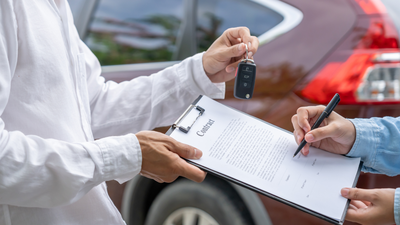
Before buying a used car, we must look at the overall performance and not just a few digits (Source: Canva)
The findings do not mean that mileage is irrelevant when purchasing a used vehicle. Higher mileage can indicate greater wear, although a car’s maintenance record, age, driving conditions and mechanical condition must also be considered when making a purchase.Consumers must pay attention to the complete number rather than allowing the leftmost digit to determine whether a car is worth buying. Comparing similar vehicles across dealerships and private listings can help you find your dream vehicle at a more reasonable price.The broader lesson extends beyond cars. From supermarket discounts to product pricing and electric-vehicle range figures, numbers can influence purchasing decisions in ways consumers may not always recognise.Sometimes, the difference between a good deal and an expensive mistake is not the number itself, but how we read it.