
Eight banks to extend fresh loans to the debt-laden conglomerate
Published : 26 October 2026
•
Updated : 26 October 2026, 13:43

Md Mehedi Hasan
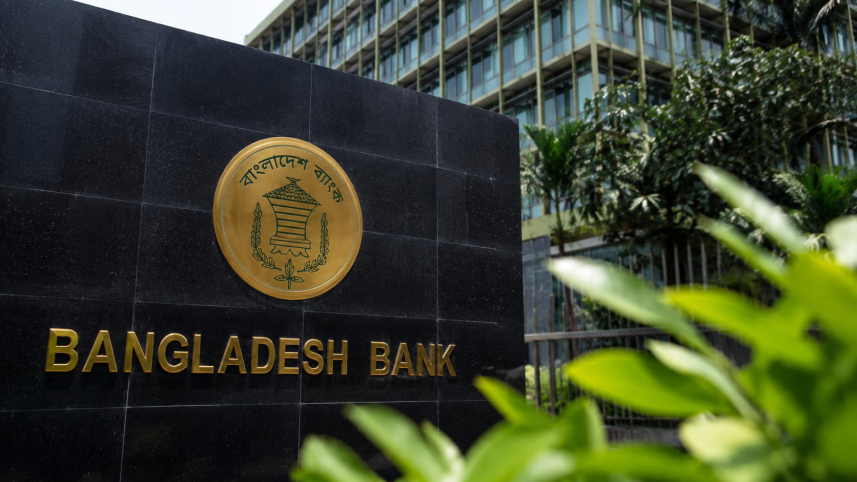
Eight private commercial banks are set to receive regulatory relief to extend Tk 1,700 crore in fresh loans to debt-laden City Group, in a move aimed at keeping its operations running and ensuring supplies of essential commodities ahead of Ramadan.
The banks are City Bank, Mutual Trust Bank, Prime Bank, Dutch-Bangla Bank, Southeast Bank, Trust Bank, NCC Bank and Pubali Bank.
In consultation with the government, the decision in principle was taken at a meeting between the eight banks and Bangladesh Bank Governor Mostaqur Rahman at the central bank’s headquarters yesterday, according to meeting sources.
At the lenders’ request, Bangladesh Bank plans to exempt them from Section 27(Ka Ka) of the Bank Company Act, 1991, which restricts lending to loan defaulters. The central bank intends to use its authority under Section 121 to grant the exemption.
Bangladesh Bank plans to exempt them from Section 27(Ka Ka) of the Bank Company Act, 1991, which restricts lending to loan defaulters
The conglomerate owes around Tk 26,000 crore to 48 domestic and foreign banks and financial institutions, some of which have already classified its loans as defaulted. The exemption would allow the banks to extend fresh loans and open letters of credit (LCs) for City Group despite its default status.
A source present at the meeting said a syndication agreement between the eight banks and the group is nearing completion.
Under the proposed syndication, City Bank would provide Tk 300 crore, while each of the other seven banks would contribute Tk 200 crore, the source said. Most of the lenders have already approved the funding at their board meetings.
The proposed rescue plan has, however, exposed differences among lenders over how to handle City Group’s financial distress.
A central bank official, speaking on condition of anonymity, said Bank Asia, BRAC Bank and Eastern Bank PLC had sought to withdraw from the revival plan and pursue legal action against the group.
Representatives of the three banks were invited to yesterday’s meeting and urged to join the rescue effort, the official said.
Meanwhile, some lenders, including HSBC, have already classified City Group’s loans as defaulted. The meeting source said other banks would also have to classify the loans in October under normal banking rules, requiring them to make provisions against them.
The lenders would reschedule the group’s existing loans only if it made a down payment, with no exceptions. “The client is not in a position to pay, so the banks cannot reschedule the loans,” the source said.
A managing director of a private commercial bank said the BB had not agreed to extend the exemption to all City Group companies and had asked the lenders to select five entities.
Opening letters of credit for those five companies would require approval from the finance ministry, which the BB could not grant on its own, he said.
“BB has promised to pursue it with the ministry, fully sincerely,” he added.
The group’s importance to the domestic market for essential commodities is another argument for the proposed intervention.
The chief executive of another bank, who requested anonymity, said City Group accounted for roughly 30 percent of the sugar market, 40 percent of the edible oil market and 30 percent of other commodities.
“Roughly a third of the market could vanish suddenly (if City Group cannot operate),” he said. “In such a crisis, people exploit shortages and raise prices, and the poor suffer most. That is a major motivation, not only the banks’ own losses.”
He also said the group had used foreign currency to import machinery, which the BB views as a national asset.
The central bank had previously instructed banks not to classify City Group’s loans as defaulted until last September. With that deadline having passed, several lenders have begun classifying the loans.
Yesterday’s meeting was also attended by BB Deputy Governors Kabir Ahmed and Sarwar Hossain, along with City Group Managing Director Md Hasan.
Bank representatives included Association of Bankers, Bangladesh Chairman and City Bank Managing Director Masrur Arefin, as well as the managing directors of Mutual Trust Bank, Bank Asia, BRAC Bank, Prime Bank, EBL, Pubali Bank and Southeast Bank, among others.
Syed Mahbubur Rahman, managing director of Mutual Trust Bank, told The Daily Star that City Group had never defaulted before and that there were no allegations against it.
“Everyone wants the group to overcome its difficulties and recover,” he said, adding that all banks wanted to support the conglomerate, although its loans would need to be restructured or rescheduled.
Mahbubur pointed to the widespread use of City Group’s Teer-branded products in households across the country.
Building a business group of comparable scale would take considerable time, he said.
The group’s products have become less available in the market because of its financial difficulties, but support could help it regain its former position, he added.
According to data, a large share of City Group’s borrowings is concentrated among a few lenders, including HSBC, Standard Chartered, City Bank, United Commercial Bank (UCB), EBL and BRAC Bank.