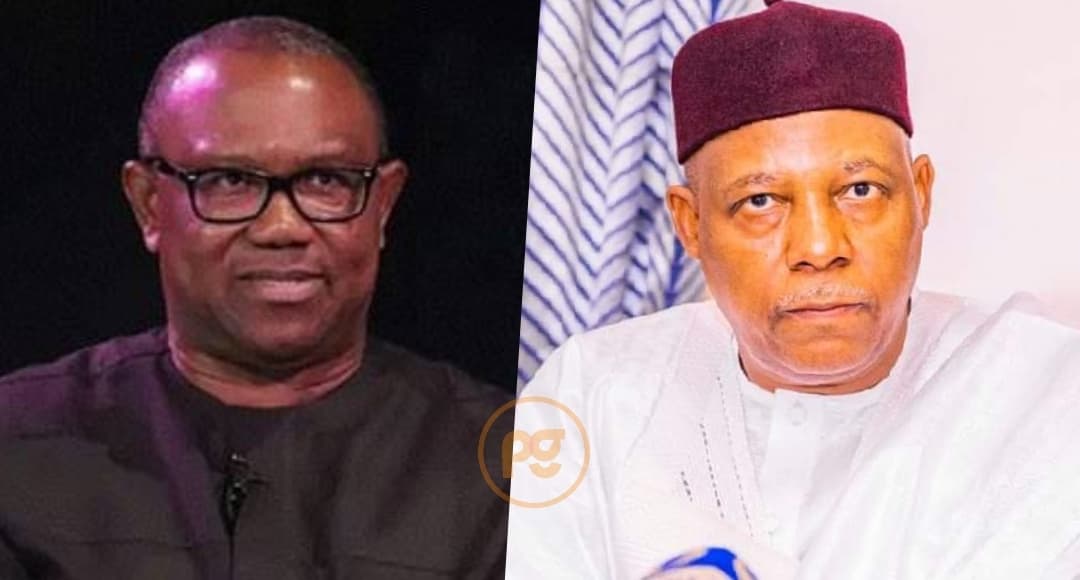
Vice President Kashim Shettima says Peter Obi offers nothing beyond “dubious statistics”, even as he commended the Nigeria Democratic Congress presidential candidate’s opposition to restoring the petrol subsidy.
Mr Shettima spoke on Monday at the 32nd Nigerian Economic Summit in Abuja, where he defended President Bola Tinubu’s economic reforms and urged business leaders to support their continuation.
“I respect Peter Obi for having the courage to say that he’s not going to restore the fuel subsidy,” Mr Shettima said. “But beyond spouting some dubious statistics, Mr Obi has absolutely nothing to offer.”
The vice president neither specified which of Mr Obi’s statistics he was disputing nor explained why he described them as “dubious”.
Mr Obi, the Labour Party’s 2023 presidential candidate, has previously supported subsidy removal while criticising the manner of its implementation. He argued that the policy should have been carried out in an organised way, with measures to cushion its effects on Nigerians.
Mr Shettima said the president had taken difficult decisions to prevent a deeper economic crisis, arguing that delaying reforms would have increased their eventual cost.
“But Mr President understood that postponing difficult decisions would multiply the eventual cost,” he said.
The vice president criticised the previous subsidy system, describing it as an industry that benefited some interests at the expense of Nigerians.
Mr Tinubu announced the removal of petrol subsidy on taking office in May 2023. The decision raised fuel and transport costs and contributed to pressure on household expenses, prompting protests and demands for relief from organised labour.
At the summit, Mr Shettima argued that Nigeria needed consistent policies to attract investment, expand businesses and create productive employment.
He urged the business community to support an enduring economic direction, saying national development should survive changes in administration.
However, he also acknowledged that the government’s work remained unfinished and that economic growth needed to translate into better livelihoods.
“We are encouraged by what we have accomplished so far, but we understand that creating jobs is only half the task,” he said.
Mr Shettima said the federal government must also improve the quality of work and make better use of the country’s workforce.
He argued that infrastructure should be assessed by the economic activity it generates, education by the skills and productivity it delivers, and industrial policy by the competitiveness it creates.
We have recently deactivated our website's comment provider in favour of other channels of distribution and commentary. We encourage you to join the conversation on our stories via our Facebook, Twitter and other social media pages.